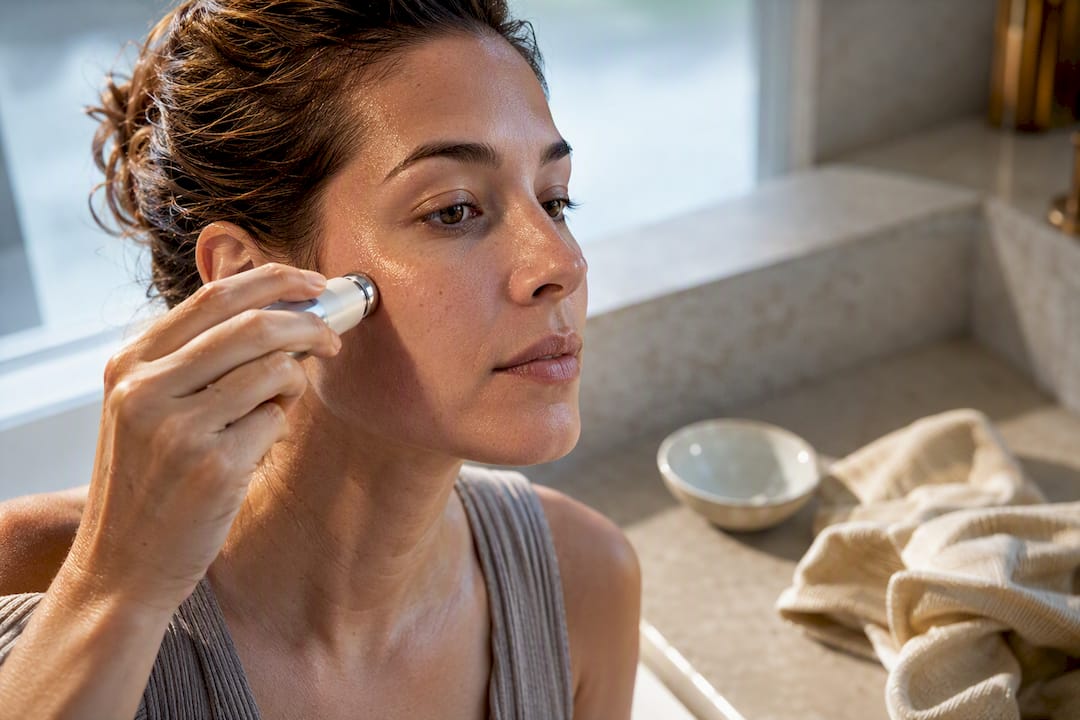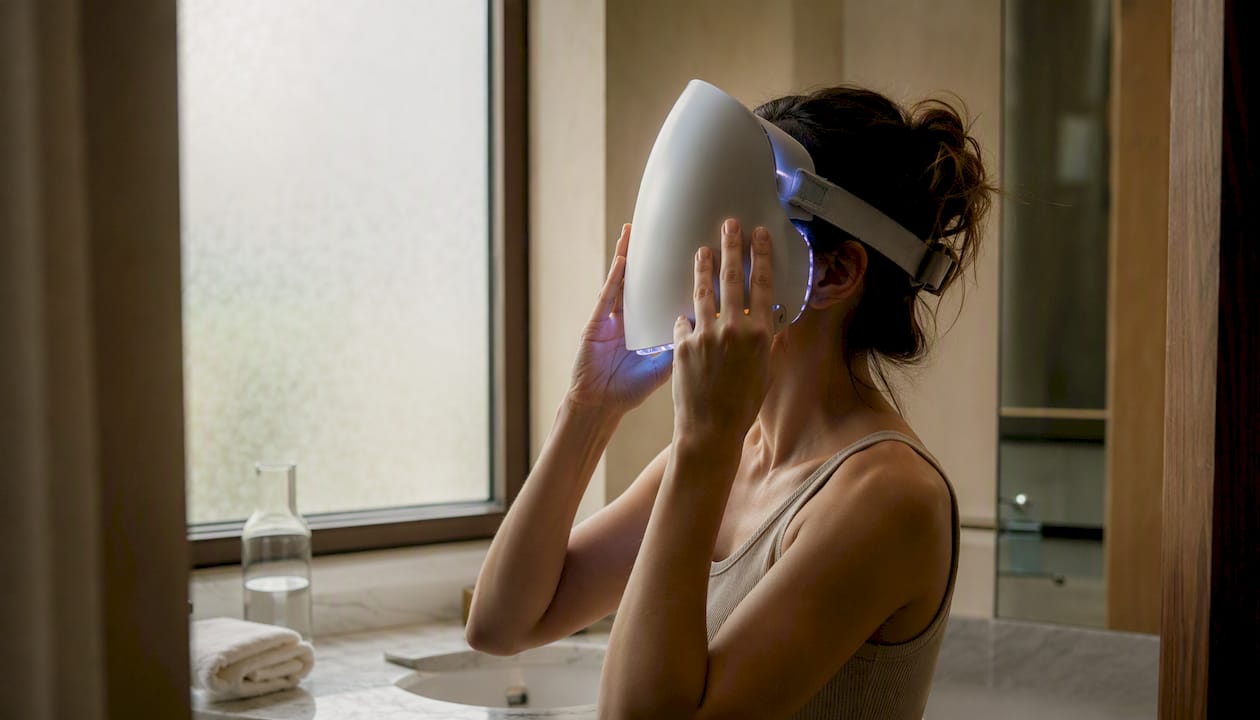
Blue light therapy reduces inflammatory acne lesions for many people when used consistently, and it works best as part of a broader skincare routine rather than as a standalone cure. The standard clinical approach uses wavelengths around 415–480 nm, sessions lasting 15–30 minutes, and a frequency of roughly 1–3 times per week over several weeks. Clinical overviews describe this as a useful adjunct for mild-to-moderate acne, with the caveat that evidence quality varies.
Here is what you need to know before you buy a device or book a session:
- Who it helps most: People with mild-to-moderate inflammatory acne (papules and pustules), not severe cystic breakouts.
- What to expect: Gradual improvement over 4–12 weeks, not overnight clearing.
- Device options: Professional in-office lamps deliver higher power; consumer LED masks and panels work at lower irradiance and need more sessions to approximate similar results.
- Safety basics: Always use eye protection, avoid photosensitizing medications during treatment, and follow manufacturer timing instructions precisely.
Pro Tip: If you use topical retinoids or benzoyl peroxide, it is advisable to pause them on the day of your light session to reduce irritation risk. Resume the next morning.
Key Takeaways
Blue light therapy reduces inflammatory acne lesions most reliably when used consistently at the correct wavelength (415–480 nm) over an 8–12 week protocol, ideally combined with red light for anti-inflammatory benefit.
| Point | Details |
|---|---|
| Mechanism is photochemical | Blue light (~415 nm) activates porphyrins in C. acnes, generating ROS that destroy the bacteria. |
| Combined protocols work better | Blue + red light addresses both bacteria and inflammation; small trials favor combined over blue alone. |
| Expect 8–12 weeks for results | Some trials report 50–70% reductions in inflammatory lesions; results vary by device and consistency. |
| Safety requires eye protection | Always use opaque goggles; pause photosensitizing actives on treatment days. |
| Glowera for vetted devices | Glowera’s LED skincare range includes full-face masks with stated wavelengths, clinical references, and authentic sourcing. |
Table of Contents
- How does blue light actually fight acne?
- What does the clinical evidence actually show?
- Who is a good candidate for blue light therapy?
- Device classes and what the specs actually mean
- How to use a blue light device safely at home
- Safety, side effects, and when to stop
- Combining light therapy with other acne treatments
- How to choose a safe and effective at-home device
- What the key studies actually measured
- Glowera’s LED skincare devices for at-home acne treatment
- Sources
How does blue light actually fight acne?
The mechanism is photochemical, not thermal. Cutibacterium acnes (formerly called Propionibacterium acnes), the bacterium central to inflammatory acne, naturally produces compounds called porphyrins. When blue light at approximately 415 nm hits those porphyrins, it triggers a reaction that generates reactive oxygen species (ROS). Those ROS damage the bacterial cell membrane and kill the bacteria from the inside out, without antibiotics and without the resistance concerns that come with them.
Wavelength matters more than most product descriptions suggest. The 420–480 nm range is the range most commonly cited in clinical literature for acne-targeting blue light. Devices that vaguely advertise “blue light” without specifying a nanometer value may be operating outside the effective window.
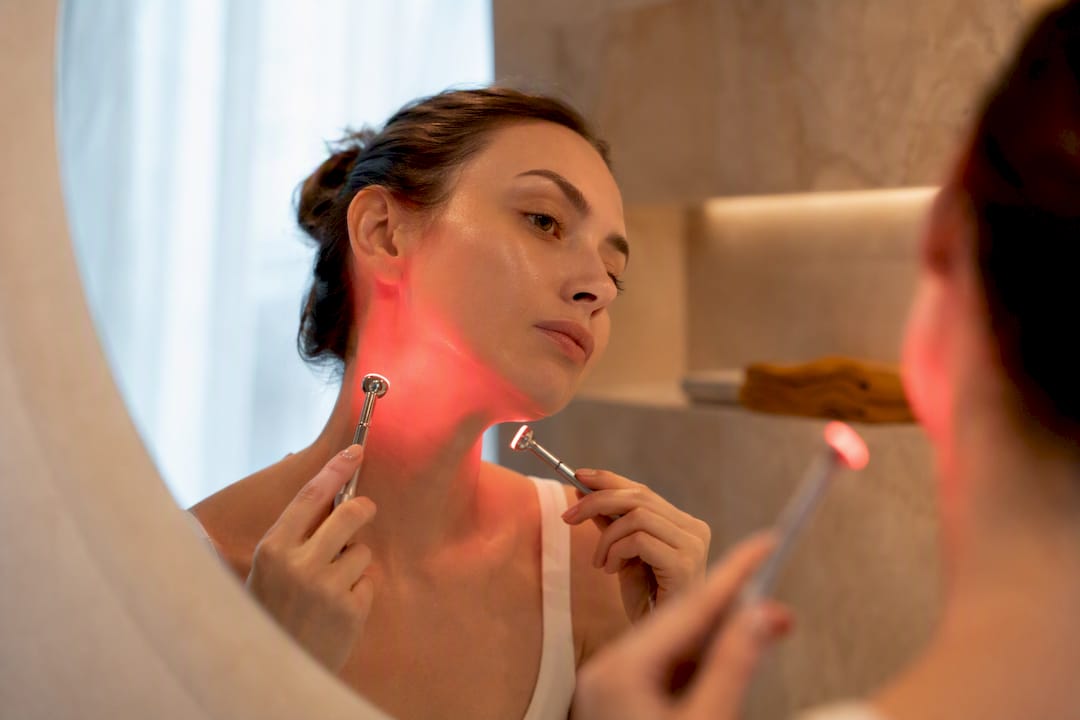
Red light (roughly 630–670 nm) works through a different pathway: it reduces inflammation and supports tissue repair at the cellular level. That is why combined blue-and-red protocols tend to outperform blue alone in small trials. Blue kills the bacteria; red calms the surrounding inflammation. The German Federal Office for Radiation Protection classifies this as a photochemical process and notes that correct dosing requires following manufacturer distance and time specifications.
Key mechanism: Blue light (~415 nm) activates porphyrins in Cutibacterium acnes, producing reactive oxygen species that destroy the bacteria. Red light (~630–670 nm) then addresses the inflammatory response the bacteria triggered.
What does the clinical evidence actually show?
The honest answer is: promising, but not definitive. PubMed-indexed trials document positive effects of LED light therapy on acne, and some small studies report reductions of 50–70% in inflammatory lesions after multiweek courses. A second indexed review supports combined red-and-blue low-level light therapy with the explicit caveat that study sizes are modest and protocols vary widely across trials.
The IGeL-Monitor summarizes the evidence base as limited in quality, noting that typical treatment cycles often involve several sessions over a period of weeks, with each session lasting up to around 30 minutes.
| Evidence dimension | What the research shows |
|---|---|
| Effect on inflammatory lesions | Some small trials report 50–70% reductions; results vary by device and protocol |
| Combined blue + red vs. blue alone | Combined protocols report better outcomes in small trials |
| Study quality | Mostly small samples, heterogeneous protocols, short follow-ups |
| Typical treatment cycle | ~8 sessions over 4 weeks, up to 30 minutes per session |
| Applicability to severe acne | Not supported as a primary treatment for nodular or cystic acne |
The gap between clinic-grade and consumer devices is real. Professional systems deliver higher irradiance, which means fewer sessions to reach a therapeutic fluence. At-home LED masks operate at lower power, so they require more frequent or longer sessions to approach comparable results. That is not a flaw; it is a physics constraint you should factor into your timeline expectations.
Who is a good candidate for blue light therapy?
Blue light therapy fits a specific profile. It is not a universal acne solution.
Good candidates:
- People with mild-to-moderate inflammatory acne (papules, pustules) who want a non-antibiotic adjunct to their routine.
- Those who have already addressed comedones with topical actives and want to target residual inflammatory lesions.
- Anyone looking to reduce reliance on topical antibiotics over time, under dermatologist guidance.
Not the right primary treatment for:
- Severe or cystic acne, nodular breakouts, or acne with significant scarring risk. These cases need a dermatologist and likely prescription therapy.
- People whose acne is predominantly non-inflammatory (blackheads, whiteheads). Blue light targets bacteria; it does not unclog pores.
Contraindications to check before starting:
- Photosensitizing medications (certain antibiotics like doxycycline, some antifungals, isotretinoin in some protocols) can amplify light sensitivity.
- Active skin conditions like lupus or porphyria that involve light sensitivity.
- A personal or family history of photosensitive epilepsy.
- Pregnancy: consult a physician before starting any light therapy regimen.
If any of these apply to you, talk to a dermatologist before using a device at home.
Device classes and what the specs actually mean
Not all LED devices are equivalent, and the difference is not just price.
In-office medical systems use high-irradiance lamps calibrated to deliver a precise fluence per session. A typical clinic protocol runs 20-minute sessions using blue filters around 400–450 nm, with a series of 6–10 treatments at roughly twice weekly. Eye protection is standard. The power levels require trained supervision.
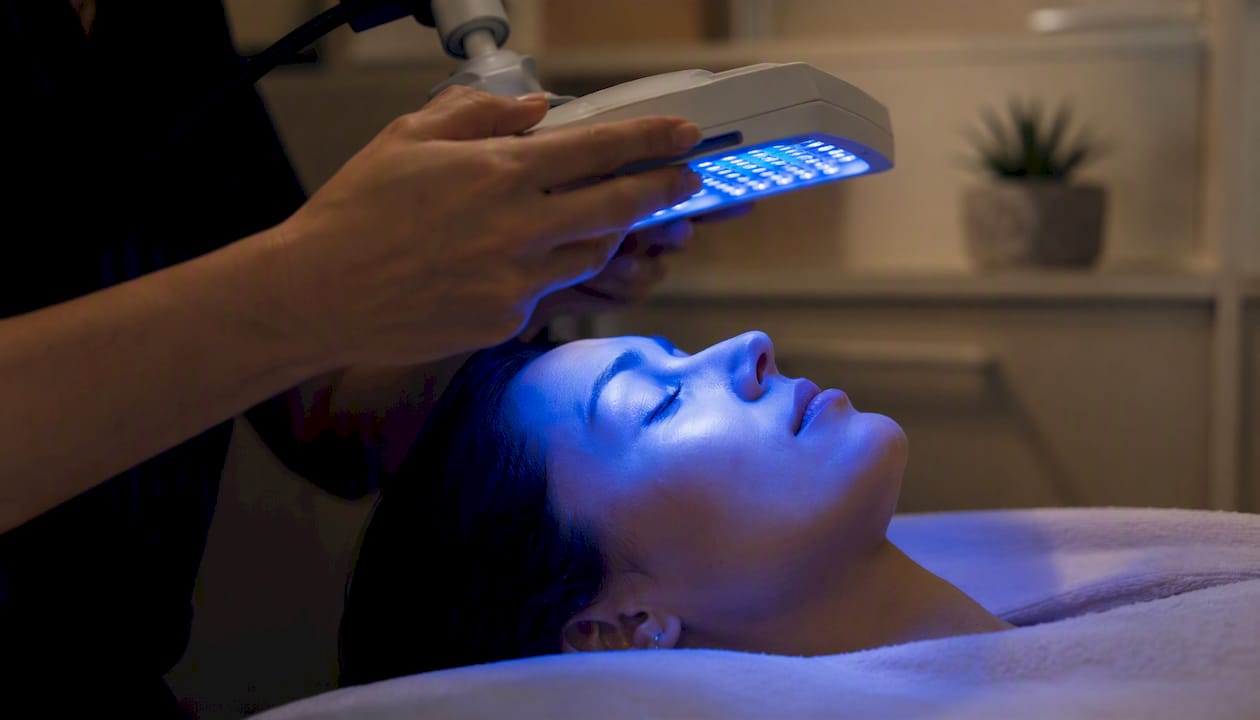
Consumer LED masks and panels operate at lower irradiance. Full-face masks cover the entire treatment area simultaneously, which is more practical for daily or near-daily use. Handheld spot devices let you target specific zones but require more time to cover a full face. Panels sit at a fixed distance and can treat larger areas.
The specs that actually matter when you are comparing devices:
- Central wavelength (nm): Should be stated explicitly. For acne, look for blue in the 415–480 nm range and red in the 630–670 nm range.
- Irradiance or fluence: Not always disclosed by consumer brands, but higher is generally more effective per session.
- Recommended distance and session time: These two numbers together determine your actual dose. Follow them exactly.
- Coverage area: A full-face mask treats everything at once; a spot device requires multiple passes.
Pro Tip: If a device’s product page does not list a specific wavelength in nanometers, treat that as a red flag. Reputable devices specify this because it is the single most important technical parameter.
How to use a blue light device safely at home
A consistent routine matters more than any single session. Here is a practical eight-step approach:
- Cleanse thoroughly. Remove all makeup, sunscreen, and skincare products. Residue on the skin can scatter light or cause irritation.
- Skip actives on treatment days. Hold benzoyl peroxide, retinoids, and AHAs/BHAs until after the session or the following morning.
- Put on eye protection. Use the goggles that came with your device, or purchase opaque LED-safe goggles. Do not skip this step.
- Position the device correctly. Follow the manufacturer’s recommended distance. Closer is not always better; the dose is calibrated for a specific distance.
- Run the full session time. Most consumer devices recommend 10–30 minutes. Do not cut sessions short expecting to compensate with more frequent use.
- Post-session: apply a gentle moisturizer. Skin can feel slightly dry after treatment. A fragrance-free, non-comedogenic moisturizer is the right follow-up.
- Apply SPF the next morning. Light therapy can temporarily increase photosensitivity. Broad-spectrum SPF 30 or higher is non-negotiable.
- Log your sessions. Track dates, session length, and any skin changes. This makes it much easier to assess whether the device is working.
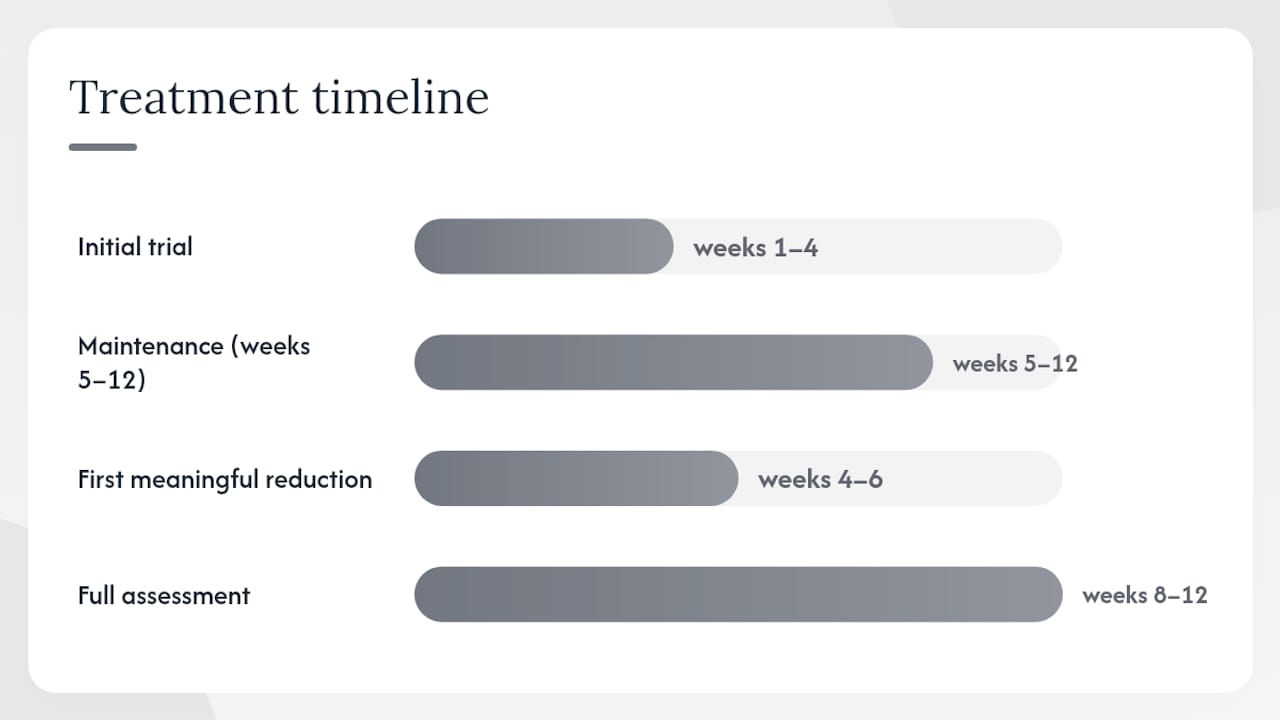
Suggested schedule: Start with 3 sessions per week for the first four weeks. If your skin tolerates it well, maintain that frequency through weeks 5–12. Most people see the first meaningful reduction in active lesions around weeks 4–6. A full assessment of results takes 8–12 weeks.
Pro Tip: Take a photo in the same lighting every two weeks. Gradual improvement is easy to miss day-to-day but obvious when you compare week 2 to week 10.
Safety, side effects, and when to stop
Blue light therapy has a strong safety profile at consumer device power levels, but it is not entirely without risk.
Common mild effects include transient redness immediately after a session, mild dryness, and occasional tightness. These typically resolve within a few hours and tend to diminish as your skin adapts over the first two weeks.
Less common but more serious risks:
- Eye exposure: Direct exposure to blue light at therapeutic intensities can cause retinal damage. Always use proper eye protection, every session, without exception.
- Photosensitivity reactions: Certain medications, including some antibiotics, diuretics, and antifungals, increase skin sensitivity to light. A reaction can range from an exaggerated sunburn to blistering.
- Interaction with topical photosensitizers: St. John’s Wort, certain essential oils, and some acne spot treatments can sensitize skin to light.
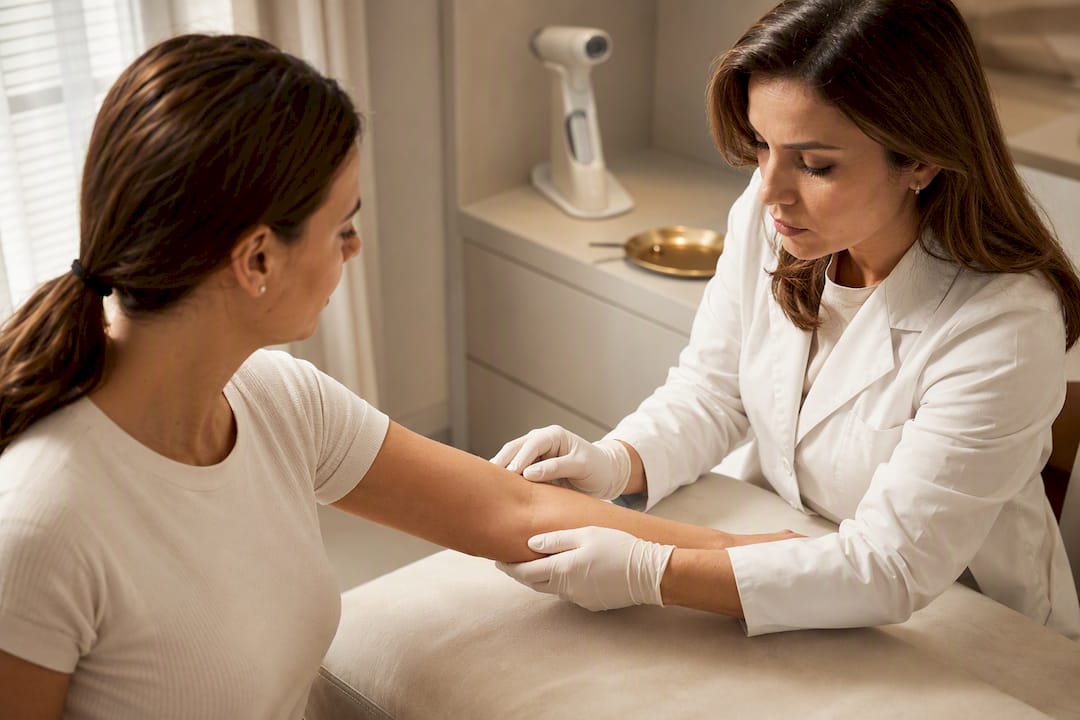
Safety rule: Before your first full session, test the device on a small area of your inner arm for the recommended session time. Wait 24 hours. If you see no unusual reaction, proceed with a full facial session.
If you experience severe redness, blistering, swelling, or pain during or after a session, stop immediately and consult a physician.
Combining light therapy with other acne treatments
Light therapy works best alongside, not instead of, a structured skincare routine.
Topical agents like salicylic acid and niacinamide pair well with blue light. Use them in your regular routine but hold them on the day of your light session to avoid stacking irritants. Benzoyl peroxide is effective against C. acnes through a different mechanism and can complement light therapy, but again, skip it on treatment days and resume the following morning.
Systemic retinoids (isotretinoin) and oral antibiotics are a different matter. If you are on isotretinoin, consult your prescribing dermatologist before adding any light therapy. Isotretinoin significantly increases photosensitivity, and the interaction with high-irradiance devices is not well-characterized in consumer settings.
Clinical note: Light therapy is described in clinical literature as an adjunct to standard acne treatment, not a replacement. For mild-to-moderate acne, it can meaningfully reduce inflammatory lesions as part of a broader regimen. For anything more severe, it should be one tool among several, directed by a dermatologist.
Red flags that mean you need a dermatologist, not a device:
- Nodules or cysts that are painful, deep, or growing rapidly.
- Acne that is leaving permanent scars.
- Breakouts accompanied by fever, joint pain, or other systemic symptoms.
- No improvement after a full 12-week at-home protocol.
How to choose a safe and effective at-home device
The U.S. market has dozens of consumer LED devices, and the quality range is wide. These are the criteria that separate a device worth buying from one that is not.
Must-haves:
- Stated wavelength in nanometers. No nm value listed means no way to verify the device is operating in the therapeutic range.
- FDA clearance or OTC labeling. Look for a 510(k) clearance number or explicit FDA-cleared claim. This is the minimum regulatory bar for a device making therapeutic claims in the U.S.
- Published clinical data or independent testing. Manufacturer-cited studies are a starting point; independent or peer-reviewed references carry more weight.
- Built-in timer and automatic shutoff. These are safety features, not conveniences.
- Included or compatible eye protection. Any device that does not address eye safety is a red flag.
Coverage and format: A full-face mask treats the entire face in one session, which is more time-efficient for people with widespread acne. A spot device is better for targeting specific zones and tends to be more affordable. Panels offer the largest coverage area and are useful if you want to treat the face and neck together.
Commercial signals of reliability: A warranty of at least one year, transparent published specs, a clear return policy, and accessible customer service all indicate a brand that stands behind its product. Devices with vague specs, no warranty information, and no return window are higher-risk purchases.
Pro Tip: Search the FDA’s 510(k) database directly at fda.gov to verify a device’s clearance status before you buy. A brand claiming “FDA cleared” without a clearance number is making an unverifiable claim.
What the key studies actually measured
The most-cited trials in blue light acne research share a few common features worth understanding before you interpret any manufacturer’s claims.
PubMed-indexed research (ID 16766484) documents clinical benefit of LED light therapy for acne, with results varying by device type, wavelength, and protocol design. The combined red-and-blue review (ID 19764893) supports low-level light therapy for acne but explicitly notes modest sample sizes and heterogeneity across studies as limiting factors.
What most trials measure: inflammatory lesion counts (papules and pustules) before and after a defined treatment course. What they often do not measure: long-term durability of results, head-to-head comparisons between consumer and clinic devices, or outcomes beyond 12 weeks.
Interpreting manufacturer studies: A study conducted by or funded by a device manufacturer using that manufacturer’s own device is not independent evidence. It may be real data, but it needs to be weighed differently than a trial run by an academic dermatology department with no commercial stake in the outcome.
The practical takeaway: the evidence supports blue light as a useful tool for inflammatory acne, but the effect size and durability depend heavily on the device, the protocol, and the individual. Treat any claim of a specific percentage reduction as a range, not a guarantee.
A balanced take on what blue light can and cannot do
Blue light therapy is one of the more credible non-prescription options for inflammatory acne, and the mechanism is genuinely well-understood. The porphyrin-ROS pathway is real science, not marketing language. What gets oversold is the magnitude and speed of results.
The honest picture: most people with mild-to-moderate inflammatory acne will see some reduction in active lesions after 8–12 weeks of consistent use. Some will see a lot. A few will see very little, because acne is multifactorial and bacteria are only one part of the equation. Devices that combine blue and red light target more acne mechanisms than blue light alone, often leading to better reported outcomes.
Where I would push back on the conventional framing: the comparison between home devices and clinic treatments is often presented as “clinic wins, home devices are second-best.” That framing misses the compliance advantage. A device you use three times a week at home for 12 weeks delivers more total treatment time than six clinic sessions you schedule over two months. Consistency matters as much as peak irradiance.
The one caveat I would not skip: if your acne is leaving scars, do not spend 12 weeks experimenting with a home device. See a dermatologist first. Scarring acne needs faster, more aggressive intervention than any consumer LED can provide.
Glowera’s LED skincare devices for at-home acne treatment
Glowera carries a curated selection of clinically minded LED devices from brands including CurrentBody, Dr. Dennis Gross, and Shark Beauty, all available through its online store with verified specs and authentic product sourcing.
For acne-focused use, the CurrentBody LED Blue Light Face Mask Series 1 and Series 2 are full-face options with stated wavelengths and published clinical references. The Shark Beauty CryoGlow Red Blue + Infrared iQLED mask combines multiple wavelengths in one device, which suits the combined-protocol approach the evidence supports. Every product on Glowera is 100% authentic, ships with manufacturer warranty coverage, and comes with access to customer support for setup and usage questions.
Browse the full LED skincare category at Glowera to compare device formats, wavelength specs, and pricing before you decide.
Sources
The sources below are the most useful public-facing references for verifying the claims in this article.
- IGeL Licht gegen Akne – Apotheken Umschau
- Rotlicht gegen Falten, Blaulicht gegen Pickel: Für wen sich LED-Masken tatsächlich lohnen
- Lichttherapie bei Akne – Jetzt online informieren
- Blaulicht bei Akne – Blaulichttherapie – Dr. Helene Krause – Dermatologische Privatpraxis
- Pubmed
- Pubmed
- Lichttherapie bei Akne – IGeL-Monitor
On interpreting these sources: The German-language clinical and regulatory sources cited here reflect European clinical practice and regulatory frameworks. The underlying photochemical mechanisms and device physics they describe apply universally; specific treatment protocols and regulatory clearance requirements differ in the U.S. Always verify a device’s FDA status independently before purchase.
This article provides general information and is not a substitute for professional medical advice. If you have concerns about your acne severity, medications, or skin health, consult a licensed dermatologist.