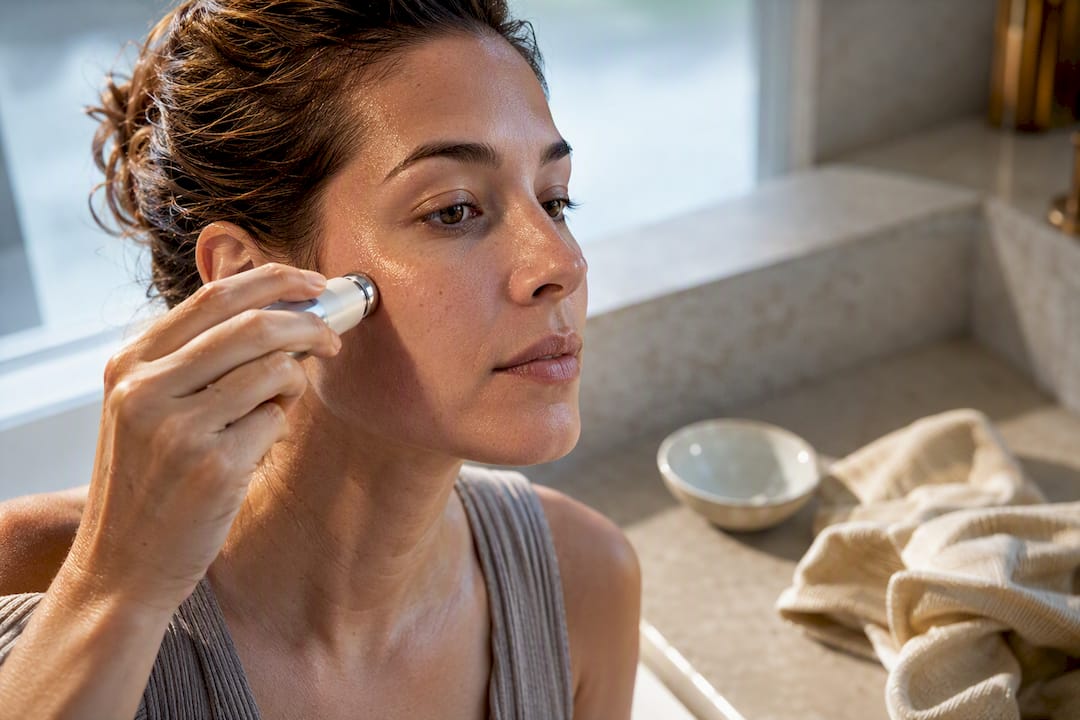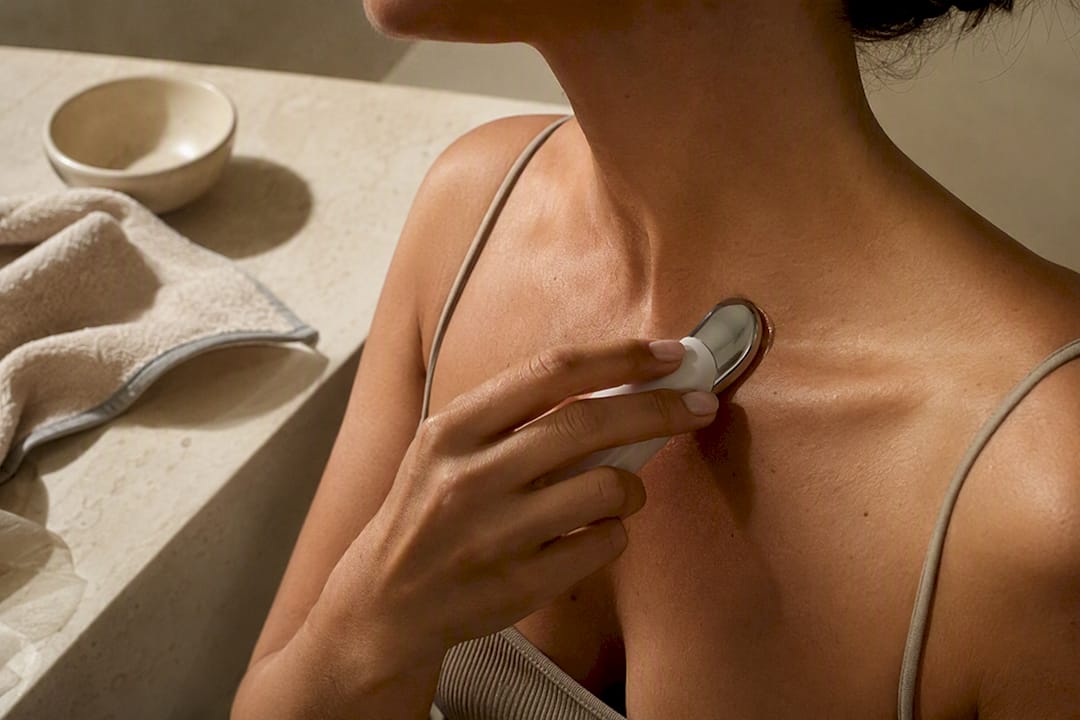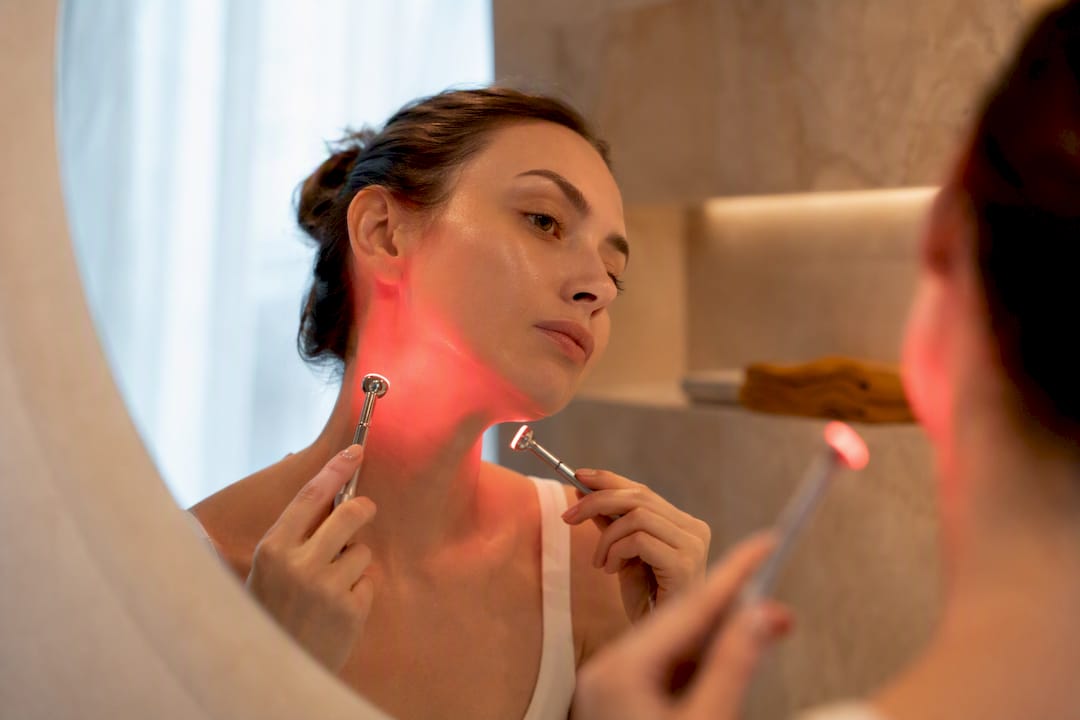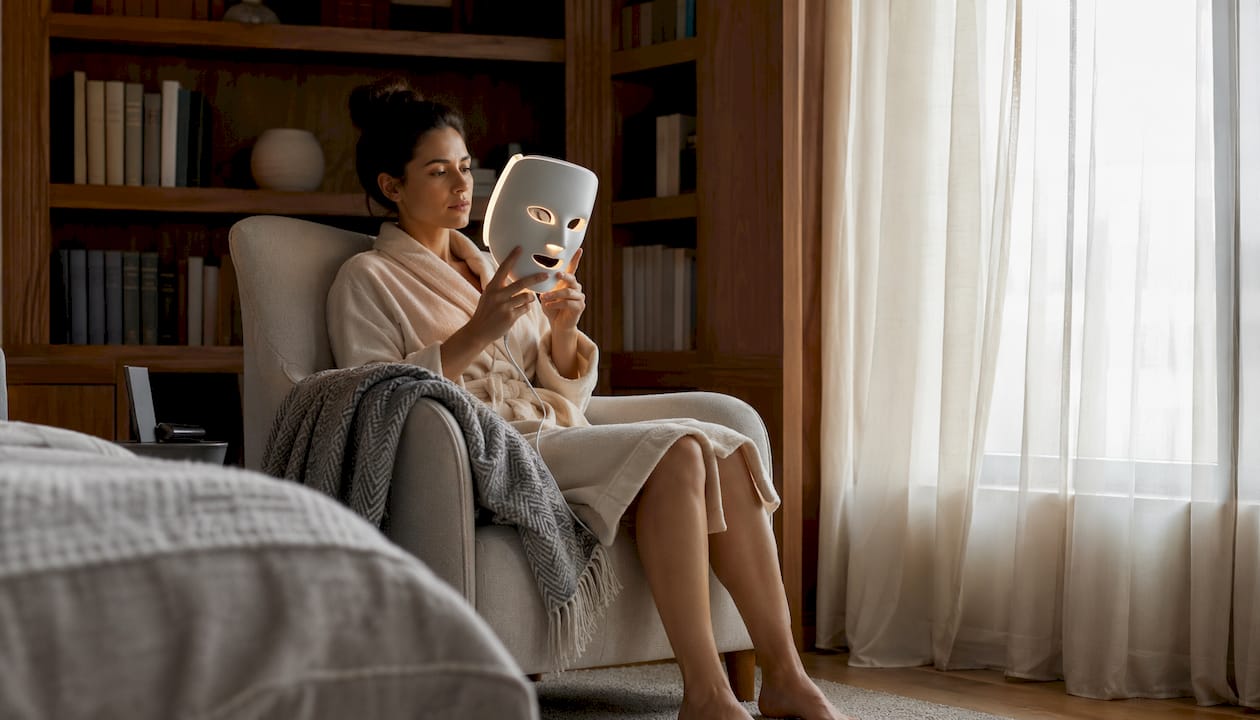
At-home LED light therapy works for specific conditions, but the results depend heavily on what you’re treating, which wavelengths your device uses, and how consistently you use it. The clearest evidence supports mild-to-moderate acne and early signs of photoaging. Hair thinning has a solid regulatory signal too. Expect weeks to months of regular sessions, not overnight results.
Conditions with the strongest evidence:
- Mild-to-moderate acne (red and/or blue light, 4–12 weeks)
- Periorbital fine lines and crow’s feet (630 nm + 850 nm, 8–16 weeks)
- Hair follicle stimulation and thinning (FDA-cleared red-light helmets and combs)
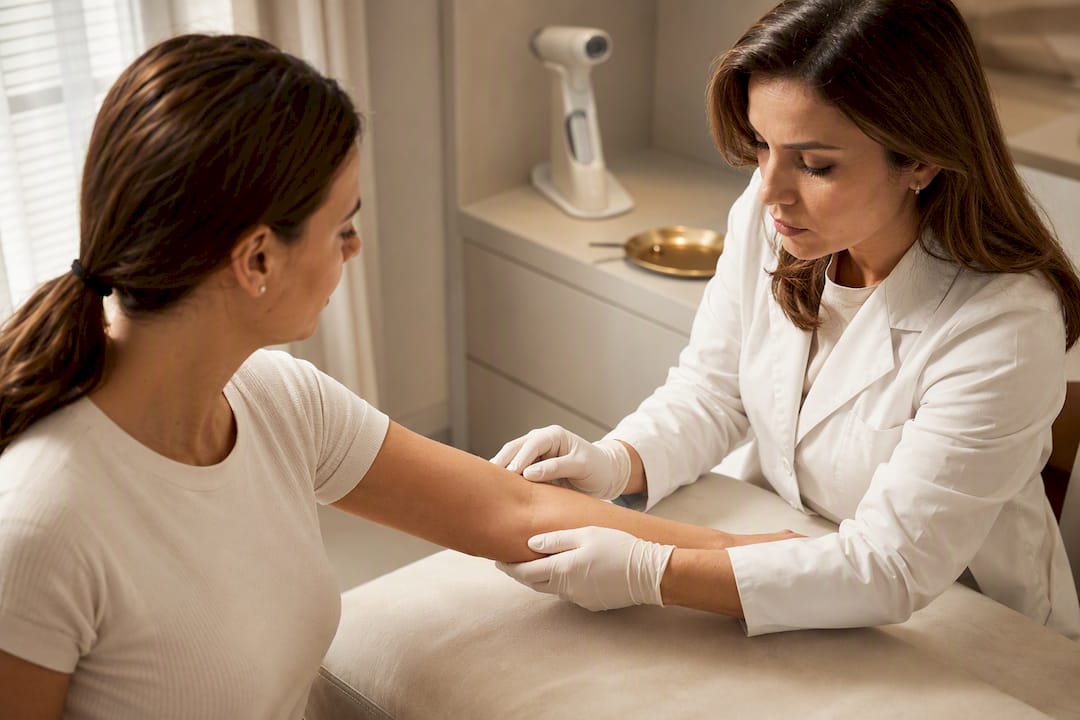
Safety flag: At-home LED devices are generally safe when used as directed. The main precautions are eye protection, avoiding use if you take photosensitizing medications, and checking with a dermatologist if you have a photosensitivity disorder or active skin cancer in the treatment area.
A board-certified dermatologist can confirm whether LED therapy fits your skin concern before you invest. Glowera carries a vetted selection of authenticated LED devices with warranty coverage and customer support to help you choose the right one.
Table of Contents
- How does LED light therapy actually work on your skin?
- What the research says about at-home LED therapy, condition by condition
- How do at-home devices compare with in-office LED systems?
- How to use an at-home LED device: session length, frequency, and schedules
- Side effects, risks, and who should avoid at-home LED therapy
- How to pick a safe, effective at-home LED device
- The key studies behind this guidance
- Key Takeaways
- The real question isn’t whether it works, it’s whether it works for you
- Glowera’s LED device selection for readers ready to shop
- Useful sources
How does LED light therapy actually work on your skin?
The mechanism behind LED therapy is called photobiomodulation (PBM), and it is more specific than “light makes skin better.” Photons at particular wavelengths are absorbed by mitochondrial cytochrome-c oxidase, an enzyme in your skin cells. That absorption triggers a cascade: ATP production increases, oxidative stress drops, and downstream effects include reduced inflammation, collagen synthesis, and, at follicle depth, hair growth stimulation.
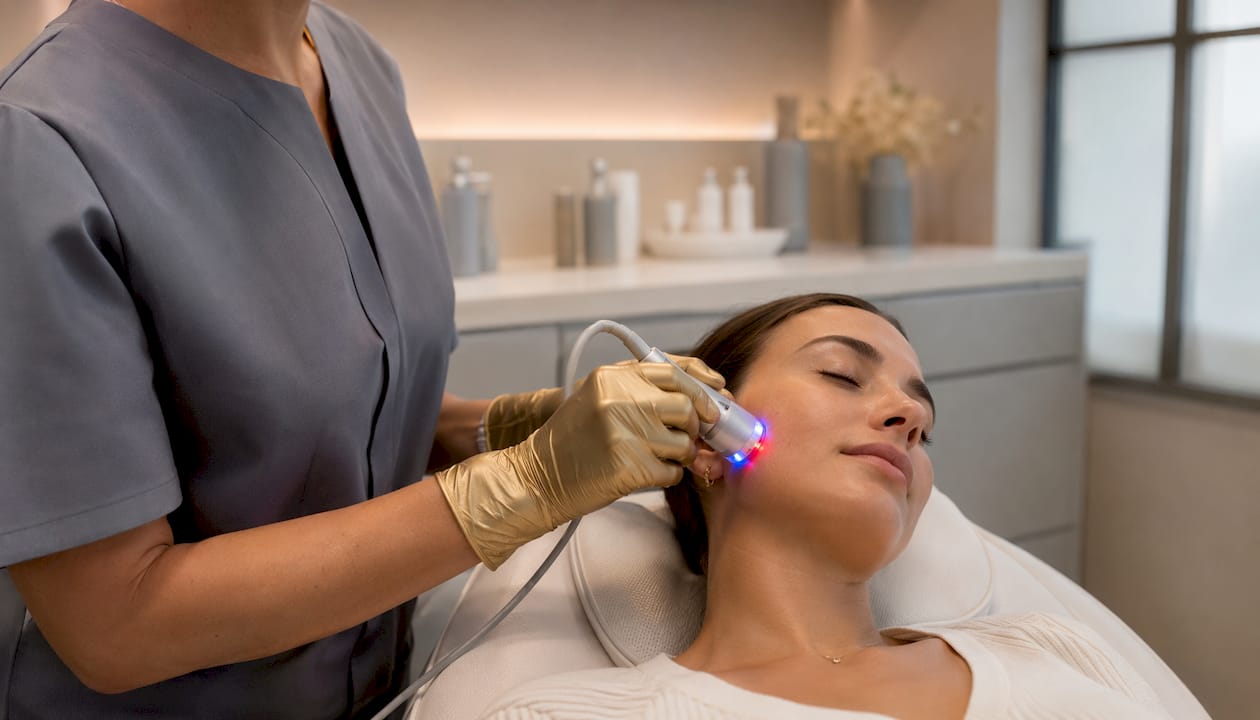
Wavelength determines where the light lands and what it does:
| Wavelength | Color | Primary target | Typical penetration |
|---|---|---|---|
| — | Blue | C. acnes bacteria, sebaceous glands | Superficial epidermis |
| 630 nm | Red | Fibroblasts, collagen synthesis | Mid-dermis |
| 850 nm | Near-infrared (IRED) | Deeper dermis, hair follicles | Subcutaneous |
Beyond wavelength, two parameters drive results: irradiance (power density, measured in mW/cm²) and fluence (total energy delivered per session, measured in J/cm²). Consumer devices typically deliver approximately 5–35 mW/cm² and 1–5 J/cm² per session. Clinical PBM systems operate at calibrated ranges well above that, which is why professional treatments tend to show faster changes.
Pro Tip: Before buying any device, look for one that publishes its wavelength in nanometers and its irradiance or fluence per session. A device that only says “red light” with no specs is impossible to evaluate.
What the research says about at-home LED therapy, condition by condition
Acne
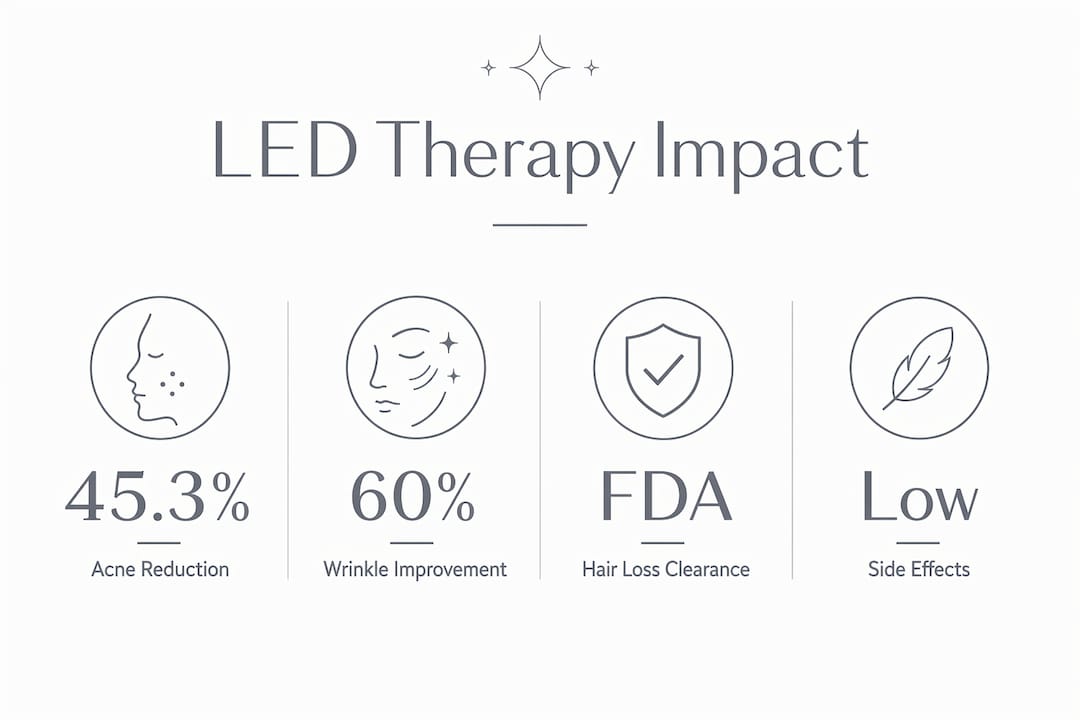
The most rigorous recent data comes from a 2025 systematic review and meta-analysis of at-home red and/or blue LED devices for acne vulgaris. The headline numbers: 45.3% reduction in inflammatory lesions and 47.7% reduction in noninflammatory lesions. Improvements were typically noted after 4–12 weeks of consistent use.
Wrinkles and photoaging
A 2025 multi-center, double-blind, sham-controlled RCT tested a home-use LED mask combining 630 nm and 850 nm wavelengths for crow’s feet. Independent rater improvement reached substantial levels, with per-protocol improvement and significant differences versus sham observed at 16 weeks. The CurrentBody LED Eye Mask uses this same wavelength combination and is available through Glowera.
Hair loss
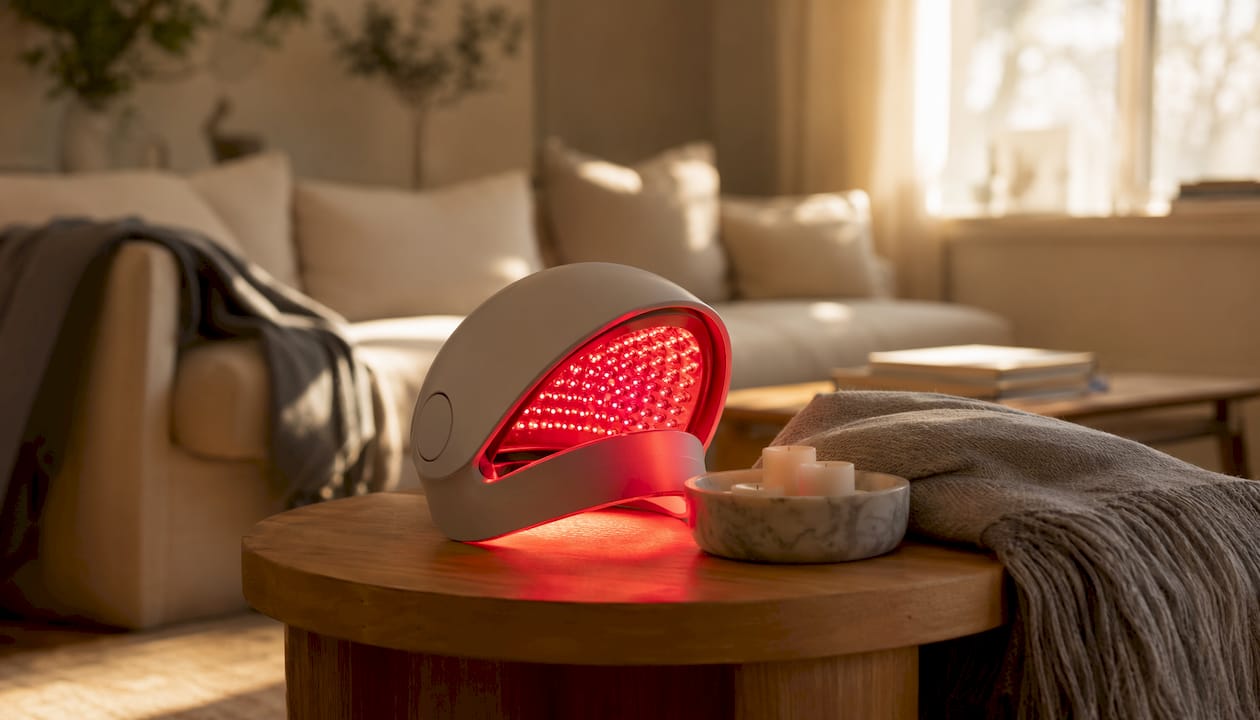
Several at-home red-light devices, including combs, caps, and helmets, have received FDA 510(k) clearance for hair loss indications. That clearance signals both safety and some demonstrated efficacy for follicle stimulation. Results require consistent, long-term use and are most relevant for androgenetic alopecia.
Other conditions
Evidence for rosacea, wound healing, and melasma is preliminary and mixed. Darker Fitzpatrick phototypes face a real risk of prolonged hyperpigmentation with some visible-light exposures, so extra caution and a clinician consult are warranted before treating those concerns at home.
How do at-home devices compare with in-office LED systems?
The honest answer: professional systems are faster and more powerful. The question is whether that gap matters for your goal.
| Factor | At-home device | In-office system |
|---|---|---|
| Irradiance | ~5–35 mW/cm² | Calibrated, often higher |
| Fluence per session | ~1–5 J/cm² | Higher, reproducible dosing |
| Time to visible results | 4–16 weeks | Fewer sessions, faster change |
| Safety oversight | Self-directed | Clinician-monitored |
| Cost structure | Higher upfront, low per-session | Pay-per-visit |
| Customization | Fixed parameters | Tailored to skin type and concern |
Where at-home devices win:
- Maintenance after in-office procedures
- Mild-to-moderate concerns that don’t need clinical-grade power
- Long-term, low-cost consistency once you own the device
- Convenience for people who can’t access regular dermatology appointments
The American Academy of Dermatology positions at-home devices primarily as complementary or maintenance therapy rather than replacements for clinical treatment. That framing is accurate for most users.
How to use an at-home LED device: session length, frequency, and schedules
General rule: follow the manufacturer’s protocol exactly. Deviating from it, especially by extending session time, does not accelerate results and can cause irritation.
| Concern | Session length | Frequency | Typical course |
|---|---|---|---|
| Acne | — | 3–5x per week | 4–12 weeks |
| Fine lines / wrinkles | — | 3–5x per week | 8–16 weeks |
| Hair loss | 30 min (helmet) | 3–4x per week | 16 weeks |
Device formats and tradeoffs:
- Masks: cover the full face at once; best for anti-aging and acne; hands-free
- Panels: larger treatment area; good for body or full-face; require you to stay still
- Wands: precise, targeted; slower for large areas; useful for spot treatment
- Helmets/combs: designed specifically for scalp; FDA-cleared options available
Prep matters. Use LED on clean, dry skin with no active photosensitizing topicals immediately before or after a session unless your device instructions say otherwise. Retinoids can be used in the same routine but consult a dermatologist on timing, since retinoids increase photosensitivity.
Pro Tip: Take a photo under consistent lighting every two weeks. At-home light therapy results are gradual enough that you’ll miss them without a baseline comparison.
Side effects, risks, and who should avoid at-home LED therapy
LED therapy has a favorable safety profile in clinical trials, with adverse events that are mostly mild and transient. That said, “generally safe” is not the same as “safe for everyone.”
Common mild effects: temporary redness (erythema), dryness, or mild irritation, all of which typically resolve within hours.
Who should not use at-home LED devices without medical clearance:
- People with photosensitivity disorders (e.g., lupus, porphyria)
- Anyone taking photosensitizing medications (certain antibiotics, NSAIDs, some diuretics)
- People on isotretinoin or shortly after stopping it
- Anyone with active skin cancer in the treatment area
- Pregnant individuals (insufficient safety data)
Eye safety: Never point an LED device directly at open eyes. Use the eye shields provided, and choose devices with built-in eye-protection features when treating the periorbital area.
Skin tone: Darker Fitzpatrick phototypes (IV–VI) face a higher risk of post-inflammatory hyperpigmentation with some visible-light wavelengths. A dermatologist consult before starting is especially important in this group.
The Cleveland Clinic recommends consulting a dermatologist before starting at-home red-light therapy to set realistic expectations and confirm suitability.
How to pick a safe, effective at-home LED device
Most devices on the market look similar. The difference between one that delivers results and one that collects dust usually comes down to a few specific specs.
Buyer’s checklist:
- Wavelength listed in nanometers (not just “red” or “blue”)
- Irradiance (mW/cm²) or fluence (J/cm²) per session published or available on request
- FDA 510(k) clearance for the intended indication (hair loss, acne, or anti-aging)
- Independent clinical studies or peer-reviewed validation
- Minimum 30-day return policy and at least a one-year warranty
- Clear, detailed instructions and built-in safety features (auto shutoff, eye shields)
Questions to ask any retailer before buying:
- What wavelength(s) does this device use?
- What irradiance or fluence does one session deliver?
- Is this FDA-cleared, and for which specific indication?
- What is the return window and warranty length?
Price generally reflects engineering quality. Devices with stable, consistent output and quality optics cost more than budget options, and that difference shows up in results over time. Glowera’s LED therapy category carries authenticated devices from brands like CurrentBody, Dr. Dennis Gross, and FOREO, all with warranty coverage and customer support to help match the right device to your concern.
Pro Tip: FDA clearance for a hair-loss device does not mean it is cleared for wrinkles. Check the specific indication on the clearance, not just whether the device has a clearance number.
The key studies behind this guidance
2025 systematic review on at-home LED for acne
Published in PMC, this meta-analysis pooled data from multiple trials of at-home red and/or blue LED devices for acne vulgaris. The headline numbers: 45.3% reduction in inflammatory lesions and 47.7% reduction in noninflammatory lesions. Study durations ranged from 4–12 weeks. The main limitation is heterogeneity across devices, since parameter reporting (irradiance, fluence) was inconsistent across included studies, making direct device-to-device comparison difficult.
2025 multi-center RCT on crow’s feet
This randomized, double-blind, sham-controlled trial is one of the most rigorous consumer-device studies published to date. It tested a 630 nm + 850 nm home mask across multiple clinical sites. Independent rater improvement reached at least 69.2% and per-protocol improvement up to 89.3% at 16 weeks. Sessions were well-tolerated with no serious adverse events. The limitation is follow-up duration: 16 weeks captures the treatment window but not long-term maintenance data.
Authoritative clinical guidance
The AAD and Cleveland Clinic both advise that at-home devices are lower-powered than clinical systems and work best as adjuncts or maintenance tools. The AAD also confirms FDA-cleared at-home devices exist for hair regrowth, which is a meaningful regulatory signal. Stanford Medicine’s expert commentary reinforces that adherence is the primary driver of outcome with consumer devices, given their lower output.
Key Takeaways
At-home LED light therapy produces clinically meaningful results for acne and periorbital wrinkles when you use a wavelength-specific device consistently for 4–16 weeks.
| Point | Details |
|---|---|
| Acne evidence is strong | A 2025 meta-analysis found 45.3% reduction in inflammatory lesions after 4–12 weeks of consistent use. |
| Wrinkle evidence is solid | A 2025 RCT showed independent rater improvement of at least 69.2% in crow’s feet and up to 89.3% per-protocol improvement using 630 nm + 850 nm over 16 weeks. |
| Consistency drives results | Consumer devices deliver lower irradiance than clinical systems, so regular adherence is the primary predictor of benefit. |
| Check FDA clearance by indication | A device cleared for hair loss is not cleared for acne; verify the specific indication before buying. |
| Glowera is a vetted source | Glowera carries authenticated, warranty-backed LED devices from brands like CurrentBody and Dr. Dennis Gross, with customer support to help you choose. |
The real question isn’t whether it works, it’s whether it works for you
The evidence for at-home LED therapy is genuinely solid in two areas: acne and early photoaging. The 2025 trials are not small or poorly designed. But there’s a gap between what the research proves and what most people actually do with these devices.
The majority of people who buy an LED mask use it inconsistently for a few weeks, see nothing dramatic, and stop. That’s not a device failure. It’s a dosing failure. Consumer devices require more time and more sessions to reach the same cumulative energy that a clinical system delivers in two or three visits. If you’re not prepared to use a device three to five times a week for at least eight weeks, the investment probably won’t pay off.
My honest framework: if your concern is mild-to-moderate acne or early fine lines and you’re willing to commit to a consistent protocol, a quality at-home device is worth trying. If you have moderate-to-severe photoaging, active cystic acne, or a complex skin condition, start with a dermatologist. Use at-home LED as a maintenance layer after professional treatment, not as the primary intervention. Set a clear checkpoint at 8–12 weeks. If you’re not seeing any change, escalate to professional care rather than buying a different device.
Glowera’s LED device selection for readers ready to shop
If you’ve done the research and you’re ready to buy, the next step is choosing a device with verified specs, a real warranty, and a retailer who can answer your questions before and after purchase.
Glowera carries authenticated LED therapy devices from clinically validated brands including CurrentBody, Dr. Dennis Gross, and FOREO, all with manufacturer warranties and a 100% authenticity guarantee. The LED skincare category includes masks, panels, and eye-area devices matched to the wavelength combinations backed by the 2025 clinical trials. Every product ships with full brand authorization, and Glowera’s customer support team can help you match the right device to your specific skin concern. Browse the full range at Glowera and reach out to the support team for a personalized recommendation before you commit.
Useful sources
- 2025 Systematic Review and Meta-Analysis — PMC: Pooled data on at-home red/blue LED for acne; reports 45.3% and 47.7% lesion reductions. Key limitation: inconsistent irradiance reporting across included trials.
- 2025 Multi-Center RCT — PubMed: Randomized, double-blind, sham-controlled trial of 630 nm + 850 nm home mask for crow’s feet; 16-week follow-up; up to 89.3% per-protocol improvement. Limitation: no long-term maintenance data.
- Forum Dermatologicum — LED PBM Review: Narrative review comparing professional and consumer LED systems; documents typical consumer irradiance (5–35 mW/cm²) and fluence (1–5 J/cm²) ranges. Useful for understanding dose gaps.
- American Academy of Dermatology — Red Light Therapy: Clinical guidance on red/NIR light for wrinkles and hair loss; confirms FDA-cleared at-home hair devices; notes clearance relates to safety, not guaranteed efficacy.
- Cleveland Clinic — LED Light Therapy: Patient-facing explainer recommending dermatologist consultation before starting; positions at-home devices as adjuncts to clinical care.
- Stanford Medicine — Red-Light Therapy Insights: Expert commentary emphasizing adherence as the primary outcome driver for consumer devices given their lower output.
- Harvard Health — LED Lights and Skin: Accessible overview of LED light therapy evidence and realistic expectations for consumers.