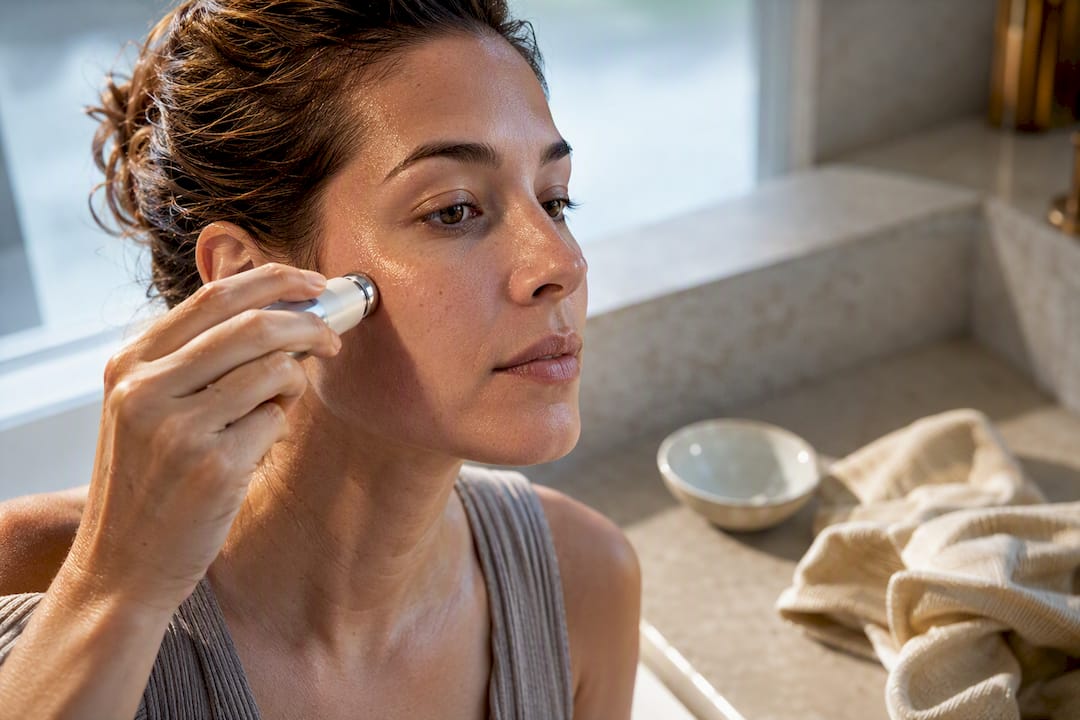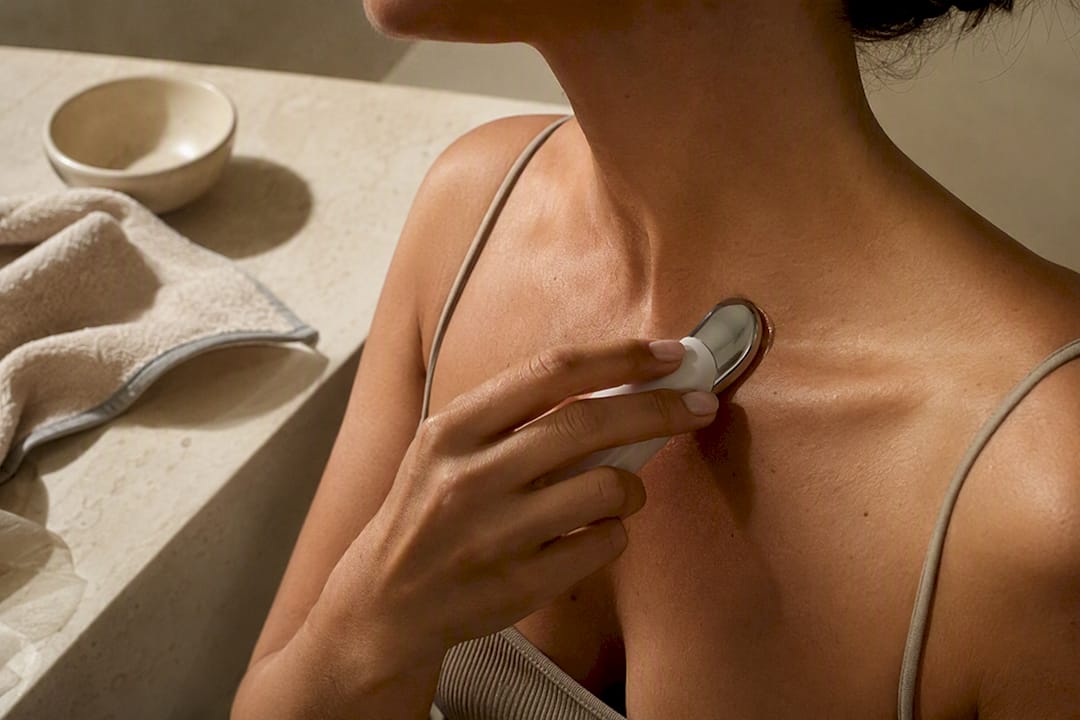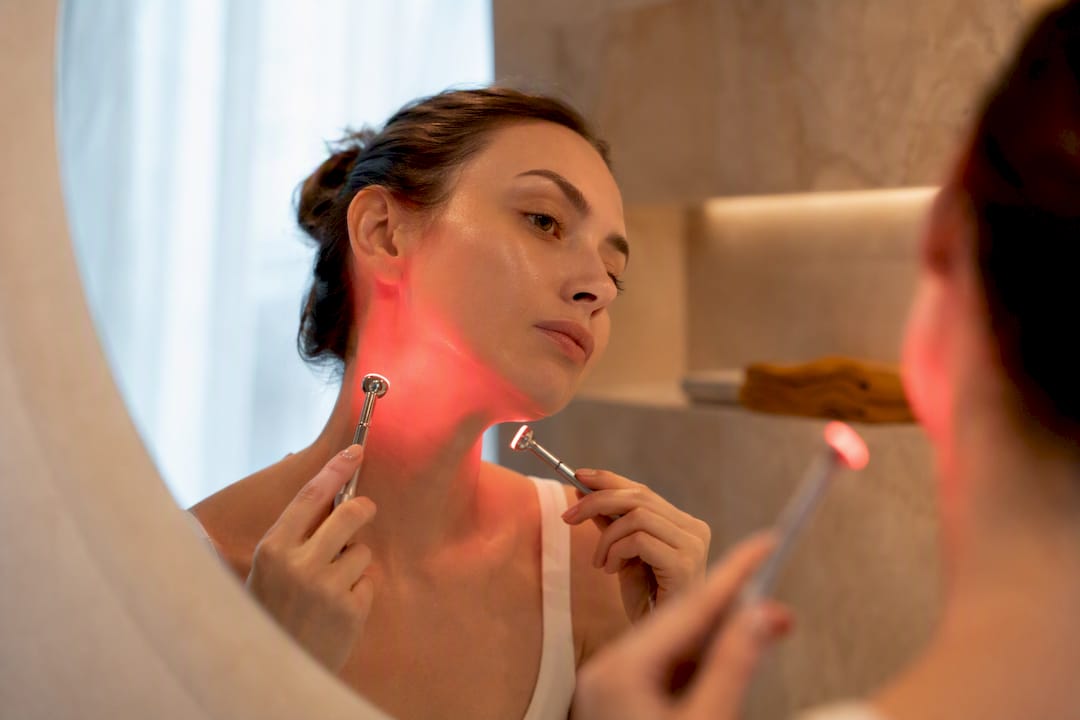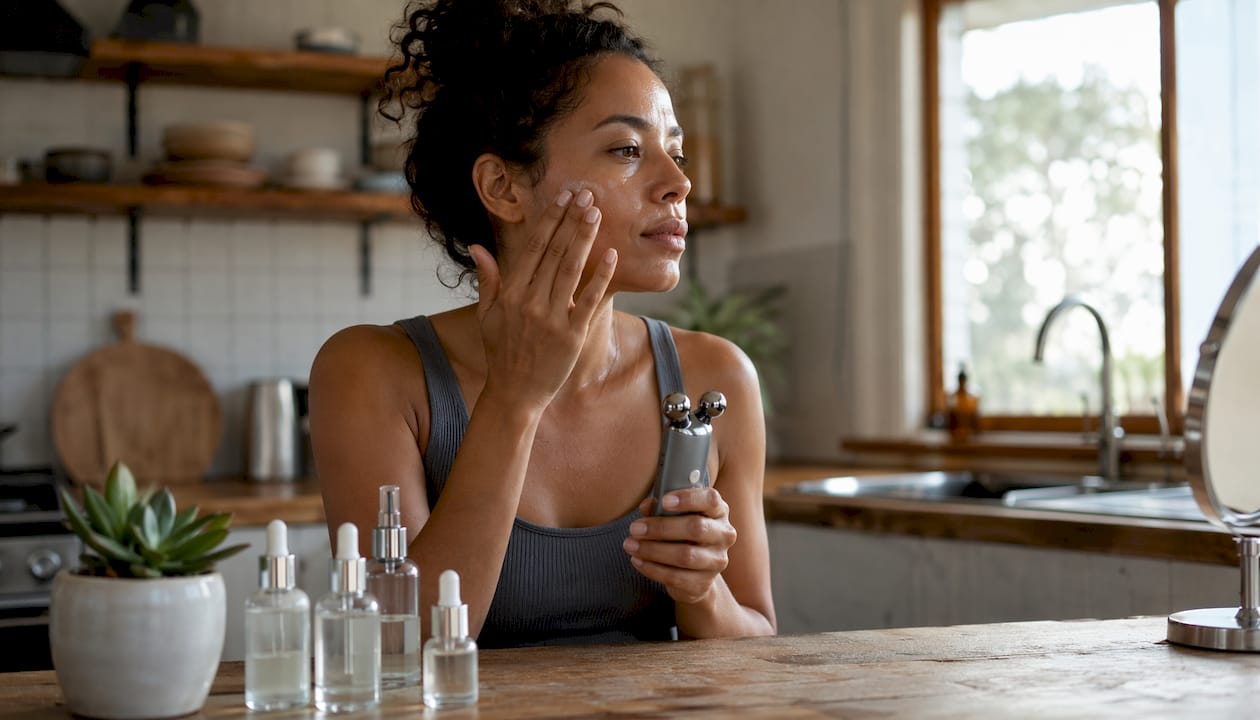
The best Foreo Bear serum alternatives are water-based, oil-free gels and serums that conduct microcurrent safely without the high price tag of FOREO’s proprietary formula. Pure aloe vera gel, the NuFACE Hydrating Leave-On Gel Primer, Neutrogena Hydro Boost Gel, and over-the-counter hyaluronic acid serums all provide the conductivity your device needs. None of them contain the peptide-and-squalane blend in FOREO’s Serum Serum Serum, but that is fine: the primary job of a conductive medium is to carry current safely into the tissue, not to deliver skincare treatment on its own.
Here is a quick comparison to orient you before diving into the details:
| Product | Best for skin type | Key ingredients | Texture and glide | Microcurrent compatibility | Price (approx.) |
|---|---|---|---|---|---|
| FOREO Serum Serum Serum | All types | Hyaluronic acid, squalane, antioxidants | Lightweight gel, excellent glide | Optimized for FOREO Bear | $49–$69 / bottle |
| NuFACE Hydrating Leave-On Gel Primer | Normal to dry | Hyaluronic acid, glycerin, aloe | Thick gel, long-lasting slip | Excellent for all microcurrent devices | $49–$69 |
| Pure Aloe Vera Gel (100%) | Sensitive, oily | Aloe vera, water | Moderate glide, absorbs quickly | Good; reapply mid-session | $5 |
| Neutrogena Hydro Boost Gel | Dry to combination | Hyaluronic acid, glycerin | Lightweight, non-sticky | Good conductivity | — |
| Ultrasound gel (medical grade) | All types | Water, carbomer | Thick, very long-lasting slip | Excellent; professional standard | — |
Each bottle of FOREO’s serum lasts several weeks with daily use, resulting in a significant yearly cost. Switching to a compatible alternative can cut that cost dramatically while keeping your treatments just as effective.

Table of Contents
- What ingredients should you avoid and embrace in microcurrent gels?
- Key properties that make a conductive gel or serum work
- How does FOREO Serum Serum Serum compare to popular alternatives?
- How to use conductive gels and serums with your microcurrent device
- Why conductive media are essential for microcurrent treatments
- Are alternative conductive serums safe? What dermatological testing tells us
- Glowera carries the devices and serums that actually work together
- Key Takeaways
What ingredients should you avoid and embrace in microcurrent gels?
The formula of your conductive medium matters more than most people realize. Get it wrong and you are not just wasting money — you are actively blocking the current your device is trying to deliver.
Ingredients to avoid
- Oils and fatty oils (mineral oil, jojoba oil, rosehip oil): non-water-soluble and coat the skin surface, blocking the conduction pathway. Oil and electricity do not mix.
- Silicones (dimethicone, cyclopentasiloxane): create a film that insulates the skin rather than conducting through it, reducing treatment efficacy and potentially triggering the Anti-Shock System to cut power.
- Fatty alcohols (cetyl alcohol, stearyl alcohol): thicken formulas and introduce a lipid barrier that impairs current flow.
- Alcohol denat. in high concentrations: dries the skin rapidly, which increases electrical resistance and leads to the prickly shock sensation mid-session.
- Fragrance and essential oils: not a conductivity issue, but a sensitization risk when skin is already receiving electrical stimulation. The combination can trigger reactions that would not occur with either alone.
- Thick emollients and waxes: anything that leaves a greasy or waxy residue will interfere with the device’s ability to detect adequate conductivity.
Ingredients to embrace
- Hyaluronic acid and sodium hyaluronate: draw moisture into the skin and maintain a hydrated surface layer, which is exactly what good conductivity requires.
- Glycerin: a humectant that keeps the product from drying out mid-session, sustaining slip and conductivity longer than most alternatives.
- Aloe vera: water-rich, soothing, and genuinely conductive. Works well as a standalone medium for shorter sessions.
- Panthenol (vitamin B5): supports moisture retention and skin comfort without adding any lipid barrier.
- Water as the primary base: the single most important factor. If water is not the first ingredient on the label, reconsider the product.
The rule is simple: water-based and oil-free. A water-based, lightweight serum with humectants like glycerin and panthenol prevents premature drying and keeps conductivity consistent from the first pass to the last.
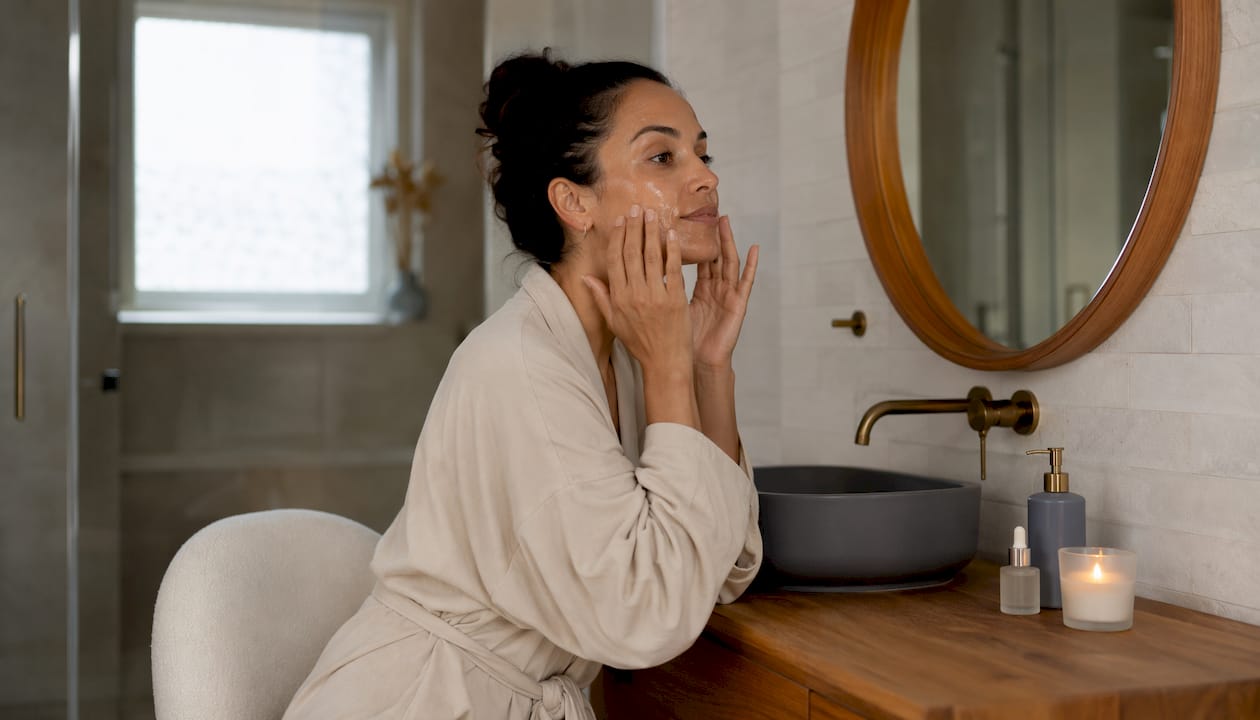
Key properties that make a conductive gel or serum work
Conductivity is the non-negotiable baseline, but a few other properties separate a frustrating session from a smooth one.
- Water-based formula: the foundation of every effective conductive medium. Without it, current cannot travel efficiently through the skin.
- Lightweight, non-sticky texture: heavy or tacky products drag the device heads across the skin, causing uneven pressure and inconsistent current delivery.
- Good slip and glide: the device should move across your face without friction. If you feel resistance, you either need more product or a different formula.
- Slow absorption rate: a serum that sinks in within 30 seconds will leave dry patches before you finish a single treatment zone. Look for glycerin or panthenol in the formula to slow absorption.
- Consistent conductivity: the FOREO Bear’s Anti-Shock System assesses skin conductivity 200 times per second and reduces power output when it detects insufficient contact. A product that dries unevenly will trigger this repeatedly, cutting your treatment short.
- Compatibility with your skin type: oily skin types often do better with thinner, faster-absorbing formulas; dry skin benefits from richer humectant blends that stay wet longer.
- Availability and price: the best conductive medium is one you will actually use consistently. A $5 aloe vera gel you restock every month beats a $65 bottle you ration.
Pro Tip: Test any new conductive medium on the back of your hand first. Drag your finger across the skin with the product applied. If it feels sticky or leaves a residue, it will drag on your face too.
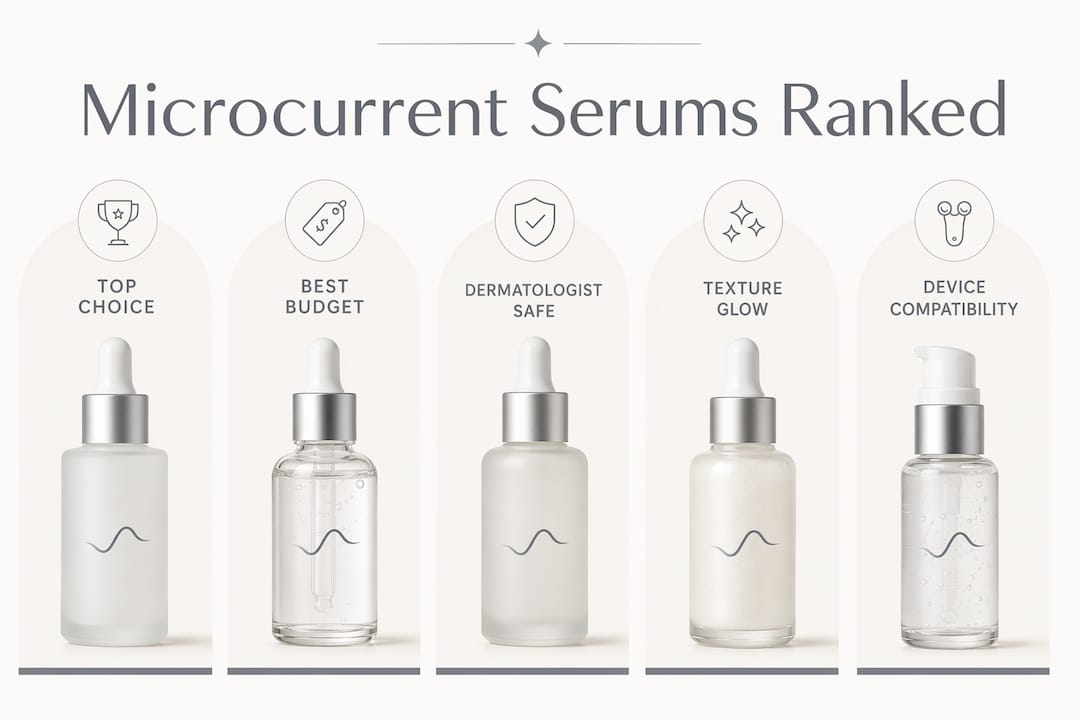
How does FOREO Serum Serum Serum compare to popular alternatives?
| Product | Best for skin type | Ingredients | Texture and glide | Device compatibility | Price |
|---|---|---|---|---|---|
| FOREO Serum Serum Serum | All types | Hyaluronic acid, squalane, antioxidants | Lightweight gel, excellent | Optimized for FOREO Bear | $49–$69 |
| NuFACE Hydrating Leave-On Gel Primer | Normal to dry | Hyaluronic acid, glycerin, aloe | Thick gel, long-lasting | All microcurrent devices | $49–$69 |
| Pure Aloe Vera Gel | Sensitive, oily | Aloe vera, water | Moderate, absorbs faster | Good; reapply mid-session | $5 |
| Neutrogena Hydro Boost Gel | Dry to combination | Hyaluronic acid, glycerin | Lightweight, non-sticky | Good conductivity | — |
| Ultrasound gel | All types | Water, carbomer | Very thick, long-lasting | Excellent; professional use | — |
| Hyaluronic acid serum (OTC) | All types | Hyaluronic acid, water | Thin, absorbs quickly | Good; layer generously | — |
FOREO Serum Serum Serum is purpose-built for the Bear family of devices. It contains hyaluronic acid and squalane for hydration and skin barrier support, plus antioxidants to protect against free radical damage. The formula is fragrance-free, non-greasy, and designed to stay wet long enough for a full session. The catch is the price: at $49–$69 per bottle with a 6–8 week lifespan at daily use, the annual cost is significant.
NuFACE Hydrating Leave-On Gel Primer is the closest like-for-like alternative. It was formulated specifically for microcurrent use, contains hyaluronic acid and glycerin for sustained slip, and works across all device types including the Bear and Bear mini. The thicker texture means it stays wet longer than most serums, which is a genuine advantage for longer sessions.
Pure aloe vera gel is the budget pick that users consistently report works well as a conductive medium. It lacks the skincare actives in FOREO’s formula, but it conducts current effectively. The main limitation is absorption speed: on dry or warm skin, it can start to dry within a few minutes, so you will need to reapply or mist mid-session.
Neutrogena Hydro Boost Gel is a practical middle-ground option. It is widely available, affordable, and its hyaluronic acid and glycerin base provides decent conductivity and glide. It is not formulated specifically for microcurrent use, so check the full ingredient list to confirm there are no silicones or oils in the version you buy.
Ultrasound gel is what medical and aesthetic professionals use as a conductive medium. It is water-based, carbomer-thickened, and stays wet for extended sessions. It has zero skincare actives, but it conducts current as well as anything on this list. The texture is thicker than most people prefer for at-home use, and it can feel clinical rather than luxurious.
Over-the-counter hyaluronic acid serums are the most versatile option. Brands like The Ordinary offer water-based, oil-free formulas at low price points that work well as conductive media. Apply generously and layer if the formula is thin.
One thing worth clarifying: the FOREO Bear 2 is marketed as “gel-free,” which confuses a lot of people. It does not mean you use it on bare skin. It means you use a serum-based conductive medium instead of a traditional thick gel activator. Skip the conductive medium entirely and the Anti-Shock System will detect high resistance and cut the output, making your session essentially useless.
How to use conductive gels and serums with your microcurrent device
Getting the application right matters more than which product you choose. Most discomfort during microcurrent sessions comes down to technique, not the device.
- Cleanse first: start with clean, dry skin. Residual sunscreen, makeup, or moisturizer can interfere with conductivity and introduce ingredients that block current.
- Apply section by section: do not spread the product across your entire face at once. Apply to one zone (cheek, jawline, forehead) and treat that zone before moving on. This prevents the product from drying before you reach it.
- Use enough product: the device heads should glide without any friction. If you feel dragging, add more. Skimping on product is the most common cause of discomfort.
- Keep a mister nearby: if your session runs longer than a few minutes or your skin absorbs product quickly, a mist of water mid-session reactivates conductivity without requiring you to stop and reapply.
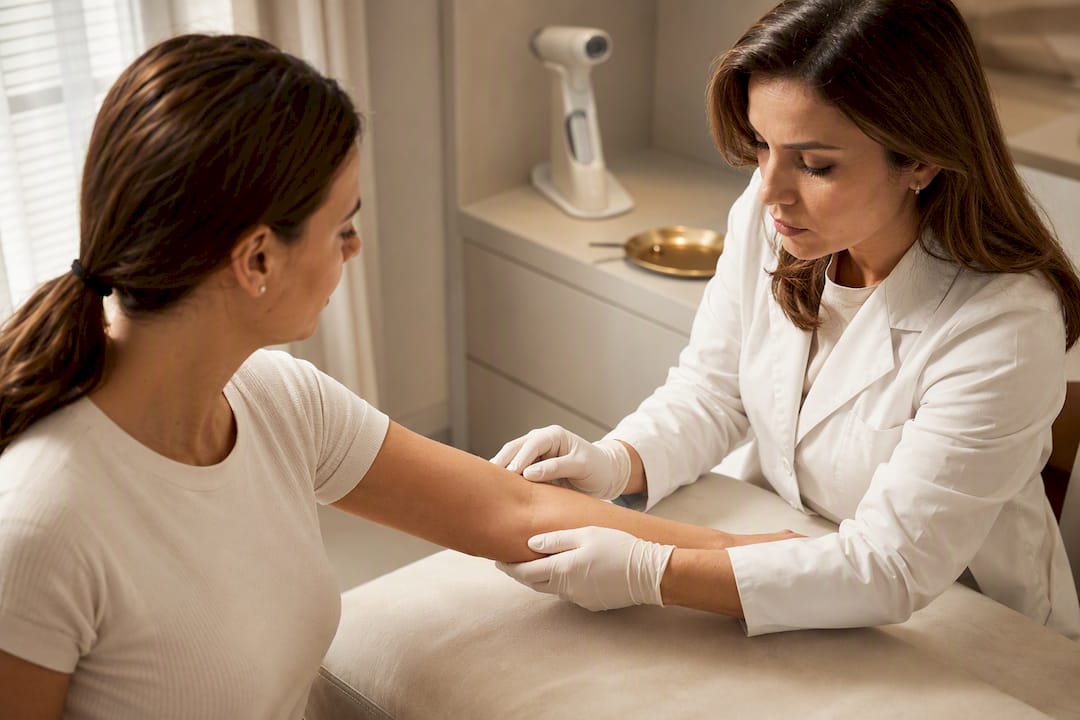
- Patch test any new alternative: apply a small amount to the inside of your wrist or behind your ear 24 hours before your first full session. Skin under electrical stimulation can react differently than it would to a product applied passively.
- Follow up with your regular skincare: the conductive medium is not your treatment serum. After the session, remove any residue and apply your actives, moisturizer, and SPF as usual.
Pro Tip: Applying your conductive medium in sections rather than all at once is often more effective than switching products. If you are experiencing prickly sensations, try this technique before assuming your alternative serum is incompatible.
The Anti-Shock System in the FOREO Bear detects conductivity 200 times per second. When the medium dries or coverage is uneven, resistance spikes and the device reduces output. You may not even notice it happening, but your treatment becomes less effective. Consistent, generous application is the fix.
Why conductive media are essential for microcurrent treatments
The conductive medium is not a skincare product that happens to work with your device. It is the mechanism by which the device works at all.
Microcurrent devices deliver low-level electrical current to the facial muscles and tissue beneath the skin. For that current to travel safely and effectively, it needs a medium that bridges the device’s metal contacts and the skin’s surface. Without it, the current meets high resistance at the skin barrier, which either triggers the safety system to cut power or, in devices without that protection, causes discomfort.
- Primary function is current delivery, not skincare: the actives in proprietary serums like hyaluronic acid and squalane are a bonus, not the point. Affordable alternatives that lack those actives still perform the core job.
- Gel-free does not mean medium-free: the FOREO Bear 2 uses T-Sonic pulsations and a serum-based medium rather than a thick gel. The serum replaces the gel as the conductive layer; it does not eliminate the need for one.
- Drying causes prickly shocks: when the conductive medium absorbs or evaporates, electrical resistance increases sharply. The result is a prickly or stinging sensation as the current concentrates at points of contact rather than spreading evenly.
- Conductivity detection is continuous: the Anti-Shock System in the Bear family checks conductivity hundreds of times per second. A product that dries unevenly will trigger repeated power reductions throughout your session.
- Alternatives conduct current effectively: ultrasound gel, aloe vera, and hyaluronic acid serums all provide the water-based conductive pathway the device needs. The absence of peptides or antioxidants does not impair the electrical function.
The practical takeaway: choose an alternative based on its water content, texture, and how long it stays wet on your skin type. The skincare benefits you want from actives can come from the products you apply after the session.
Are alternative conductive serums safe? What dermatological testing tells us
Safety is the right question to ask before swapping out a proprietary formula, and the answer is more reassuring than the marketing around branded serums suggests.
The FOREO Serum Serum Serum is dermatologically tested and formulated to work with the Bear device’s electrical output. That matters. But the safety bar for a conductive medium is not as high as it is for an active treatment serum. The product sits on the skin surface during a session and is rinsed or wiped off afterward. It does not penetrate deeply in the way a leave-on retinol or acid treatment does.
Pure aloe vera gel, when sourced from a reputable brand and free of added alcohols, fragrances, and colorants, has a well-established safety profile for topical use. A PubMed-indexed review confirms aloe vera’s broad tolerability and low sensitization potential in cosmetic applications. For most skin types, it is one of the gentler options on this list.
The NuFACE Hydrating Leave-On Gel Primer is formulated specifically for microcurrent use and undergoes the same category of dermatological testing as branded device serums. Neutrogena Hydro Boost Gel is a mass-market product with a long safety record across diverse skin types, though it is not designed for microcurrent use specifically.
A few practical safety points worth knowing:
- Patch test before the first session: apply the alternative to a small area and wait 24 hours. Skin under microcurrent stimulation can be more reactive than usual, so a product that seems fine in normal use could cause a reaction during treatment.
- Avoid products with known sensitizers: fragrance, essential oils, and high-concentration alcohol are the main culprits. Check the ingredient list, not just the marketing claims.
- Discontinue if you notice redness or irritation: some reactions are contact dermatitis from the product itself; others are from the combination of the product and electrical stimulation. Either way, stop and reassess.
- Medical-grade ultrasound gel is among the safest options available. It is formulated for use on skin during clinical procedures, is free of common sensitizers, and is tested to a higher standard than most cosmetic products.
The honest summary: most water-based, oil-free alternatives are safe for the majority of skin types when patch tested first. The risk is not higher than using any new skincare product. What changes with microcurrent is that the electrical stimulation can amplify a reaction that might otherwise be mild, so the patch test step is not optional.
Glowera carries the devices and serums that actually work together
If you have been spending $50–$69 every couple of months on FOREO’s proprietary serum, you already know the math does not favor the brand’s preferred setup. Glowera stocks the full range of certified microcurrent devices from FOREO, NuFACE, ZIIP Beauty, and Medicube alongside compatible water-based conductive serums, so you can find the right pairing without guesswork.
Every product Glowera sells is 100% authentic, sourced directly from authorized brand channels. That matters for microcurrent devices specifically: counterfeit or gray-market devices often lack the safety certifications (including FDA clearance) that protect you during treatment. Glowera’s team can also help you match a conductive serum to your specific device and skin type, which is the kind of guidance that saves you from buying three products before finding one that works. Browse the full selection at Glowera’s beauty tech store and get the combination right from the start.
Key Takeaways
The most effective Foreo Bear serum alternatives are water-based, oil-free products with humectants like glycerin and hyaluronic acid that maintain conductivity throughout a full microcurrent session.
| Point | Details |
|---|---|
| Water-based formula is non-negotiable | Oil, silicone, and fatty alcohol ingredients block microcurrent conduction and reduce treatment efficacy. |
| Affordable alternatives genuinely work | Pure aloe vera gel, NuFACE Gel Primer, and OTC hyaluronic acid serums conduct current effectively without proprietary actives. |
| FOREO serum costs $49–$69 per bottle | At daily use, that is roughly $300–$450 per year; compatible alternatives cut that cost significantly. |
| Application technique matters most | Applying section by section and misting mid-session prevents drying and eliminates most shock sensations. |
| Glowera for device and serum pairing | Glowera stocks authentic microcurrent devices and compatible serums with expert guidance to match the right combination. |