The most reliable way to firm skin after 50 combines a consistent, age-tailored topical routine with targeted energy-based treatments, whether at-home devices or in-office procedures. Moisturizers alone won’t reverse structural laxity, but the right combination of retinoids, barrier support, and collagen-stimulating technology can produce visible, lasting improvement. Realistic expectations matter: topical actives take 3–6 months to show structural changes, while devices and clinic treatments deliver results over weeks to months depending on the method.
Start here today:
- Apply broad-spectrum SPF 30+ every morning, without exception.
- Add a low-strength retinoid two nights per week and build from there.
- Hydrate with ceramide-rich moisturizer morning and night.
- Book a dermatologist consultation if laxity is moderate to severe.
TL;DR: Topicals need 3–6 months for collagen-level changes. At-home devices (microcurrent, LED, RF) show results over several weeks to months with consistent use. In-office energy treatments peak around 2–6 months. Surgery delivers the most dramatic correction for advanced laxity, with full settling over several months.
Table of Contents
- Why does skin loosen after 50?
- What does an age-specific daily routine look like?
- Which active ingredients actually help mature skin?
- Can at-home devices really move the needle after 50?
- What in-office procedures are available for lifting and firming?
- How do you choose the right path for your skin?
- When will you actually see results?
- What are the safety risks and how do you manage them?
- Key Takeaways
- Glowera brings professional-grade devices to your home routine
- Useful sources and further reading
Why does skin loosen after 50?
The structural changes that drive skin laxity after 50 are biological, not cosmetic. Understanding them helps you pick interventions that actually address the root cause rather than just the surface.
Collagen and elastin loss are the primary drivers. Studies report up to a 30% loss of skin collagen in the first five years after menopause, a rate far faster than the gradual decline that precedes it. Elastin, the protein that lets skin snap back after stretching, degrades at the same time. The result is skin that folds and sags rather than bouncing back.
Hormonal shifts compound the problem. Estrogen supports collagen synthesis, hyaluronic acid production, and sebum output. As estrogen drops during and after menopause, skin becomes drier, thinner, and less able to retain moisture. This is why skin that felt resilient at 45 can feel noticeably different by 55.
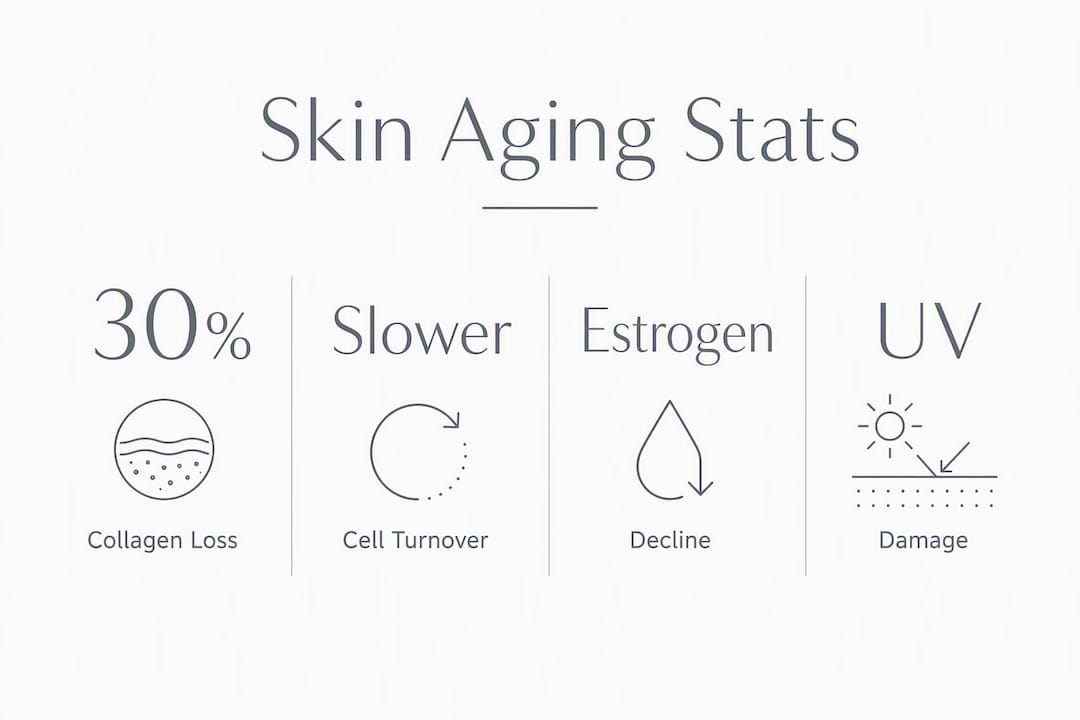
Slower cell turnover means the skin’s surface renews more slowly, reducing radiance and making it harder for active ingredients to penetrate efficiently. Blood supply to the dermis also decreases with age, slowing healing and reducing the delivery of nutrients to skin cells.
Cumulative UV damage is the single largest external contributor. Decades of sun exposure degrade collagen fibers and elastin, creating what dermatologists call photoaging. Smoking accelerates the same process through oxidative stress, and significant weight loss can leave skin without the underlying volume that previously kept it taut.
The practical implication: a moisturizer can improve how skin looks and feels, but it cannot rebuild the structural proteins that have been lost. That requires either stimulating new collagen production (retinoids, energy devices, professional treatments) or replacing lost volume (injectables). Both take time.
What does an age-specific daily routine look like?
Skin after 50 needs a routine built around barrier repair, targeted actives, and strict sun protection. The goal is to support what the skin can no longer do on its own, without overwhelming it with too many aggressive ingredients at once.
Morning routine
- Gentle cleanser. Use a low-pH, fragrance-free cleanser that removes overnight product without stripping. Avoid foaming cleansers with sulfates, which can disrupt the barrier.
- Antioxidant serum. Apply a vitamin C serum (10–15% L-ascorbic acid) or a peptide serum. Vitamin C supports collagen synthesis and neutralizes free radicals before sun exposure hits. A product like the FOREO SUPERCHARGED™ Triple-Action Firming Serum combines peptides and antioxidants in one step.
- Hyaluronic acid. Apply to slightly damp skin to draw moisture into the surface layers.
- Moisturizer with ceramides or squalane. Richer formulas work for most skin types after 50. Ceramides restore the lipid barrier; squalane is lightweight and non-comedogenic.
- Broad-spectrum SPF 30+. This is non-negotiable. Dermatological guidelines recommend SPF 30–50 for older skin, and reapplication every two hours during outdoor exposure matters as much as the morning application.
Evening routine
- Double cleanse if you wore SPF or makeup. An oil-based cleanser first, then a gentle water-based one.
- Retinoid. Start with retinol 0.025–0.05% two nights per week. After four to six weeks with no irritation, increase to three nights, then every other night. Prescription tretinoin is more potent but requires a dermatologist’s guidance.
- Hydrating night cream. Layer ceramides and a richer emollient over the retinoid once it has absorbed (about 20 minutes). This buffer method reduces dryness without blocking the retinoid’s effect.
- Exfoliation: once per week maximum. A low-strength AHA (lactic acid 5–8%) on a non-retinoid night. Never layer exfoliants with retinoids on the same evening.
Neck, décolleté, and hands
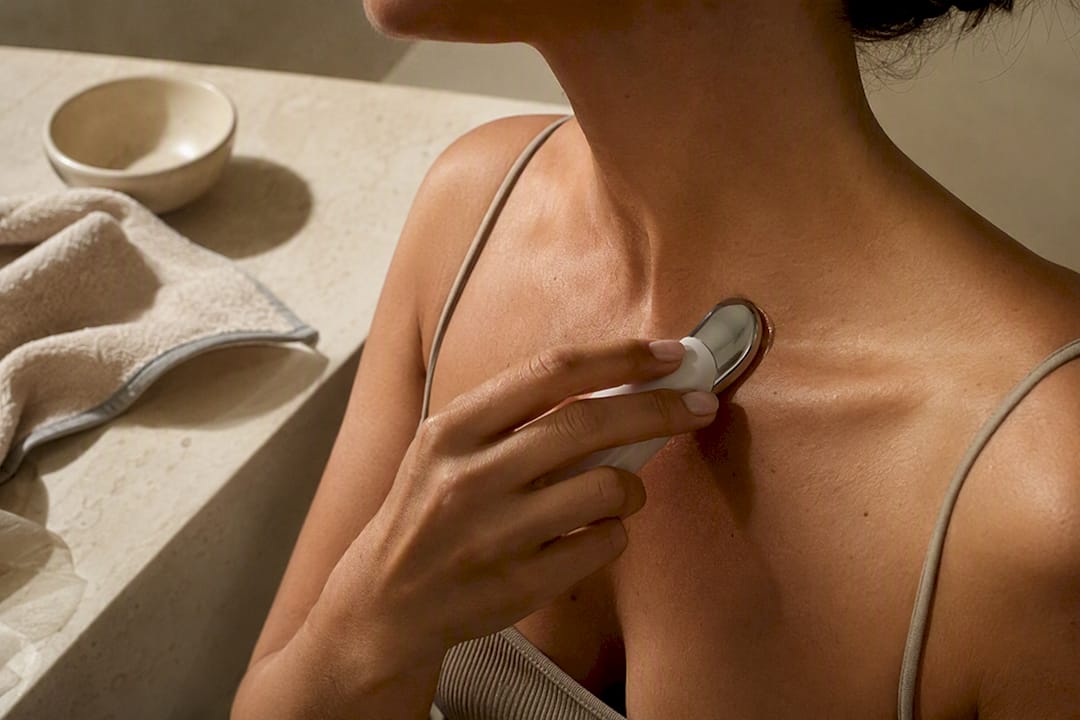
Extend every step of your face routine down to the neck and chest. These areas have thinner skin and fewer sebaceous glands, making them more vulnerable to dryness and photoaging. Hands benefit from the same SPF and ceramide moisturizer applied to the face.
Pro Tip: Apply your moisturizer within three minutes of stepping out of the shower. Aging skin loses water faster than younger skin, and this window locks in hydration before transepidermal water loss accelerates. This is sometimes called the “3-minute rule” in clinical practice.
Which active ingredients actually help mature skin?
The short answer: retinoids, peptides, vitamin C, hyaluronic acid, and ceramides. Each works differently, and how you combine them matters as much as which ones you choose.
| Ingredient | Primary Action | Best Time to Use | Key Caution |
|---|---|---|---|
| Retinoids (retinol, tretinoin) | Stimulates collagen; speeds cell turnover | Evening only | Start slow; causes dryness/peeling initially |
| Peptides | Signal proteins that support collagen structure | AM or PM | Generally well tolerated; avoid mixing with strong acids |
| Vitamin C (L-ascorbic acid) | Antioxidant; supports collagen synthesis; brightens | Morning | Unstable in light/air; store in dark bottle |
| Hyaluronic acid | Draws water into skin; plumps surface | AM and PM | Apply to damp skin; seal with moisturizer |
| Ceramides | Restores lipid barrier; reduces water loss | AM and PM | No significant cautions; suitable for all skin types |
| Squalane | Lightweight emollient; mimics skin’s natural oils | AM and PM | Non-comedogenic; good for sensitive or dry skin |
| AHAs (lactic, glycolic acid) | Exfoliates dead cells; improves texture | Evening, 1x/week max | Never combine with retinoids on the same night |
Retinoids remain the most evidence-backed topical option for collagen stimulation. They work by binding to retinoic acid receptors in skin cells and upregulating collagen gene expression. The catch: they cause initial dryness and sensitivity, which is why slow introduction is critical for skin over 50. Expect to wait 3–6 months to evaluate structural improvements because collagen synthesis and cell renewal both slow with age.
Peptides are a lower-irritation alternative or complement. Signal peptides (like Matrixyl/palmitoyl pentapeptide-4) prompt fibroblasts to produce more collagen. They won’t match the potency of tretinoin, but they’re well tolerated daily and pair well with retinoids on off-nights. The Medicube AGE-R Booster Gel Serum is one example of a peptide-forward formula designed for mature skin.
Vitamin C works best in the morning, where it neutralizes UV-generated free radicals and supports the collagen your retinoid is building at night. Pair it with SPF for a meaningful antioxidant defense. Look for L-ascorbic acid at 10–15% in a pH-appropriate formula (around 3.5).
Hyaluronic acid and ceramides are the foundation. Skincare after 50 should prioritize barrier support, conservative actives, and strict daily sunscreen use; aggressive routines can backfire by stripping the barrier and triggering inflammation. Ceramides and squalane rebuild that barrier and reduce transepidermal water loss, which worsens with age.
One practical note on heavy formulas: rich, occlusive creams can sometimes trap heat and worsen facial flushing common after menopause. Lighter ceramide-and-squalane emollients often work better for long-term daily comfort.
Can at-home devices really move the needle after 50?
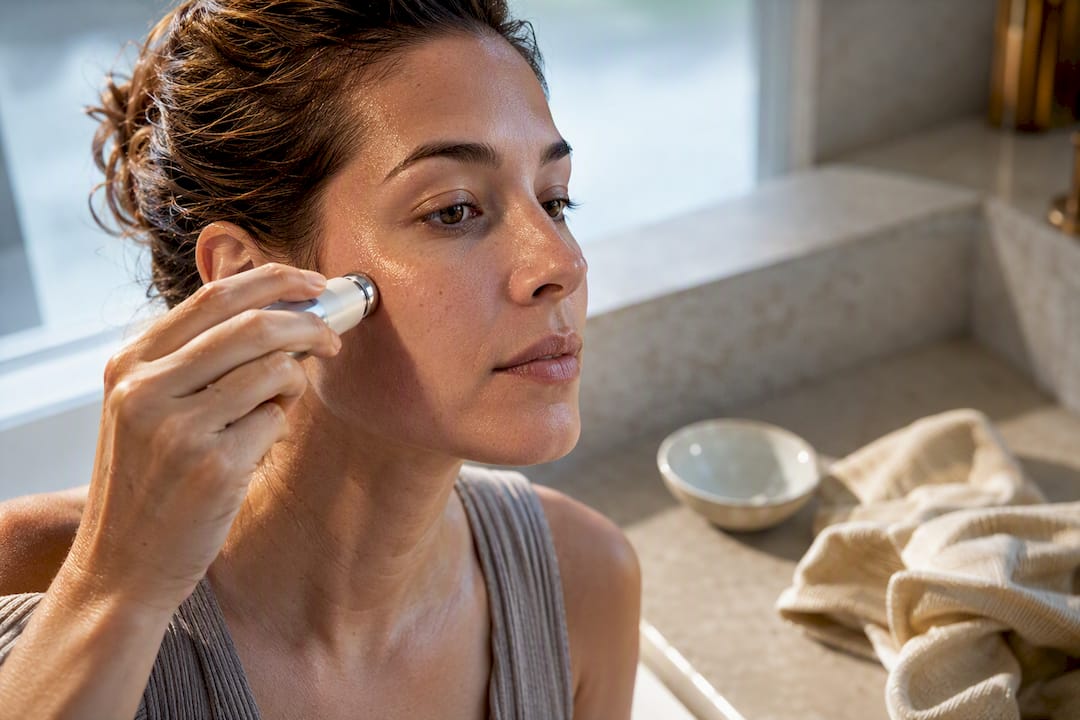
At-home devices produce modest to moderate tightening over time. They won’t replicate the results of a clinical HIFU or ablative laser session, but for mild to moderate laxity, consistent use of the right device category can produce visible improvement, especially when paired with a solid topical routine. The key word is consistent: these devices require regular sessions over weeks and months, not one-time use.

| Device Type | How It Works | Effectiveness (Home) | Clinic Equivalent | Typical Home Cost | Sessions/Maintenance | Downtime | Best For |
|---|---|---|---|---|---|---|---|
| Microcurrent | Low-level electrical current re-educates facial muscles and stimulates ATP production | Mild lifting and contouring; cumulative over weeks | Professional microcurrent facial | — | 5x/week initially; 2–3x/week maintenance | None | Mild laxity; facial contouring |
| LED (red/near-infrared) | Photobiomodulation stimulates fibroblasts; supports collagen production | Mild improvement in texture and firmness | Clinical LED panels | — | 3–5x/week, 10–20 min | None | Mild laxity; skin quality; complements other devices |
| RF (radiofrequency) | Heats dermis to stimulate collagen remodeling | Moderate tightening with consistent use | In-office RF (Thermage, Morpheus8) | — | 1–2x/week; monthly maintenance | Minimal (mild redness) | Mild to moderate laxity |
Microcurrent devices work by delivering a gentle electrical current that mimics the body’s own bioelectric signals, stimulating the facial muscles and increasing cellular energy (ATP). Brands like NuFACE have built a strong clinical and consumer track record. Results are cumulative: most users see visible contouring after four to six weeks of consistent daily use, with maintenance sessions keeping results stable.
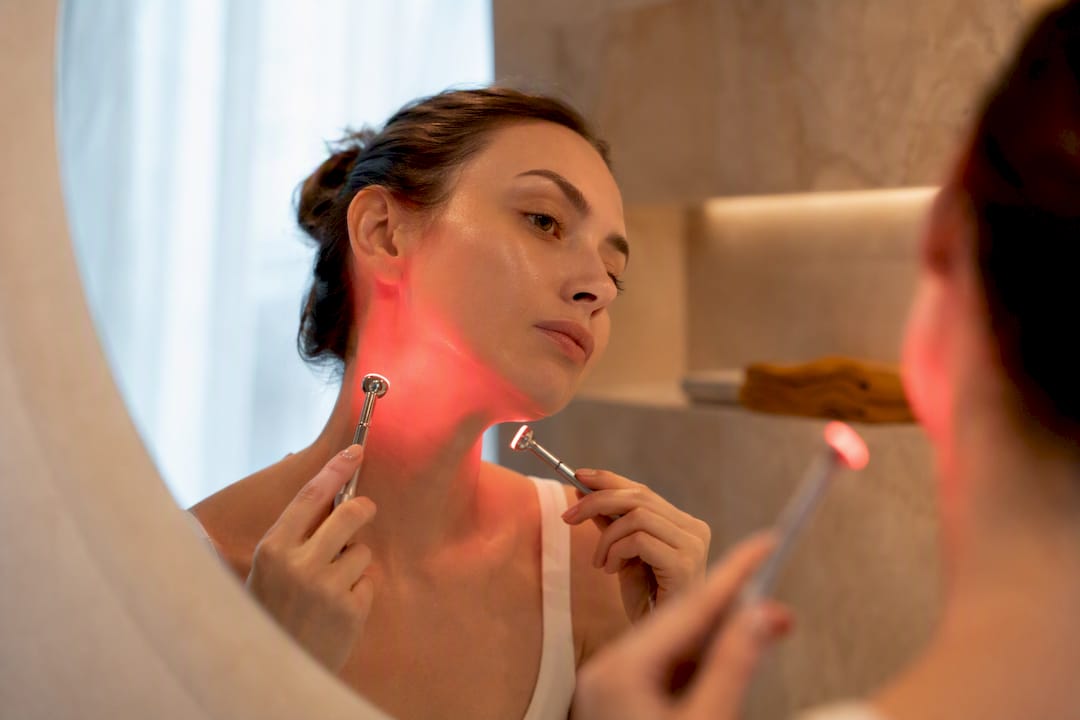
LED therapy, particularly red light (630–700nm) and near-infrared (800–850nm), supports collagen production through photobiomodulation. It’s the gentlest option and works well as a complement to microcurrent or RF rather than a standalone firming treatment. The FOREO UFO™ 3 combines LED with thermal and cryo modes for a more complete at-home treatment.
Home RF devices heat the dermis to trigger collagen remodeling, similar to clinical RF but at lower energy levels. The CurrentBody RF radio frequency skin tightening device is a well-regarded option in this category. Expect to use it consistently for 8–12 weeks before evaluating results, and plan monthly maintenance sessions after that.
Pro Tip: Always apply a conductive gel before using microcurrent or RF devices. The gel improves electrical conductivity, protects the skin surface, and allows the device to glide without friction. Using a peptide or hyaluronic acid serum as your conductive layer means you’re treating and hydrating simultaneously.
Glowera carries microcurrent, LED, and RF devices from verified brands including NuFACE, ZIIP Beauty, CurrentBody, FOREO, and Medicube. All devices are 100% authentic, which matters in a market where counterfeit beauty tech is common. For readers exploring the full range, the LED skincare category and the microcurrent lineup are good starting points.
What in-office procedures are available for lifting and firming?
Professional treatments cover a wide spectrum, from injectables that restore volume to ablative lasers that resurface the skin’s structure. The right choice depends on your laxity level, budget, downtime tolerance, and skin tone.
| Treatment | Mechanism | Effectiveness | Downtime | Typical Cost (US) | Sessions Needed | Best Candidate |
|---|---|---|---|---|---|---|
| Botox / Neuromodulators | Relaxes muscles; softens dynamic wrinkles | Moderate (wrinkle reduction, not tightening) | None | — | Every 3–4 months | Mild to moderate wrinkles |
| Dermal fillers (HA) | Restores volume; lifts folds | Moderate to high (volume correction) | Minimal (1–2 days) | — | As needed (1–2 years) | Volume loss; nasolabial folds |
| HIFU (Ultherapy) | Focused ultrasound heats deep structural layer | Moderate tightening; gradual | None to minimal | — | 1 session; optional touch-up at 6–12 months | Mild to moderate laxity |
| RF (Thermage, Morpheus8) | Heats dermis/subdermal tissue | Moderate to high (especially Morpheus8) | 1–5 days (Morpheus8) | — | 1–3 sessions | Moderate laxity; skin texture |
| Laser resurfacing (ablative) | Removes outer skin layers; triggers collagen remodeling | High | 5–7 days | — | 1–2 sessions | Moderate to severe laxity; texture |
| Microneedling (with RF) | Creates micro-injuries; stimulates collagen | Moderate | 2–3 days | — | 3–6 sessions | Mild to moderate laxity; texture |
| Surgical facelift | Repositions tissue; removes excess skin | Very high | 2–4 weeks | — | Once (with possible revision) | Severe laxity |
HIFU (Ultherapy) reaches the SMAS layer, the same structural layer addressed in a surgical facelift, using focused ultrasound. Improvement is gradual, typically visible over 2–3 months with peak results around 6 months, and some patients benefit from a second session. It’s a strong option for mild to moderate laxity in the 50s when surgery isn’t desired.
Laser resurfacing is among the most effective non-surgical options for skin texture and tightening, but it carries the highest downtime in this category. Expect roughly 5–7 days of recovery, with redness persisting for several weeks. Ablative CO2 and erbium lasers are the most potent; fractional versions reduce downtime but may require more sessions. People with darker skin tones face a higher risk of post-inflammatory hyperpigmentation with ablative lasers and should discuss this explicitly with their provider.
Surgical facelift remains the most effective option for advanced laxity. No non-surgical treatment can replicate the structural repositioning a skilled surgeon achieves. If your skin has significant jowling, deep neck laxity, or excess skin, the honest answer is that energy devices and injectables will produce limited results. A consultation with a board-certified plastic surgeon gives you a realistic picture.
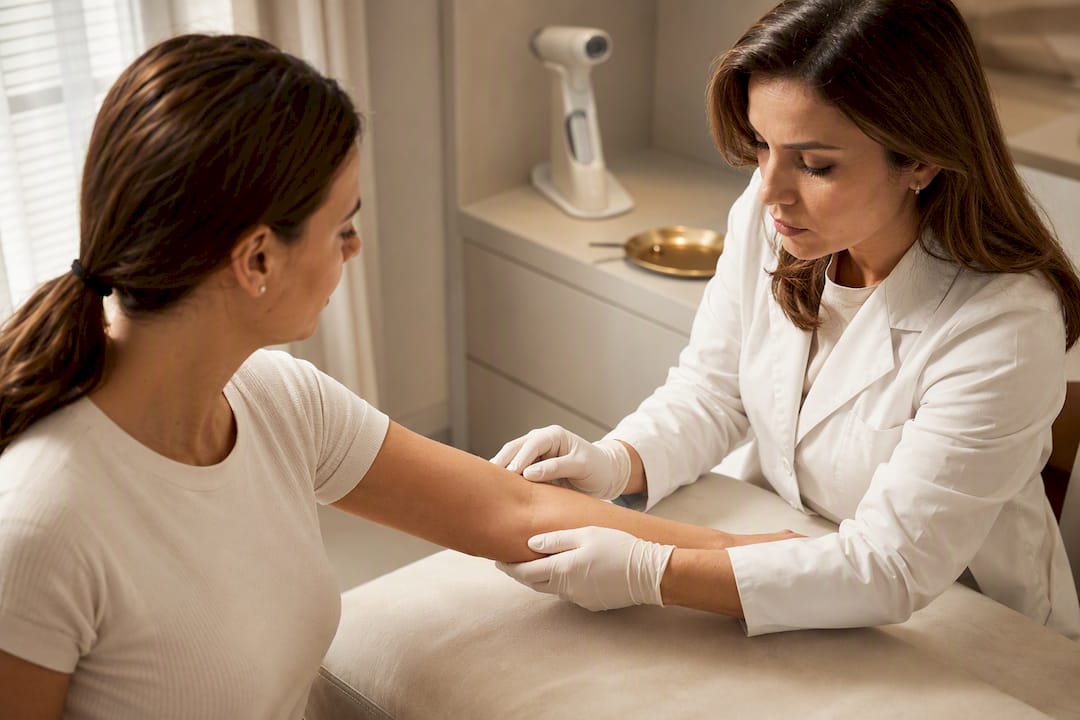
When choosing a provider, verify that the clinic uses FDA-cleared devices (for US patients), that the operator is trained and certified on the specific device, and that you receive a written treatment plan with realistic outcome expectations before any money changes hands.
How do you choose the right path for your skin?
The decision comes down to four variables: how much laxity you have, how much downtime you can accept, your budget, and your skin tone (which affects laser and RF risk profiles).
Self-assess your laxity level:
- Mild: Skin feels slightly less firm; fine lines visible at rest; no significant sagging or jowling. At-home devices and a strong topical routine are a reasonable starting point.
- Moderate: Visible jowling, deeper nasolabial folds, or neck laxity beginning. In-office energy treatments (HIFU, RF, microneedling) are worth a dermatologist consultation.
- Severe: Significant sagging, excess skin, or deep structural changes. Surgical consultation is the most honest next step.
Questions to ask at a consultation:
- What device or technique do you use, and is it FDA-cleared for this indication?
- How many sessions do you recommend, and what is the realistic timeline for results?
- What are the specific risks for my skin tone and health history?
- Can I see before-and-after photos of patients with similar laxity levels?
- What is your protocol if I experience an adverse reaction?
Red flags to watch for:
- No written treatment plan or outcome discussion before payment.
- Pressure to purchase a multi-session bundle at the first consultation.
- Vague answers about device brand or operator certification.
- Promises of “facelift results” from a single non-surgical session.
- Unlicensed or uncertified practitioners offering medical-grade procedures.
Pro Tip: Take standardized photos in the same lighting and angle every four weeks. Progress in skin firming is gradual enough that you won’t notice it day-to-day, but a side-by-side comparison at three months often shows clear improvement that keeps you on track.
When will you actually see results?
Timeline expectations vary by treatment type, and confusing them is one of the main reasons people abandon effective routines too early.
Topical actives (retinoids, peptides, vitamin C): Surface texture and hydration improve within two to four weeks. Structural changes, meaning actual collagen remodeling, take 3–6 months of consistent use to evaluate. If you’re not seeing any change at six months, reassess the product strength or consider adding a device or professional treatment.
At-home devices:
- Microcurrent: Visible contouring and lift after 4–6 weeks of daily use; maintain with 2–3 sessions per week.
- LED: Gradual improvement in skin quality and mild firmness over 8–12 weeks; best as a long-term maintenance tool.
- Home RF: Moderate tightening visible after 8–12 weeks of consistent weekly sessions; monthly maintenance sustains results.
In-office energy treatments:
- HIFU/Ultherapy: Gradual improvement over 2–3 months; peak results around 6 months. Many patients benefit from a touch-up session at 6–12 months.
- RF (Thermage, Morpheus8): Visible improvement over 2–4 months; results last 1–2 years with maintenance.
- Laser resurfacing: Immediate texture change post-healing; collagen remodeling continues for 3–6 months.
Surgery: Immediate visible correction post-healing; full settling of swelling and final results over 3–6 months.
Variability is real. Hormonal status, baseline skin quality, genetics, and lifestyle habits (smoking, sun exposure, sleep) all affect how quickly and dramatically skin responds. The most reliable predictor of success is consistency, not intensity.
What are the safety risks and how do you manage them?
Most at-home devices and professional treatments are safe when used correctly, but every intervention carries a risk profile worth knowing before you start.
Common short-term effects:
- Redness and mild swelling after RF, microneedling, or laser (resolves within hours to days).
- Temporary sensitivity or dryness when introducing retinoids.
- Mild tingling or muscle twitching during microcurrent use (normal and expected).
Procedure-specific cautions:
- Ablative lasers: Higher risk of post-inflammatory hyperpigmentation (PIH) in Fitzpatrick skin types IV–VI. Always discuss this with your provider and confirm they have experience treating your skin tone.
- RF and microneedling: Contraindicated if you have active acne, open wounds, implanted metal devices (pacemakers, metal plates near the treatment area), or are pregnant.
- Retinoids: Avoid during pregnancy. Use strict SPF during the day, as retinoids increase photosensitivity.
- At-home devices: Follow manufacturer guidelines on session frequency. More is not better; overuse of RF or microcurrent can cause temporary muscle fatigue or skin irritation.
Aftercare basics:
- Avoid direct sun exposure for at least one week after any energy-based procedure.
- Use only gentle, fragrance-free skincare for 48–72 hours post-treatment.
- Do not layer active ingredients (retinoids, AHAs, vitamin C) immediately after a professional procedure; reintroduce gradually over one to two weeks.
When to contact your provider immediately: Excessive pain that doesn’t resolve within 24 hours, signs of infection (increasing redness, warmth, pus), prolonged numbness or tingling beyond a few days, or blistering after a device treatment. These are not normal side effects and require prompt evaluation.
This article provides general information, not medical advice. Confirm current treatment guidelines and suitability with a board-certified dermatologist or licensed medical professional before starting any new regimen.
Key Takeaways
Firming skin after 50 works best as a layered strategy: daily topicals build the foundation, at-home devices add gradual structural support, and in-office treatments address moderate to severe laxity that topicals alone cannot correct.
| Point | Details |
|---|---|
| Collagen loss is the core problem | Up to 30% of skin collagen is lost in the first five years post-menopause, driving structural laxity. |
| Topicals need time | Retinoids and peptides require several months of consistent use before structural improvements are visible. |
| At-home devices fill the gap | Microcurrent, LED, and RF devices produce mild to moderate tightening for mild laxity with regular use over weeks to months. |
| Match treatment to laxity level | Mild laxity responds to devices and topicals; moderate to severe laxity warrants in-office energy treatments or surgical consultation. |
| Glowera for at-home firming | Glowera offers authentic microcurrent, LED, and RF devices from brands like NuFACE, CurrentBody, and FOREO for at-home maintenance. |
The case for a mixed strategy after 50
The beauty industry tends to push people toward one of two extremes: either a 12-step topical routine that promises everything, or a single in-office procedure sold as the definitive fix. Neither framing serves people in their 50s particularly well.
What actually works is less dramatic and more sustainable. A retinoid at night, a good SPF in the morning, and a microcurrent or RF device used consistently three to four times a week addresses the problem from multiple angles simultaneously. Topicals stimulate collagen from the inside of the cell; devices reinforce that signal from the outside. An annual or biannual in-office treatment, when the budget allows, adds a deeper structural reset that home tools can’t fully replicate.
The part most guides understate is the maintenance mindset. Skin after 50 doesn’t need to be “fixed” once and left alone. It needs ongoing support, the same way cardiovascular fitness does. The people who see the best long-term results aren’t the ones who had the most aggressive single treatment; they’re the ones who built a routine they could actually sustain. Patience and consistency beat intensity every time.
Glowera brings professional-grade devices to your home routine
Clinic-quality results aren’t always accessible, whether because of cost, scheduling, or simply not wanting to commit to in-office procedures for maintenance. Glowera offers a direct alternative: professional-level microcurrent, LED, and RF devices from trusted brands like NuFACE, ZIIP Beauty, CurrentBody, FOREO, and Medicube, all 100% authentic and available without a clinic appointment.
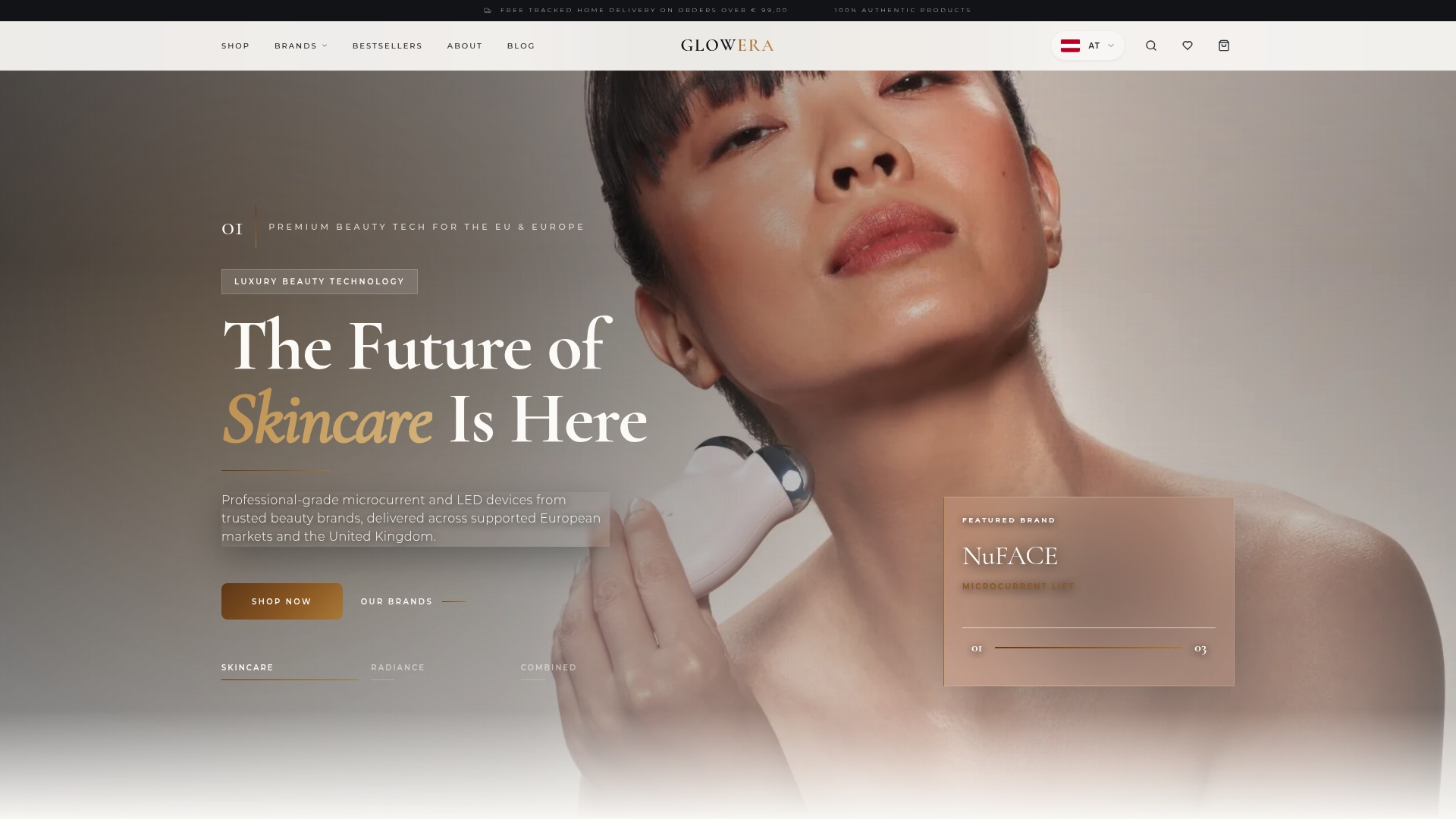
For mild to moderate laxity, a microcurrent device used consistently at home delivers cumulative contouring and lifting that complements your topical routine. Pair it with an LED therapy device for collagen-supporting photobiomodulation, and you have a maintenance protocol that runs between clinic visits, or instead of them for mild concerns.
Every device Glowera sells is brand-authorized and ships across the EU and UK. Before starting any intensive energy-device regimen, particularly RF, consult a dermatologist to confirm suitability for your skin type and health history. U.S.-based readers should check regional availability directly on the site.
Browse the full range and find the right device for your skin at glowera.at.
Useful sources and further reading
The following sources informed this guide and are worth consulting for deeper evidence and provider-level guidance:
- Skin Care for Aging Skin: Minimizing Age Spots, Wrinkles, and Undereye Bags — Harvard Health
- Skin Care and Aging — National Institute on Aging
- Many Ways to Firm Sagging Skin — American Academy of Dermatology
- How to Tighten Loose Skin — Medical News Today
- Post-Menopausal Collagen Loss Study — PubMed
- Skincare After 50: What Happens to Your Skin — Good Housekeeping
For personalized treatment recommendations, consult a board-certified dermatologist who can assess your specific laxity level, skin tone, and medical history before recommending a device or procedure.