At-home LED red light therapy is a legitimate, evidence-backed option for mild to moderate acne, basic skin rejuvenation, and hair maintenance — provided you choose a device that discloses its wavelength and irradiance, and you use it consistently for at least 4–12 weeks. The single most important next step: shortlist only devices that specify red 630–660 nm and/or near-infrared (NIR) 830–850 nm wavelengths and publish their irradiance in mW/cm². A systematic review found that at-home LED devices reduced inflammatory acne lesions by 45.3% and noninflammatory lesions by 47.7% after consistent use. Results from home devices are subtler than in-office treatments, but they are real when the specs and regimen align.
Pro Tip: The most common consumer mistake is buying a device that lists only “minutes per day” with no irradiance or fluence data. Without those numbers, you cannot verify whether the device operates in the therapeutic range used in clinical trials (irradiance ~20–60 mW/cm²; fluence 4–18 J/cm²).
Table of Contents
- Which device form factor suits your skin goals?
- What specs actually matter when buying an LED device?
- How to use LED therapy at home step by step
- Safety, side effects, and when to see a dermatologist
- What the science actually says about at-home LED results
- How much does effective at-home LED therapy cost?
- Key Takeaways
- The case for patience over perfection in at-home LED therapy
- Glowera’s LED device selection and how to get started
- Useful sources and further reading
Which device form factor suits your skin goals?
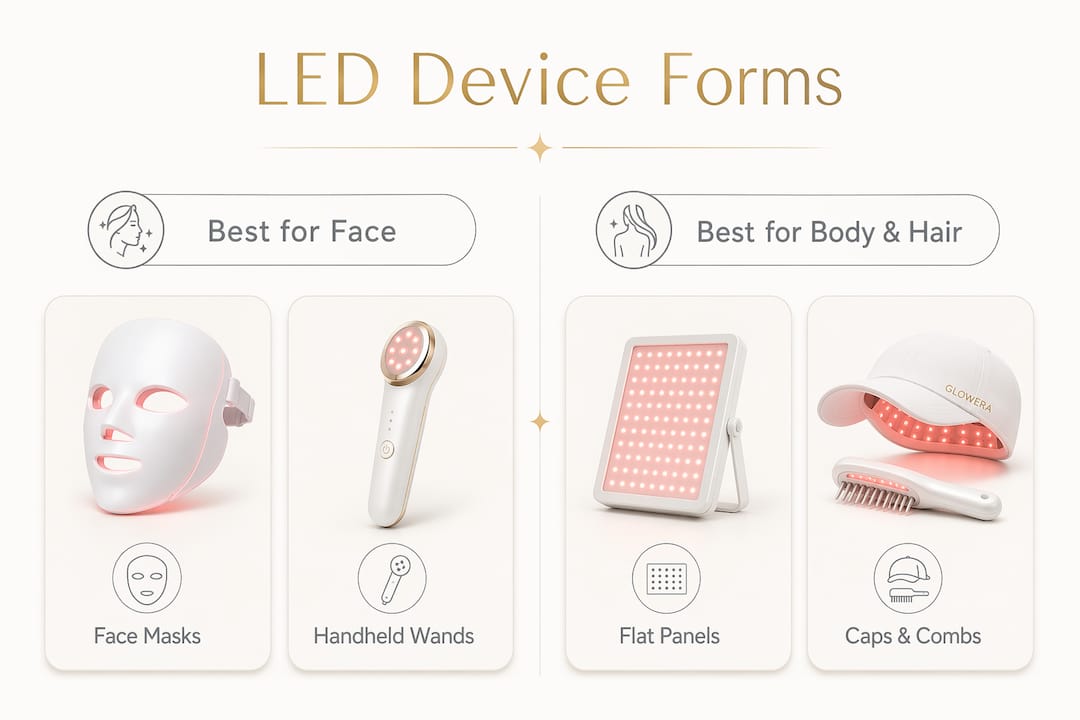
The form factor you choose should follow your primary goal, not your budget. Each type covers different anatomy, delivers different session experiences, and comes with real trade-offs.
Face masks cover the entire face in one session. They are the most popular at-home option for whole-face acne treatment or general skin rejuvenation. Most quality masks combine red and blue wavelengths, which trials show often outperform single-wavelength devices for acne. The downside: they are the least portable and typically the priciest entry point for a quality device.

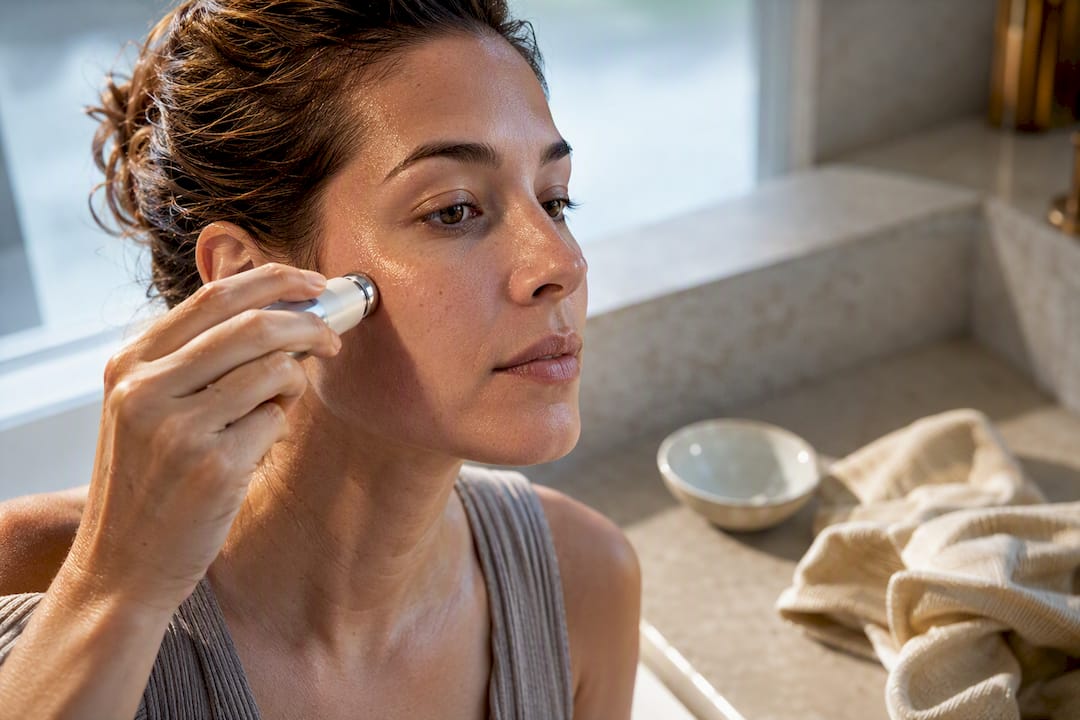
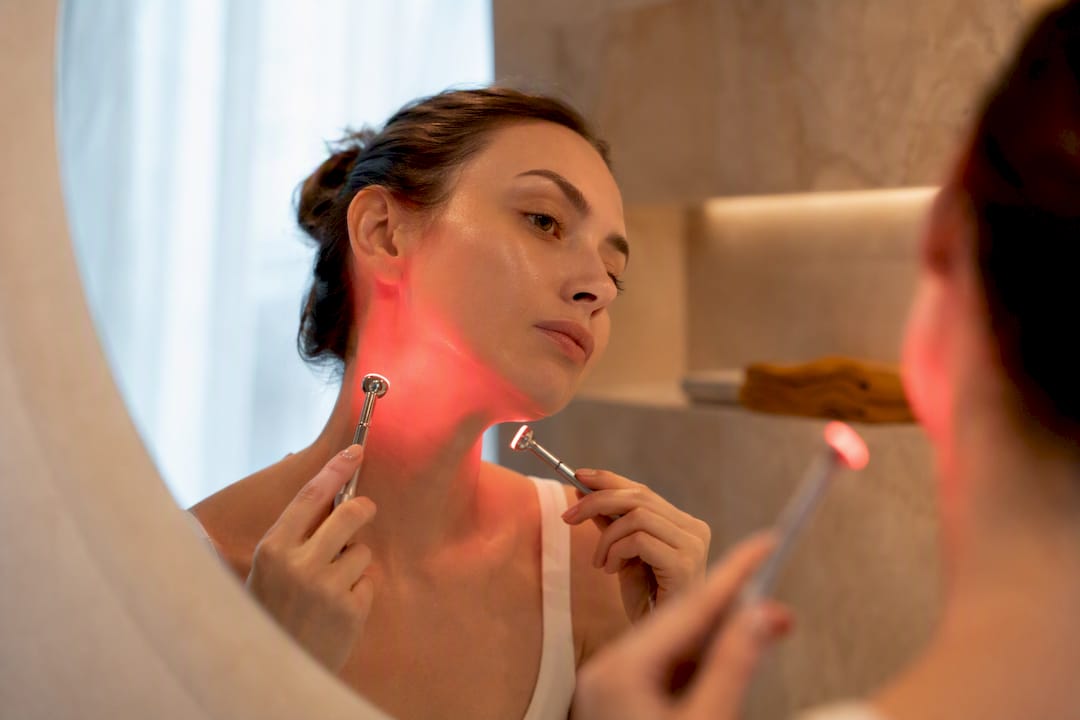
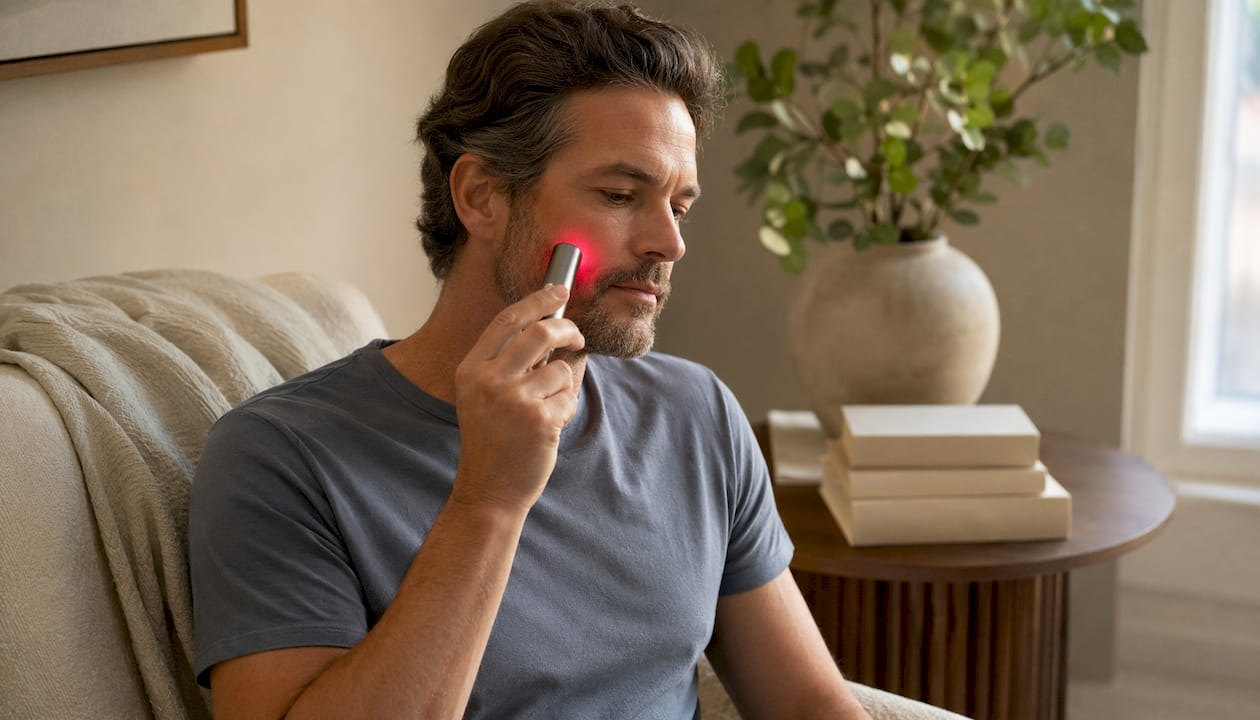
Handheld wands are best for spot treatment — a breakout zone, a fine line around the eye, or a small patch of hyperpigmentation. They are portable and affordable, but covering the full face takes multiple passes and significantly more time per session.
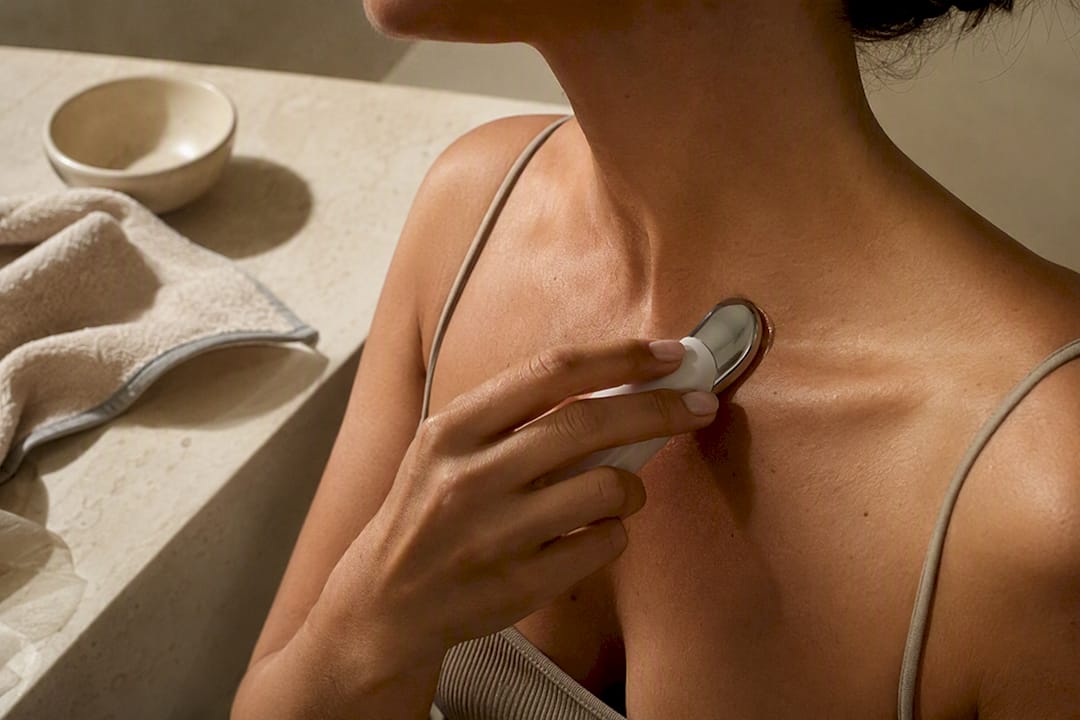
Flat panels offer the largest treatment area per session and are common for body, neck, and décolletage work. They tend to have higher irradiance than masks, which shortens session times. The trade-off is size: panels are not travel-friendly.
Hair growth caps and comb devices use red and NIR wavelengths to stimulate follicles. They are a separate category from skin devices and require consistent use over months, not weeks, before any visible change.
| Form factor | Best for | Typical session length | Portability |
|---|---|---|---|
| Face mask | Whole-face acne, anti-aging | 10–20 min | Low |
| Handheld wand | Spot treatment, targeted areas | 3–5 min per zone | High |
| Flat panel | Neck, body, décolletage | 10–15 min | Low |
| Hair cap/comb | Hair follicle maintenance | 15–30 min | Medium |
Pro Tip: If acne is your primary concern, look for a mask or wand that combines blue (415–465 nm) with red (630–660 nm). The combination wavelength approach consistently outperforms blue or red alone in published trials.
What specs actually matter when buying an LED device?
Most product listings lead with marketing language. Here is what to look past it for.
Wavelength
The most effective wavelengths for skin rejuvenation and hair treatments fall in the red (630–660 nm) and NIR (830–850 nm) ranges. Blue light (415–465 nm) targets Cutibacterium acnes bacteria and is the primary wavelength for acne-focused devices. Any device that lists only “red light” without a specific nanometer range is giving you incomplete information.
Irradiance and fluence
Irradiance (mW/cm²) measures power density at the skin surface. Fluence (J/cm²) measures the total energy dose delivered per session. Published dermatologic trials use irradiance of 20–60 mW/cm² and fluence of 4–18 J/cm². A device that discloses both numbers lets you calculate whether a 10-minute session at a given irradiance actually delivers a therapeutic dose. One that only says “use for 10 minutes daily” does not.
Photobiomodulation follows a biphasic dose response: too little energy produces no effect, and too much can inhibit the response. More power is not automatically better.
Certifications and clearance
The FDA rarely “approves” consumer LED devices outright. Most carry a 510(k) premarket notification, which signals the device is substantially equivalent to a legally marketed predicate. Verify any clearance claim yourself using the FDA 510(k) database or AccessGUDID — search by device name or manufacturer. Marketing copy that says “FDA-approved” without a 510(k) number is a red flag. UL or ETL electrical safety certification is a separate, worthwhile check for any device that plugs into a wall.
| Spec | What to look for | Why it matters |
|---|---|---|
| Wavelength | 630–660 nm (red), 830–850 nm (NIR), 415–465 nm (blue) | Determines biological target (collagen, bacteria, follicles) |
| Irradiance | 20–60 mW/cm² disclosed | Confirms therapeutic power range |
| Fluence | 4–18 J/cm² per session | Verifies dose aligns with clinical trials |
| FDA status | 510(k) number verifiable in database | Confirms regulatory review, not just marketing claim |
| Warranty | Minimum 1 year | Protects against early device failure |
Questions to ask before buying: Does the listing state irradiance in mW/cm²? Is there a verifiable 510(k) number? Does the brand cite a published clinical study, not just a testimonial? What is the return window?
How to use LED therapy at home step by step
The routine is simple. The discipline is where most people fall short.
- Cleanse thoroughly. Remove all makeup, SPF, and heavy serums. Residue on the skin surface can block light penetration. A gentle, non-stripping cleanser works fine.
- Apply conductive gel only if the device specifies it. Some devices, particularly those combining LED with microcurrent or electroporation, require a compatible conductive gel for optimal energy transfer. Standard moisturizers are not substitutes.
- Protect your eyes. Wear the goggles included with the device, or use opaque eye covers. Even non-UV LED light at close range can cause discomfort or strain with repeated exposure.
- Position the device correctly. Most masks sit flush against the skin. Panels and wands should be held at the distance specified in the manual — typically 0.5–2 inches for wands, flush for masks. Closer is not always better; follow the manufacturer’s guidance.
- Time the session per device specs. A device with irradiance of 40 mW/cm² delivering 4 J/cm² needs approximately 100 seconds of exposure per zone. A lower-power device at 20 mW/cm² needs roughly twice that. Use the device’s recommended time if you cannot calculate fluence yourself.
- Follow your frequency plan. For acne: 3–5 sessions per week for the first 4–8 weeks, then reassess. For skin rejuvenation: 3–4 sessions per week for 8–12 weeks. For hair maintenance: daily or near-daily use for 3–6 months before expecting visible change.
- Apply SPF after daytime sessions. Red and NIR light do not increase photosensitivity the way UV does, but clean, treated skin is more vulnerable to environmental damage. Sunscreen is a reasonable post-session habit.
- Clean the device after each use. Wipe the light-emitting surface with a soft, damp cloth. Never submerge electrical components.
At-home devices produce subtler results than in-office treatments because clinical machines operate at significantly higher irradiance. That gap is real, and setting the right expectation from the start prevents abandonment. Think of home therapy as a consistent maintenance tool that supports and extends professional results, not a replacement for them.
Pro Tip: Skip heavy oils or occlusive balms immediately before a session. They create a physical barrier that reduces light penetration. If you use a vitamin C serum or retinoid, apply it after the session, not before.
Safety, side effects, and when to see a dermatologist
Most people tolerate at-home LED therapy well. The adverse effects reported in clinical trials are generally mild: temporary redness (erythema), mild dryness, occasional flaking, and headache in light-sensitive individuals. These typically resolve within hours.
That said, certain situations call for a conversation with a board-certified dermatologist before you start:
- You take photosensitizing medications (common examples: doxycycline, isotretinoin, certain antifungals, some antidepressants, and diuretics). Check your medication guide for photosensitivity warnings.
- You have a diagnosis of lupus, melasma, or another condition that is exacerbated by light exposure.
- You have a history of skin cancer or are currently under dermatologic monitoring for suspicious lesions.
- You are pregnant and have not yet discussed light-based treatments with your OB or midwife.
- You have a history of migraines or light-triggered headaches. Even non-UV LED masks can trigger episodes in susceptible people — test with a short, 2–3 minute session first.
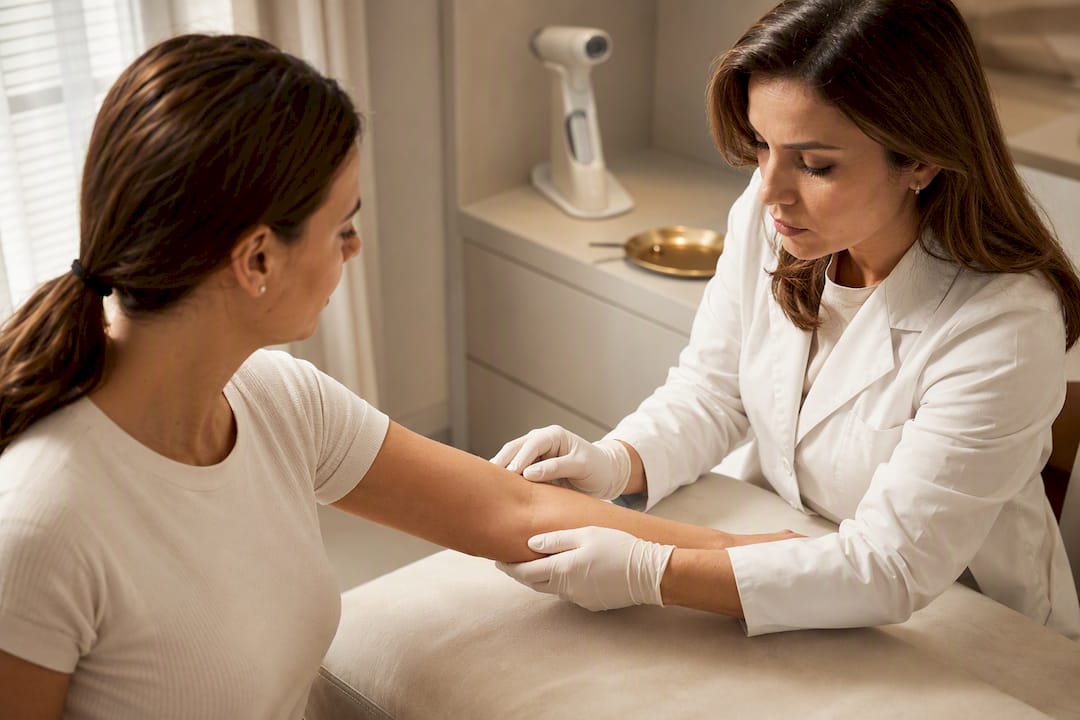
The American Academy of Dermatology recommends consulting a board-certified dermatologist before starting at-home LED therapy if you have photosensitivity or complex skin conditions. Dermatologists can review your medication list, assess your skin condition, and recommend the wavelength and dose most appropriate for your situation — guidance that no product listing can replicate.
When you do consult, bring: your current medication list, your skin condition history, the specific device you are considering (or its spec sheet), and your treatment goal. That 15-minute conversation can prevent weeks of ineffective or counterproductive use.
What the science actually says about at-home LED results
The clinical evidence for at-home LED devices is strongest for acne and meaningful, if more modest, for skin rejuvenation.
A systematic review and meta-analysis of at-home LED devices for acne vulgaris found:
Compared with control, at-home LED devices produced a 45.3% reduction in inflammatory lesions, a 47.7% reduction in noninflammatory lesions, and a 45.7% improvement in Investigator Global Assessment (IGA) scores after 4–12 weeks of consistent use.
Those are clinically meaningful numbers for mild to moderate acne. The caveat: the studies included in that review varied considerably in device specs, session protocols, and follow-up duration. Not every device on the market will replicate those outcomes.
For skin rejuvenation (fine lines, texture, tone), the evidence base is smaller and the effect sizes are more modest. Red and NIR wavelengths stimulate collagen synthesis and cellular repair through a process called photobiomodulation, but the wavelength and dose must align with published trial parameters to produce a measurable effect. A device operating below 20 mW/cm² with no disclosed fluence is unlikely to match trial results.
Key limitations to keep in mind:
- Home devices operate at lower irradiance than in-office equipment, so results take longer and are less dramatic.
- Consistency is the single biggest predictor of outcome. Sporadic sessions do not accumulate the same way a scheduled regimen does.
- Most published trials run 4–12 weeks. Expecting visible change in two weeks is unrealistic for most people.
- Hair growth devices require the longest commitment — typically 3–6 months of near-daily use before any meaningful assessment is possible.
How much does effective at-home LED therapy cost?
Price bands for at-home LED devices break into three tiers, and the differences are real, not just marketing.
Entry-level ($30–$150): Handheld wands and basic single-wavelength masks. Few disclose irradiance. Useful for spot treatment or as a low-commitment introduction, but harder to verify therapeutic dosing. Warranties are often 90 days or less.
Mid-range ($150–$400): Full-face masks and small panels from established brands. Better wavelength disclosure, some with published clinical backing. This is where most consumers find the best balance of coverage, verified specs, and warranty (typically 1–2 years). Brands like CurrentBody and Dr. Dennis Gross sit in this tier.
Higher-end medical-grade consumer ($400–$600+): Larger panels, combination wavelength devices, and hair growth systems. These typically disclose irradiance, carry 510(k) clearance, and come with 2-year warranties. The higher upfront cost is offset by longer device lifespan and more reliable dosing.
Ongoing costs to factor in:
- Conductive gels or serums if the device requires them (budget $20–$50 per month depending on usage)
- Replacement parts are rare for LED devices — panels and masks have long LED lifespans — but check whether the device has any consumable components before buying
- If you are using LED as a complement to in-office treatments, factor in the cost of periodic professional sessions
When to reassess: if you have used a device consistently for 12 weeks with no visible change, the device may not be operating in the therapeutic range, or the condition may require professional treatment. A dermatologist consultation at that point is a better investment than a second device.
Before purchasing, confirm: minimum 1-year warranty, a clear return window (30 days minimum), and a customer support channel that can answer spec questions.
Key Takeaways
Effective at-home LED therapy comes down to three things: the right wavelengths, a verified therapeutic dose, and consistent use over weeks.
| Point | Details |
|---|---|
| Verify wavelength and irradiance | Only buy devices that disclose red 630–660 nm, NIR 830–850 nm wavelengths, and irradiance in mW/cm². |
| Match form factor to goal | Masks for whole-face acne or anti-aging; wands for spot treatment; panels for body and neck coverage. |
| Expect results in 4–12 weeks | Clinical trials show meaningful acne improvement after consistent use in that window, not sooner. |
| Check safety before starting | Review photosensitizing medications and consult a dermatologist if you have lupus, skin cancer history, or light sensitivity. |
| Glowera’s LED category | Glowera carries verified LED devices from brands like CurrentBody and Dr. Dennis Gross, with authenticity guarantees and customer support. |
The case for patience over perfection in at-home LED therapy
At-home LED therapy gets oversold in two directions at once: dismissed as a gimmick by skeptics and overhyped as a clinical replacement by enthusiasts. Neither framing serves the person actually trying to clear their skin or slow visible aging.
The evidence is real. A 45.3% reduction in inflammatory acne lesions is a clinically significant outcome from a meta-analysis of controlled trials. But those results came from people who used devices consistently, with verified specs, over a full treatment window. The device sitting on a bathroom shelf after three sessions is not a failed technology. It is an abandoned regimen.
What most guides miss is the dose question. Consumers spend hours comparing brand names and reading reviews, then buy a device with no irradiance disclosure and wonder why nothing changed after a month. The spec is the product. A beautiful mask with undisclosed power output is a skincare accessory, not a therapy device. Prioritize the numbers over the aesthetics.
Home LED therapy works best as a committed maintenance practice, not a one-time fix. Think of it the way you would think about a consistent skincare routine: the results compound over time, and the people who see the most benefit are the ones who treat it like a habit rather than a treatment.
Glowera’s LED device selection and how to get started
Glowera carries a curated range of at-home LED devices from brands including CurrentBody and Dr. Dennis Gross — all 100% authentic, with verified specs and full warranty coverage. Where most online marketplaces leave you to decode spec sheets alone, Glowera’s customer support team can help you match a device to your skin goal, confirm wavelength and irradiance details, and walk you through warranty and return terms before you buy.
The LED therapy category on Glowera includes face masks, targeted wands, and combination devices across the price tiers covered in this guide. Each product page lists wavelength and key specs — look for irradiance disclosure and 510(k) status as your first filter. If you want a starting point, the CurrentBody LED Red Light Face Mask is a well-documented option with published clinical backing and clear spec disclosure. Browse the full LED skincare range or reach out to Glowera’s support team for a personalized recommendation before you commit.
Useful sources and further reading
The sources below back the claims in this guide and are worth reading directly if you want to go deeper on the evidence or verify regulatory status.
- At-Home LED Devices for the Treatment of Acne Vulgaris: A Systematic Review and Meta-Analysis — the primary clinical efficacy data for acne outcomes (45.3% inflammatory lesion reduction, 47.7% noninflammatory, 45.7% IGA improvement).
- What to Look for in Red Light Therapy: A Product Guide Backed by Science — covers wavelength selection, irradiance/fluence ranges, and how to evaluate device claims.
- American Academy of Dermatology: Is red light therapy right for your skin? — professional guidance on contraindications and when to consult a dermatologist.
- Cleveland Clinic: LED Light Therapy — plain-language overview of how LED therapy works, side effects, and realistic expectations.
- FDA 510(k) Clearances Database — use this to verify any clearance claim by searching the manufacturer name or device name. AccessGUDID is an alternative search tool for the same database.
Pro Tip: When checking a device’s 510(k) status, search the FDA database by the manufacturer’s legal name, not the brand name. Many consumer devices are manufactured under a parent company name that differs from the retail brand.
This article is general information, not medical advice. Confirm current guidelines and your personal contraindications with a board-certified dermatologist before starting any light-based treatment.