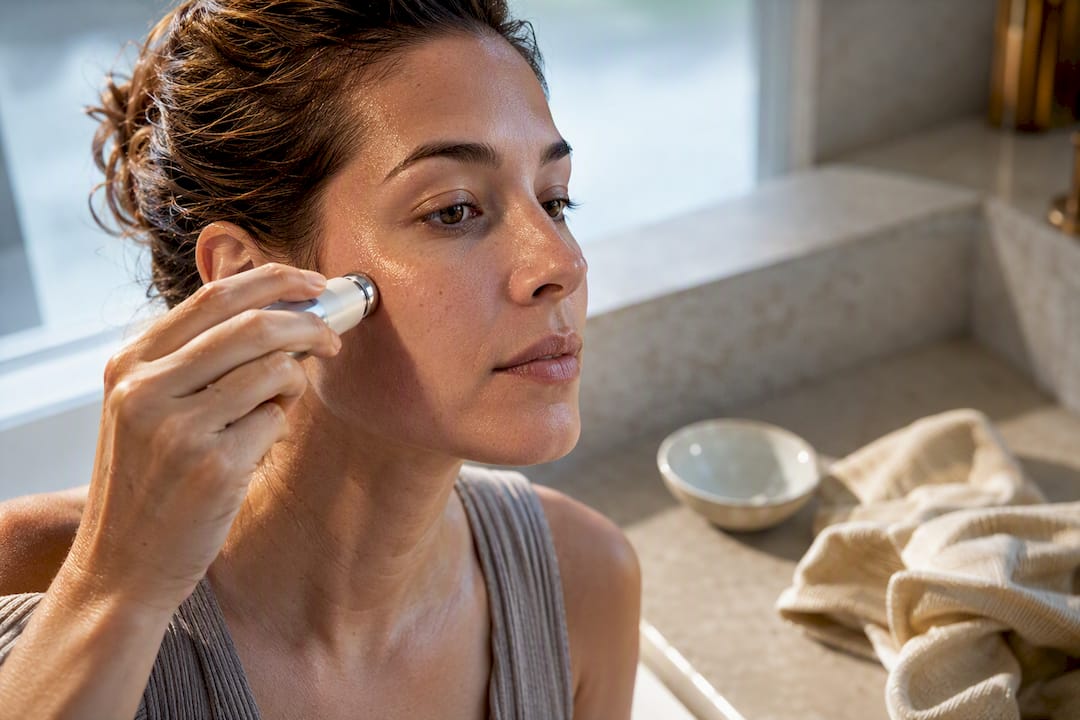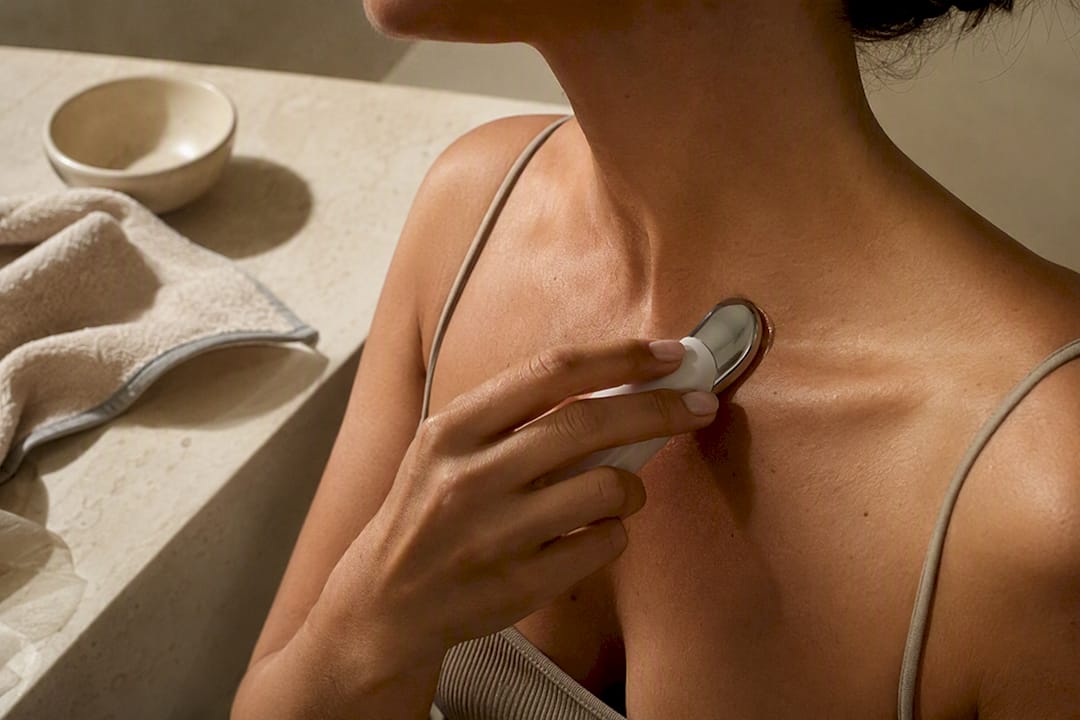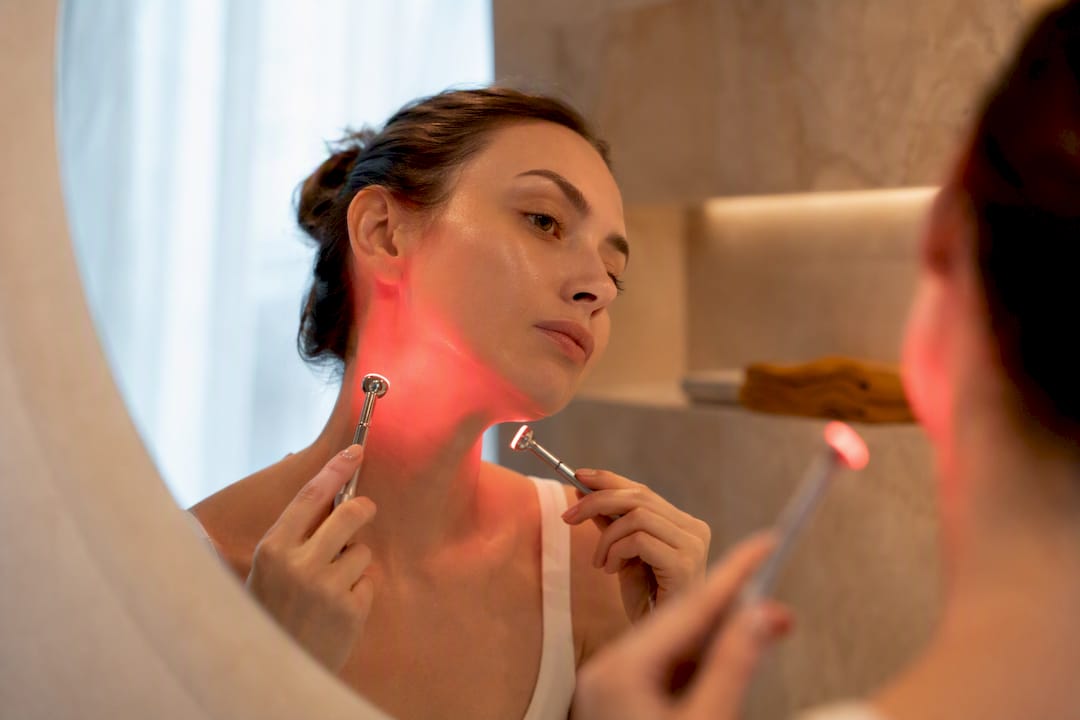
At-home RF (radiofrequency) is the realistic choice for routine skin firming and texture improvement. Consumer gadgets marketed as “at-home HIFU” cannot safely replicate the deep-tissue lifting that clinic HIFU delivers, and the evidence for them is thin at best.
The short version of why:
- Mechanism and depth: Home RF heats the upper-to-mid dermis to encourage collagen remodeling. Consumer “HIFU-style” devices use low-power ultrasound that rarely reaches the deeper SMAS-adjacent layers where structural lift actually happens.
- Safety and power limits: Regulatory bodies require consumer devices to operate at energy levels safe for untrained, unsupervised use. That cap is the reason home RF works for maintenance; it is also why no consumer gadget can match clinic HIFU for structural results.
- Evidence: Controlled trials back home RF for measurable wrinkle and elasticity improvements. Evidence for at-home HIFU-style gadgets is sparse and inconsistent.
If you have significant skin laxity or want a structural lift, a clinic consultation is the right call. For everyone else evaluating a home device purchase, read on.
Table of Contents
- How at-home RF devices work
- What “at-home HIFU” consumer gadgets actually deliver
- What realistic results look like, and what they cost
- Safety, side effects, and who should skip home devices
- How to choose an at-home RF device — and when to skip “HIFU” gadgets
- What the research actually shows about home RF effectiveness
- Key Takeaways
- The part most buyers underestimate
- Glowera’s curated RF devices make the choice straightforward
How at-home RF devices work
RF devices pass an alternating electrical current through skin tissue, generating heat through resistance. That heat stimulates collagen contraction and, over weeks, new collagen synthesis. Home devices typically reach the epidermis and mid-dermis, not the deeper fat or muscle layers.
Most consumer RF handsets use multipolar or bipolar surface electrodes that distribute heat across a wider area for safer, more even dermal warming. Microneedle RF, which delivers energy deeper, is rarely available for home use because of the safety and regulatory constraints around self-administered skin penetration.
Temperature range matters: Home RF devices regulate skin temperature between roughly 37°C and 42°C. Clinical high-fluence systems reach 50–75°C, the range needed for deeper tissue remodeling. That gap explains why home results are gradual and modest compared with in-office treatments.
Built-in safety features on consumer RF devices typically include:
- Real-time temperature sensors that cut power when skin surface exceeds the safe threshold
- Motion sensors that pause treatment if the handset stops moving, preventing localized overheating
- Automatic shutoff after a set session time
Pro Tip: Pair your RF device with a quality conductive gel or a serum containing hyaluronic acid. Good conductivity improves energy transfer and reduces friction, which means the device spends less time compensating and more time heating the right layer.
What “at-home HIFU” consumer gadgets actually deliver
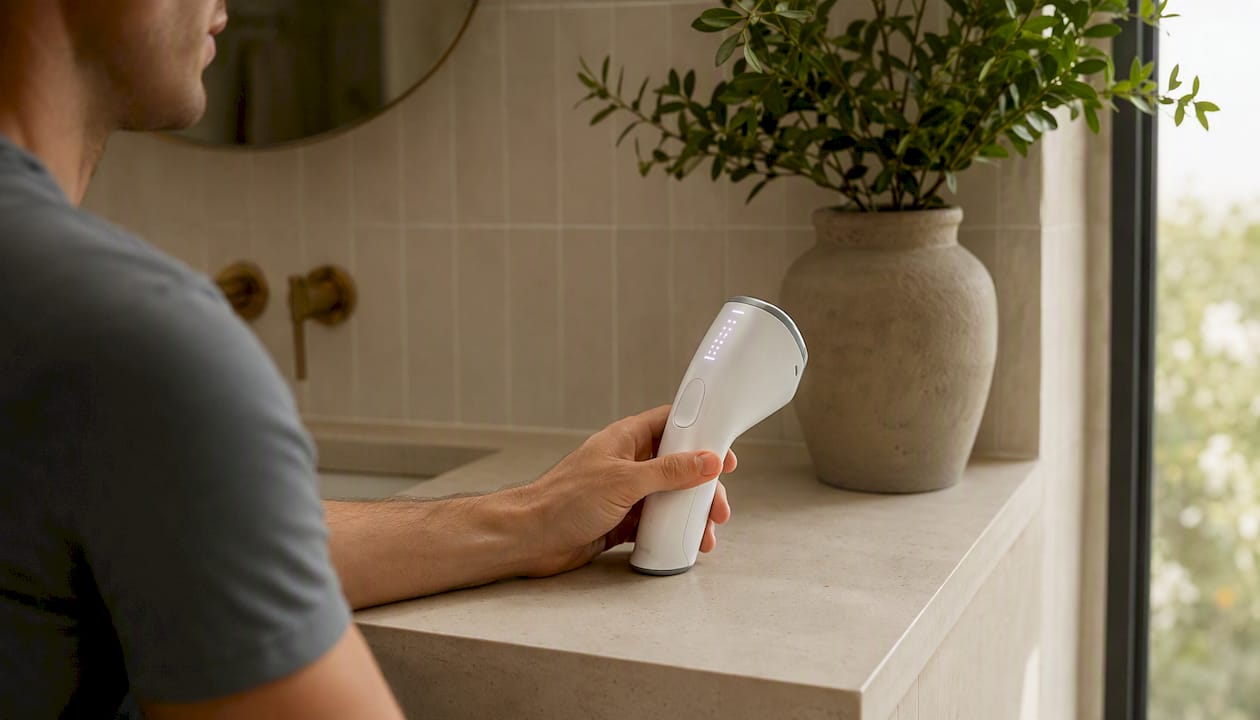
True clinical HIFU (High-Intensity Focused Ultrasound) focuses acoustic energy to a precise focal point deep in tissue, reaching the SMAS layer to produce structural lift. Consumer devices labeled “HIFU” use a fundamentally different engineering approach.
The core problem is power. Regulatory requirements mandate that consumer devices deliver energy levels low enough for safe self-administration without medical supervision. That constraint means:
- Focal depth is shallower than clinic HIFU, often reaching only the superficial dermis
- Energy output is a fraction of clinical systems, so the thermal injury needed to trigger deep remodeling does not occur
- Safety cutoffs activate well before the tissue temperatures associated with structural lifting
The sensation difference is telling. Clinical HIFU is often described as painful, with tenderness lasting 48–72 hours. At-home “HIFU” gadgets feel mild, which sounds appealing but usually signals insufficient energy for deep lift.
Pro Tip: Watch for these red flags in product marketing: claims of “SMAS-level lifting,” “same as clinic,” or “no downtime deep lift.” A device that is genuinely safe for home use cannot reach SMAS depth at therapeutic energy. If the marketing promises both safety and clinic-level structural results, one of those claims is not accurate.
What realistic results look like, and what they cost
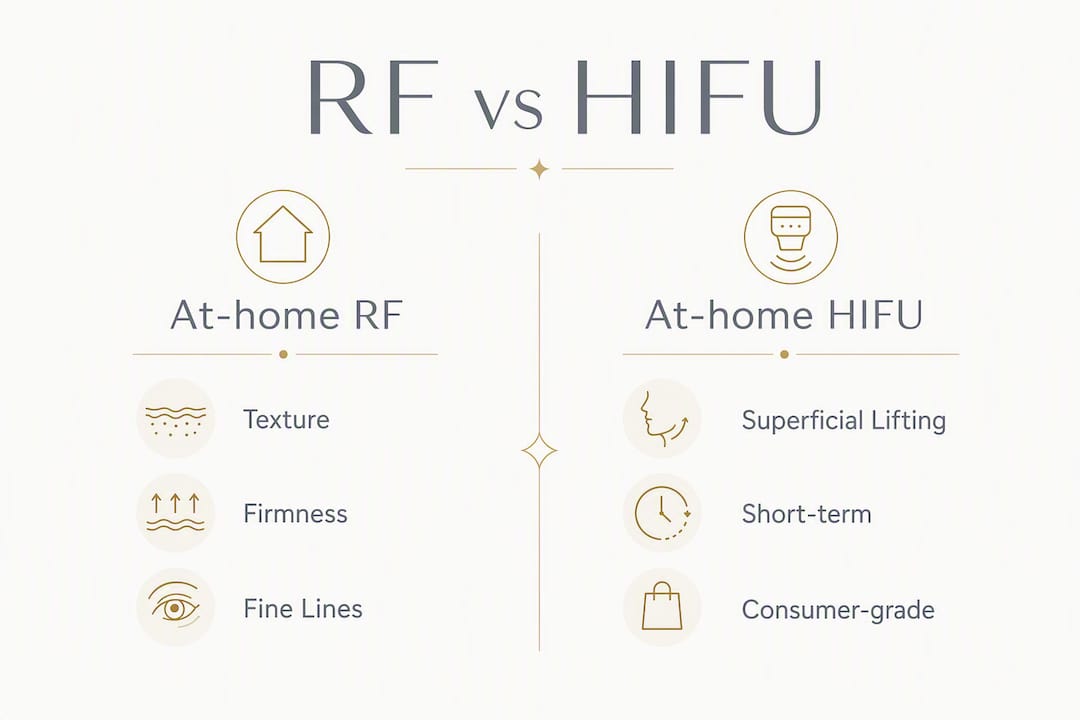
At-home RF produces gradual, visible improvement in skin texture, firmness, and fine lines over 4–12 weeks of consistent use. At-home HIFU-style devices rarely produce meaningful structural lift, and results are inconsistent across users.
A typical at-home RF program:
- Loading phase: 2–3 sessions per week for 4–8 weeks to build initial collagen response
- Assessment at week 8: Look for changes in skin texture, pore appearance, and fine-line depth
- Maintenance phase: Weekly or biweekly sessions to sustain results
- 12-week check: Randomized split-face trials show statistically significant improvements in wrinkles, radiance, and dermal thickness at this point versus topical-only controls
| Factor | At-home RF | At-home “HIFU” gadgets |
|---|---|---|
| Best for | Texture, firmness, fine lines | Superficial tone (limited evidence) |
| Visible results timeline | 4–12 weeks | Inconsistent; often minimal |
| Typical session duration | 10 minutes | 10 minutes |
| Treatment frequency | 2–3×/week loading, then weekly | Varies by device |
| Device cost | $150–$700+ | Similar range |
| Deep structural lift | No | No |
Results from home RF are not permanent. Most users see gradual fading after 3–6 months without maintenance. If you want a structural lift that lasts 12–18 months, that is a clinic conversation.
Safety, side effects, and who should skip home devices
Home RF devices are engineered for low-power safety. Serious adverse events in published trials are rare, and the thermal controls described above keep most sessions within a safe range. At-home HIFU-style gadgets carry a slightly higher misuse risk because users may be tempted to overlap pulses or increase intensity chasing results.
Common side effects by category:
- Home RF: Mild redness (erythema) lasting 0–48 hours, occasional temporary tenderness, rare minor burns from improper use
- At-home “HIFU” gadgets: Similar mild redness; risk of localized burns increases if motion sensors are bypassed or pulses are overlapped
Contraindications for both categories:
- Pregnancy
- Metal implants or electronic implants (pacemakers, cochlear implants) in or near the treatment area
- Active skin infections, open wounds, or active acne in the treatment zone
- Certain photosensitizing medications (check with a dermatologist)
- Severe rosacea or highly reactive skin types
Statistic callout: The 8-week open-label trial of a home multipolar RF device involving 22 subjects reported no serious adverse events, with improvements in wrinkle scores and dermal thickness at weeks 4 and 8. Thermal controls kept skin surface temperatures within the 37–42°C range throughout.
Pro Tip: Always patch-test a new device on a small area of your jaw or neck for one session before treating your full face. If you see prolonged redness beyond 48 hours or any blistering, stop and consult a dermatologist before continuing.
How to choose an at-home RF device — and when to skip “HIFU” gadgets
The decision rule is simple: choose at-home RF for routine texture improvement and firming; consult a clinic if your goal is structural lift.
Buyer checklist:
- Define your goal. Texture, fine lines, and firmness: RF. Structural lift of the jawline or brow: clinic.
- Verify safety features. Temperature sensor and motion sensor are non-negotiable. Check the product page explicitly.
- Check regulatory status. Look for FDA clearance (US) or CE marking (EU/UK) on the product listing.
- Assess manufacturer transparency. Does the brand publish clinical data or cite peer-reviewed studies? Vague “clinically tested” claims without citations are a warning sign.
- Confirm return policy and warranty. A 30-day return window and at least a one-year warranty are reasonable minimums for a device in this price range.
- Factor in consumables. Conductive gels and replacement heads add to the total cost. Check availability and price before buying.
- Contact customer support before purchasing. Ask about the recommended regimen, contraindications, and maximum energy output. A brand that cannot answer those questions clearly is one to avoid.
Questions to ask on the product page or directly:
- What is the maximum energy output (watts or joules)?
- What temperature does the device cap at?
- Are there published clinical studies for this specific device?
- What gel or serum does the manufacturer recommend?
Purchase decision flow:
- Goal is texture, firmness, or fine lines → buy an at-home RF device
- Goal is structural lift of deep tissue → book a clinic consultation
- Goal is texture plus tone → consider an RF device with a complementary microcurrent device for a multi-modal protocol
What the research actually shows about home RF effectiveness
The evidence base for at-home RF is real but modest. Controlled small trials show measurable improvements in wrinkle scores, dermal thickness, and skin elasticity. The 8-week open-label trial cited above used 22 subjects and found statistically significant improvements at both the 4-week and 8-week marks. The 12-week randomized split-face trial showed similar gains versus topical controls.
Key study takeaways:
- Improvements in fine-line depth and skin radiance appear within 4–8 weeks of consistent use
- Dermal thickness increases are measurable by ultrasound imaging in some trials
- Side effect profiles in these trials are mild and transient
The evidence gaps are significant, though:
- Most trials are small (under 30 subjects) and short (under 12 weeks)
- Several are manufacturer-funded, which introduces bias risk
- Long-term follow-up data beyond 6 months is limited
- Comparative trials between different at-home device designs are largely absent
“Although both radiofrequency and focused ultrasound are commonly used non-invasive skin-tightening methods, comparative studies between the two methods are lacking.” — PMC, Efficacy and Safety of Radiofrequency and Focused Ultrasound in Facial Rejuvenation
The honest read: home RF works for what it is designed to do, within the limits of consumer-grade energy. The research supports it for texture and fine lines. It does not support expecting clinic-level structural results from any home device.
Key Takeaways
At-home RF is the evidence-backed home option for skin firming and texture improvement; no consumer device, RF or HIFU-style, can safely replicate clinic-level structural lifting.
| Point | Details |
|---|---|
| At-home RF verdict | Produces measurable texture and firmness gains in 4–12 weeks; best for routine maintenance. |
| Safety features matter | Verify temperature and motion sensors on any device before buying; they prevent burns. |
| Cost range | At-home RF devices run $150–$700+; factor in gel and replacement head costs. |
| Evidence is real but limited | Trials are small and short; results are genuine but modest compared with clinic treatments. |
| Glowera’s RF selection | Glowera curates tested RF and EMS devices from brands like Medicube and CurrentBody, with customer support to match buyers to the right device. |
The part most buyers underestimate
Most people shopping in the RF vs. HIFU space are asking the wrong question. They want to know which technology is “better,” when the real question is which goal they are actually trying to achieve at home.
Home RF is not a watered-down version of clinic RF. It is a different tool with a different job: consistent, low-dose collagen stimulation over time. The buyers who get the most out of it treat it like a skincare habit, not a one-time fix. Two sessions a week for two months, paired with a good conductive gel and, ideally, a complementary modality like red light or microcurrent, produces noticeably better outcomes than sporadic high-intensity sessions.
The “at-home HIFU” category is where I see the most buyer disappointment. The marketing is aggressive, the price points are similar to home RF, and the results are rarely proportional. If a device cannot tell you its focal depth, its maximum energy output in joules, or cite a peer-reviewed study, that is your answer.
Patience and consistency are the actual active ingredients in any home device protocol. A 12-week commitment to a well-designed RF device will outperform two months of chasing the next “clinic-equivalent” gadget.
Glowera’s curated RF devices make the choice straightforward
Choosing a home RF device is easier when the selection has already been filtered for safety specs, clinical backing, and real-world usability. Glowera stocks tested RF and EMS devices from trusted brands including Medicube and CurrentBody, alongside conductive gels and complementary tools like LED therapy masks and microcurrent handsets for buyers who want a multi-modal protocol.
Every device Glowera carries is 100% authentic, backed by manufacturer warranties, and supported by a customer service team that can help you match a device to your specific skin goals and treatment frequency. Free shipping thresholds apply, and returns are straightforward if a device is not the right fit.
Browse Glowera’s RF and EMS category to compare specs, read clinical backing, and find the device that fits your routine and budget.