
Electroporation is defined as a technique that uses short, controlled electrical pulses to create temporary microscopic openings in skin cell membranes, allowing active skincare ingredients to penetrate far deeper than they could through topical application alone. The skin’s outermost layer, the stratum corneum, blocks most of what you apply to your face. Electroporation overcomes that barrier without needles, without downtime, and without pain. The technique has moved from clinical dermatology labs into home beauty devices, making professional-grade ingredient delivery accessible to anyone serious about their skincare results.
How does electroporation work to enhance skin treatment?
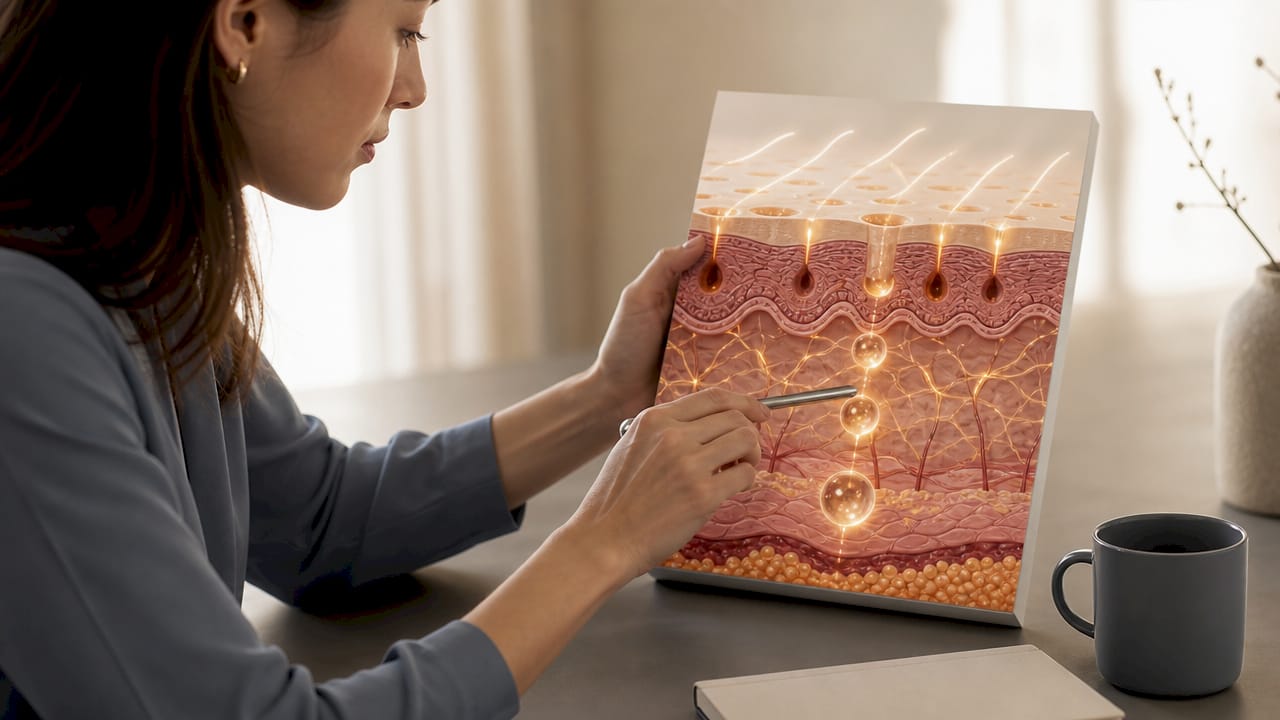
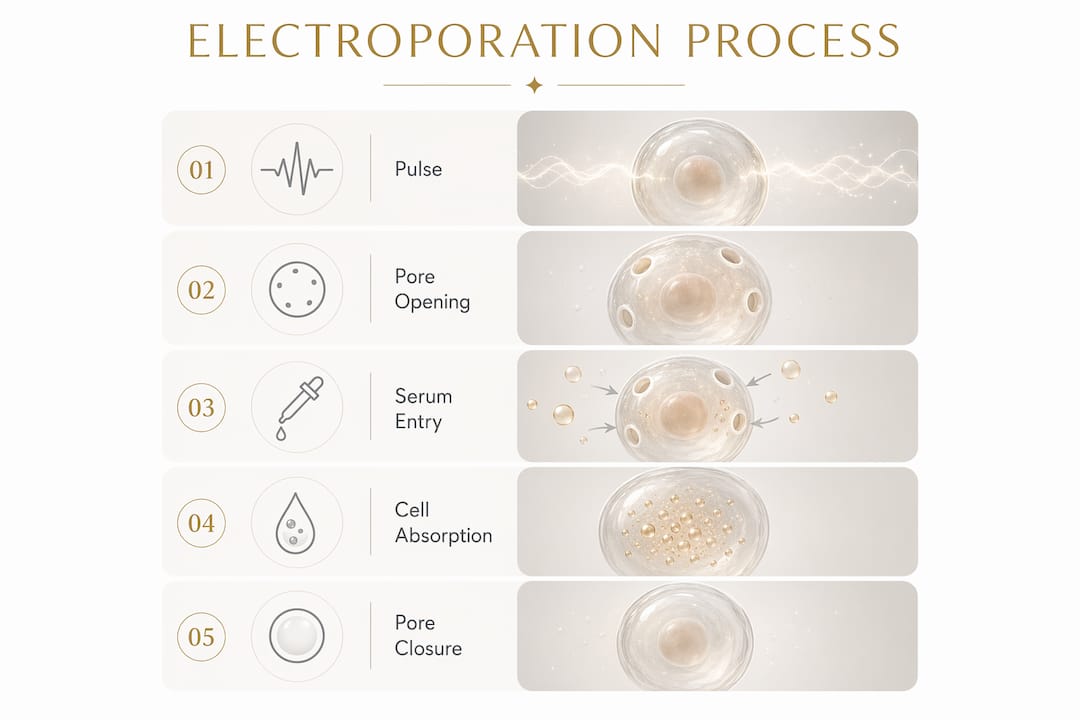
Electroporation works by sending rapid electrical pulses through the skin’s surface. These pulses temporarily destabilize the lipid bilayer of cell membranes, creating transient aqueous pores. Those pores stay open for a short window, typically seconds to a few minutes, then close completely without leaving any permanent damage. During that window, active ingredients pass through channels that would otherwise be too small or too hydrophobic to cross.
The stratum corneum is the main obstacle in skincare absorption. It acts as a physical and chemical wall, blocking large molecules like hyaluronic acid and vitamin C from reaching the dermis where they do their real work. Electroporation bypasses this wall by temporarily restructuring the membrane rather than physically puncturing it.
Compared to other physical delivery methods, electroporation holds a distinct position:
- Microneedling creates physical micro-injuries to open channels. It works well but involves recovery time and discomfort.
- Iontophoresis uses a mild electrical current to push charged molecules across the skin. It works only for small, ironically charged molecules.
- Sonophoresis uses ultrasound waves to disrupt the skin barrier. It is effective but typically requires professional equipment.
- Electroporation creates pores large enough for both small and large molecules, including high-molecular weight substances like hyaluronic acid, without causing skin damage.
The electrical parameters matter. Pulse duration, voltage, and frequency all affect how wide the pores open and how long they stay open. Devices calibrated for cosmetic use apply much lower energy than clinical electroporation systems, keeping the experience safe and comfortable for home users.
Pro Tip: Apply your serum immediately before using an electroporation facial device. The pores open during the pulse, so the ingredient needs to be present on the skin surface at that exact moment to enter the channel.
What does the research say about electroporation’s effectiveness?
The clinical evidence for electroporation in skincare is strong and growing. A 2025 clinical study found that combining electroporation with sonophoresis increases absorption amount, depth, and speed of cosmetic ingredients by over 200% compared to manual application. That figure is not a marketing claim. It comes from a controlled trial measuring actual ingredient penetration in human skin over four weeks.
The same research tracked skin hydration, elasticity, tone, and pigmentation across the study period. Participants using the combined electroporation and sonophoresis protocol showed significant improvement in all four markers. Manual application of the same products produced noticeably weaker results.
Hyaluronic acid is one of the most studied ingredients in this context. Applying electroporation for just 3 minutes with hyaluronic acid boosts penetration area and increases type I collagen synthesis in human dermal fibroblasts. Type I collagen is the structural protein responsible for skin firmness and density. Getting more of it produced from a topical treatment, rather than an injectable, is a meaningful clinical outcome.
“Electroporation is classified as a nonthermal, safe technique in transdermal delivery and cosmetology. It enables delivery of both low- and high-molecular weight substances into deeper skin layers without causing skin damage, making it one of the most versatile physical enhancement methods available for cosmetic use.”
The safety profile is well established. Electroporation is non-invasive and needle-free, with microscopic pores closing shortly after treatment. Users typically feel mild tingling, which can be adjusted for comfort. There is no downtime, no redness that persists beyond a few minutes, and no risk of infection from open wounds.
Electroporation also works well alongside LED light therapy. Researchers observe synergistic effects when combining these technologies, with electroporation handling ingredient delivery and light therapy supporting cellular repair and collagen stimulation simultaneously.
What are the best practices for using electroporation skincare devices?
Getting results from an electroporation skincare device depends on more than just switching it on. The formula you use, the order of your routine, and the intensity settings all determine whether the treatment works or wastes your time.
Choose the right formula
The skincare formula matters enormously. Water-based, free-flowing serums conduct electrical pulses effectively and move through the temporary pores without resistance. Viscous creams and oil-based products reduce efficiency and can physically block the micro-channels the device creates. Stick to lightweight, water-based formulas when using an electroporation device for face treatments.
Follow this protocol for best results
- Cleanse thoroughly. Remove makeup, sunscreen, and surface oils before treatment. A clean surface reduces electrical resistance.
- Exfoliate first. Removing dead skin cells lowers electrical resistance and improves pore opening efficiency with less applied voltage. You get better results with less energy.
- Apply your serum. Use a water-based active serum, such as hyaluronic acid, vitamin C, or niacinamide, directly to damp skin.
- Run the device. Follow the manufacturer’s recommended duration, typically 3–10 minutes per zone.
- Seal with moisturizer. Apply a gentle moisturizer after treatment to support the skin barrier as it recovers.
Manage intensity correctly
Higher voltage does not equal better results. Consistent, moderate intensity yields better long-term improvements than infrequent, high-intensity sessions. If you feel more than mild tingling, reduce the setting. Discomfort is a signal to lower the energy, not push through it.
Pro Tip: Use your electroporation beauty device 2–3 times per week rather than daily. Skin needs recovery time between sessions, and consistent moderate use outperforms aggressive daily treatment.
Avoid common mistakes
Overuse is the most frequent error. Treating the same area too often or at too high an intensity can cause temporary redness or sensitivity. People with active breakouts, rosacea flares, or compromised skin barriers should consult a dermatologist before starting electroporation treatments.
How does electroporation compare to other skin delivery technologies?
Electroporation sits in a specific position among skin delivery technologies. It is more effective than purely topical application, less invasive than microneedling, and more accessible than clinical sonophoresis systems.
The key advantages of electroporation as a delivery method include:
- No needles or skin injury. Unlike microneedling, there is no physical puncture and no healing period.
- Molecule size flexibility. Iontophoresis only moves small, charged molecules. Electroporation handles large molecules like hyaluronic acid with equal effectiveness.
- Home usability. Clinical sonophoresis requires professional equipment. Electroporation devices designed for home use are compact and straightforward to operate.
- No thermal damage. Electroporation is classified as a nonthermal technique, meaning it does not heat tissue the way some laser or radio frequency treatments do.
The limitations are real too. Electroporation does not reach the same depth as needle injection. For substances that need to reach the subcutaneous layer, such as certain medical treatments, injection remains the only reliable method. For cosmetic ingredients targeting the dermis and epidermis, electroporation delivers results that rival professional treatments.
| Method | Invasiveness | Downtime | Molecule size range | Home use |
|---|---|---|---|---|
| Electroporation | None | None | Small and large | Yes |
| Microneedling | Moderate | 24–48 hours | Small to medium | Limited |
| Iontophoresis | None | None | Small, charged only | Yes |
| Sonophoresis | None | None | Small to medium | Rarely |
| Needle injection | High | Variable | All sizes | No |
For people who want professional-level ingredient delivery without clinic visits, electroporation is the most practical option available.
Key Takeaways
Electroporation is the most accessible non-invasive method for delivering active skincare ingredients into the dermis, with clinical evidence showing over 200% improvement in absorption when combined with sonophoresis.
| Point | Details |
|---|---|
| Core mechanism | Electrical pulses create temporary pores in cell membranes, allowing deeper ingredient penetration. |
| Clinical evidence | Combining electroporation with sonophoresis improves absorption by over 200% versus manual application. |
| Formula selection | Use water-based, free-flowing serums. Oil-based or viscous products block the micro-channels. |
| Intensity guidance | Moderate, consistent sessions outperform high-intensity infrequent use for long-term results. |
| Synergy advantage | Pairing electroporation with LED light therapy amplifies both ingredient delivery and cellular repair. |
Why electroporation changed how I think about skincare technology
I have spent years watching beauty technology cycle through trends, and most of them disappoint on closer inspection. Electroporation is different. What convinced me was not the marketing. It was seeing the clinical data on collagen synthesis from hyaluronic acid delivery and realizing that the mechanism is genuinely sound, not just plausible-sounding.
The thing most people get wrong is treating intensity as a proxy for effectiveness. I have seen people crank their device to the highest setting and wonder why their skin feels irritated. The research is clear: consistent, moderate use wins. That counterintuitive finding is the single most useful thing I can share with anyone starting out with an electroporation facial device.
The synergy angle is also underappreciated. Pairing electroporation with LED therapy is not just a nice add-on. The two technologies address different parts of the same problem. Electroporation gets the ingredient into the skin. Light therapy supports the cellular response to that ingredient. Used together, they produce results that neither achieves alone.
My honest caution: device quality varies significantly. A poorly calibrated device may not generate the pulse parameters needed to open pores effectively, meaning you get the tingling sensation without the actual delivery benefit. Buy from brands that publish their device specifications and have a track record in professional beauty technology.
— Gilda
Glowera’s approach to electroporation beauty technology
Glowera carries a curated selection of professional-grade beauty tech devices designed for effective home use, including electroporation and complementary technologies that work together to improve skincare absorption and skin health.
The devices available through Glowera’s beauty tech store are sourced from trusted brands with verified clinical backing. Each device is selected for ease of use, safety, and compatibility with the water-based serums that electroporation requires. Glowera also offers LED therapy panels and red light devices that pair naturally with electroporation treatments, giving you a complete at-home protocol. If you want salon-comparable results without the clinic appointment, exploring Glowera’s full device range is the logical next step.
FAQ
What is electroporation in skincare?
Electroporation is a technique that uses controlled electrical pulses to temporarily open microscopic pores in skin cell membranes, allowing active ingredients to penetrate deeper than topical application allows. The pores close naturally within minutes, leaving no permanent change to the skin.
Is electroporation safe for home use?
Electroporation is classified as a nonthermal, non-invasive technique with no downtime. Home users typically experience only mild tingling, and the microscopic pores created during treatment close shortly after the session ends.
How often should I use an electroporation facial device?
Using an electroporation device 2–3 times per week is more effective than daily use. Consistent moderate sessions produce better long-term skin improvements than high-intensity infrequent treatments.
What skincare products work best with electroporation?
Water-based, free-flowing serums conduct electrical pulses most effectively. Oil-based or viscous products reduce device efficiency and can block the micro-channels created during treatment.
Can electroporation boost collagen production?
Clinical research shows that applying electroporation for 3 minutes with hyaluronic acid increases type I collagen synthesis in human dermal fibroblasts, producing measurable skin firmness improvements beyond what topical application alone achieves.