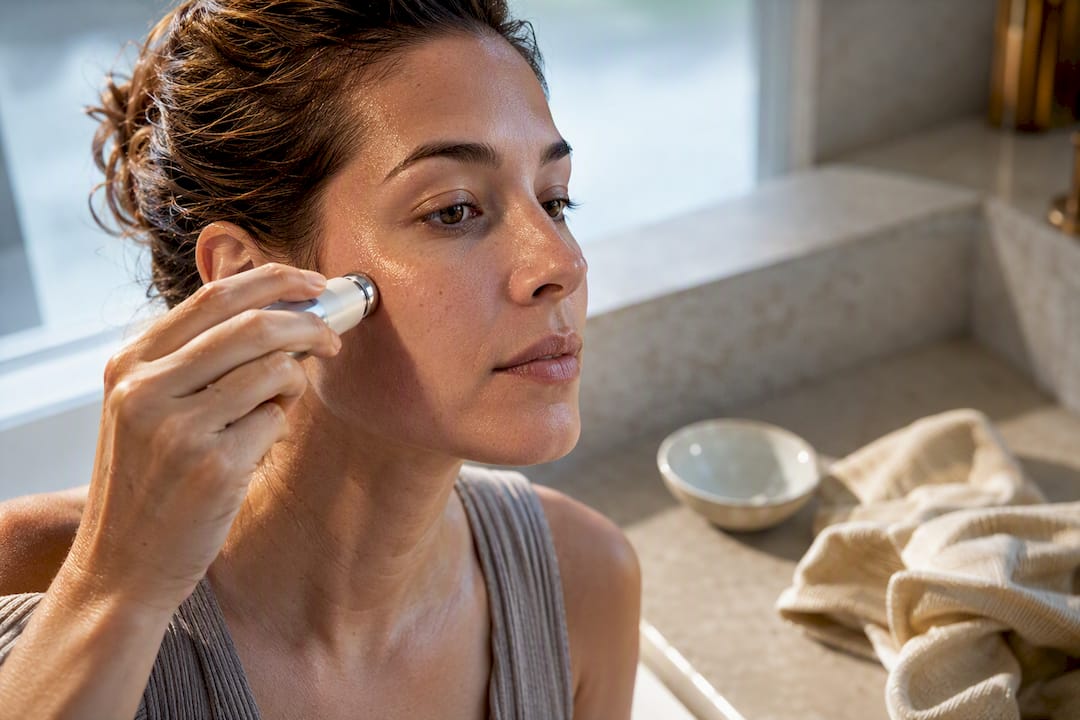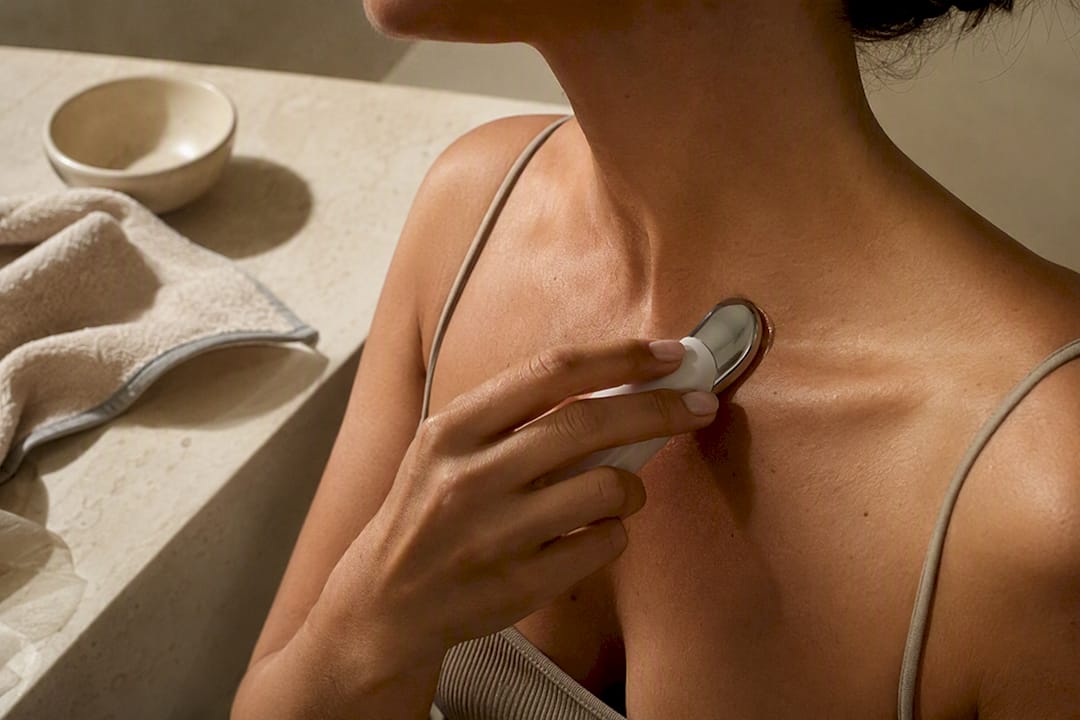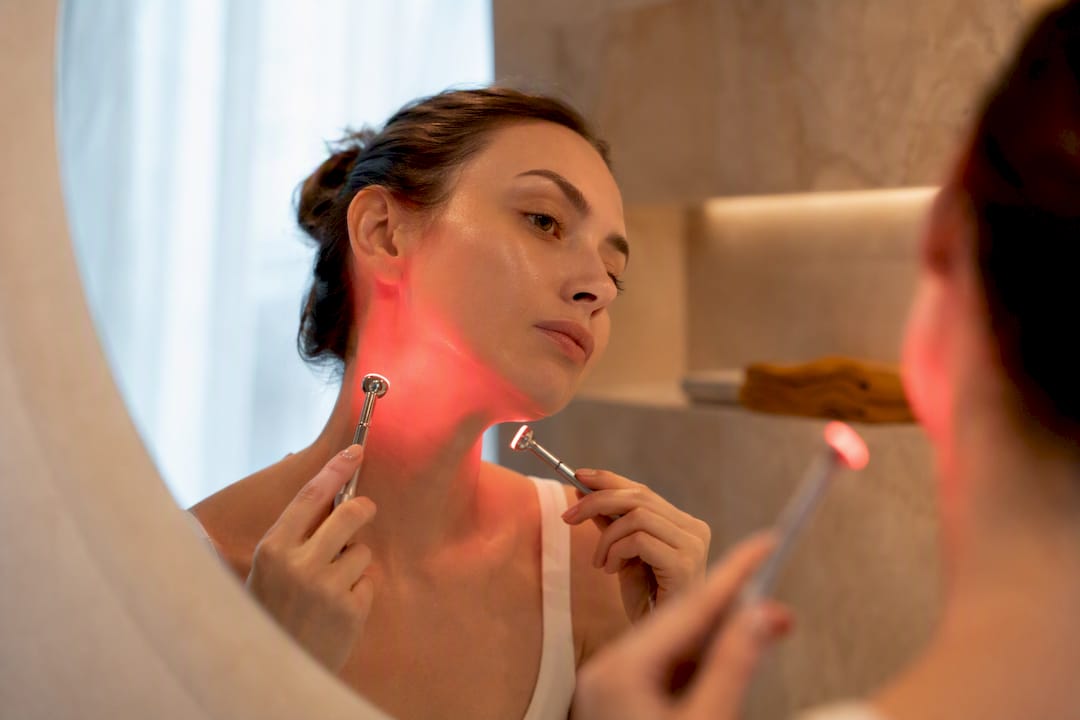
Microcurrent facial devices do produce visible before-and-after changes, but the type and timing depend on which effect you’re looking for. Within minutes of a session, most people notice a temporary lift, reduced puffiness, and a subtle glow, all driven by increased circulation and lymphatic drainage. The cumulative payoff, sharper jawline definition, improved cheek contour, and better skin tone builds over weeks of consistent use through a process experts call muscle re-education.
Two distinct effects are at work here:
- Immediate (minutes to 72 hours): Lymphatic drainage and circulation create a transient lift and radiance. This fades within a day or two.
- Cumulative (weeks 4–12+): Repeated low-level electrical stimulation gradually re-educates facial muscles, improving tone, definition, and texture over time.
Real-user before-and-after photos, a consistent documented routine, and expert guidance are the three things that separate credible results from marketing noise. Results also vary by area: the jawline and cheeks tend to show the most visible change, while the under-eye and neck require more patience and technique.
Table of Contents
- How does microcurrent actually produce before-and-after changes?
- What do real before-and-after results look like, area by area?
- How long until you see results, and how often should you use it?
- How to build an at-home microcurrent routine that actually works
- Who should avoid microcurrent, and what side effects are normal?
- How do you spot misleading before-and-after photos?
- What device features actually predict better results?
- Glowera’s microcurrent collection: authentic devices, real support
- Key Takeaways
- The evidence gap most microcurrent articles skip over
- Sources and further reading
How does microcurrent actually produce before-and-after changes?
Microcurrent delivers low-level electrical pulses, typically in the microampere range, that pass through the skin and into the underlying muscles and connective tissue. The current operates at a level compatible with the body’s own bioelectrical signals, which is what makes it distinct from stronger electrical modalities like EMS or RF. According to PMC research on home beauty devices, microcurrent stimulation promotes fibroblast activity, neovascularization, and connective tissue repair in the dermis and subdermal layers.
Three mechanisms drive the visible changes:
- Immediate circulatory and lymphatic response: The physical movement of the probes across the face stimulates drainage and blood flow, producing the post-treatment glow and temporary depuffing most users notice right away.
- Neuromuscular re-education: Repeated sub-threshold stimulation gradually trains facial muscles to hold a lifted, more toned position. This is the slower, cumulative effect.
- Cellular signaling: Microcurrent is thought to upregulate ATP production, which supports collagen synthesis and fibroblast activity over time.
One thing that cannot be skipped: conductive gel. The gel creates the electrical bridge between the device probes and your skin. Without a generous layer, current transfer drops, you may feel uncomfortable stinging, and results suffer. This is one of the most common reasons users report disappointing microcurrent facial results.
A randomized controlled trial using the Slendertone Face device found that participants using neuromuscular electrical stimulation five times per week for 12 weeks showed an 18.7% increase in muscle thickness at weeks 5–6 compared to baseline, alongside significant improvements in facial radiance and skin tone. The control group showed no significant change.
What do real before-and-after results look like, area by area?
The changes microcurrent produces are real but measured in millimeters, not centimeters. Clinical studies show modest, statistically significant improvements in jawline definition, cheekbone prominence, brow position, and overall facial contour as noted in research published via Celliara’s clinical review. Here is what to expect by area:
- Jawline and jowls: The most commonly photographed improvement. Early jowling and soft jaw definition respond well to consistent treatment. Expect a sharper, more defined edge after 6–8 weeks. Pronounced structural jowling from fat pad descent will not respond to microcurrent alone.
- Cheeks and cheekbones: Short guided sessions of 4–6 minutes can produce visible cheek and jaw definition the same day, though the cumulative lift in cheek contour takes weeks to stabilize.
- Under-eye area: Puffiness and mild hollowing respond to the lymphatic drainage effect. This is largely an immediate benefit; structural under-eye concerns require other interventions.
- Brow position: A subtle lift in brow height is one of the more photographically apparent cumulative changes, often visible by weeks 8–12.
- Neck and platysma: The neck responds more slowly and requires deliberate technique. Mild platysmal banding and early neck laxity can improve with consistent work, but significant laxity is outside what at-home microcurrent addresses.
- Overall tone and texture: Skin looks more even, firmer, and luminous with regular use, partly from improved circulation and partly from the cellular-level collagen support.
Spa before-and-after case studies consistently show softened nasolabial folds, higher cheek contours, and reduced puffiness after a series of sessions, which mirrors what at-home users report when they document their routines properly.
Pro Tip: Take your first before photo immediately before your very first session, a second photo right after, and a third at the 30–60 day mark. That three-photo set captures both the immediate lymphatic effect and the cumulative muscle-tone change, making your progress far easier to see and verify.

How long until you see results, and how often should you use it?
The honest answer: most users who see meaningful cumulative results notice subtle changes around weeks 4–8 of a consistent loading phase, with more defined changes possible by weeks 8–12. NuFACE’s microcurrent guidance recommends building muscle memory through consistent at-home frequency before expecting progressive improvement.
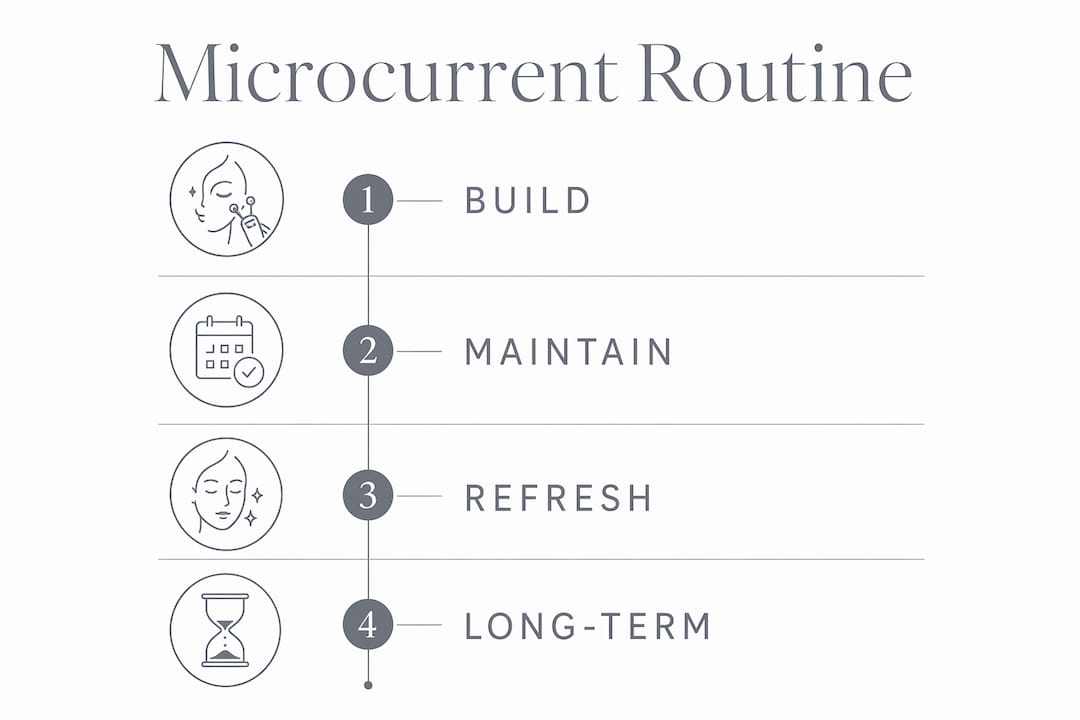
Professionals and spas outline a phased protocol that mirrors how the evidence actually works, with an initial build phase, a transition, and then ongoing maintenance:
| Phase | Frequency | Session Length | What to Expect |
|---|---|---|---|
| Build (Weeks 1–8) | 5–6x per week | 5–10 minutes | Little visible change early; cellular adaptation building |
| Transition (Weeks 8–12) | 3–4x per week | 5–10 minutes | Subtle definition, improved firmness becoming visible |
| Maintenance (Week 12+) | 2–3x per week | 5–10 minutes | Sustaining and refining cumulative tone |
A typical professional plan runs 10–12 sessions to build baseline tone; at-home users generally need 5 times per week for 60 days to reach an equivalent starting point, per SpaLens and NuFACE. Skipping sessions during the build phase is the single most common reason users plateau early.
How to build an at-home microcurrent routine that actually works
A consistent technique matters as much as frequency. Follow this sequence for reproducible results:
- Cleanse thoroughly. Remove all makeup, SPF, and residue. Any barrier between the probes and skin reduces current delivery.
- Apply a generous layer of conductive gel. Cover the entire treatment area, not just a thin film. The gel should stay wet throughout the session; reapply as needed.
- Set device intensity low to start. Build up over several sessions as your skin adapts. A slight tingle is normal; sharp discomfort or stinging means insufficient gel or too-high intensity.
- Work in upward, outward strokes. Follow the device’s guided protocol or app instructions. General direction: lift from chin toward ear, cheek toward temple, brow upward.
- Allocate time by area: Jawline and cheeks: 2–3 minutes each. Brow and eye area: 1–2 minutes. Neck: 1–2 minutes. Total session: 5–10 minutes.
- Finish with a hydrating serum or moisturizer while skin is still slightly damp from the gel.
- Clean the probes after every session with a damp cloth or the manufacturer’s recommended wipe. Product buildup on the spheres reduces conductivity and is a leading cause of inconsistent results.
For detailed technique guidance, Glowera’s step-by-step microcurrent tutorial covers probe movement, gel application, and common mistakes worth reviewing before your first session.
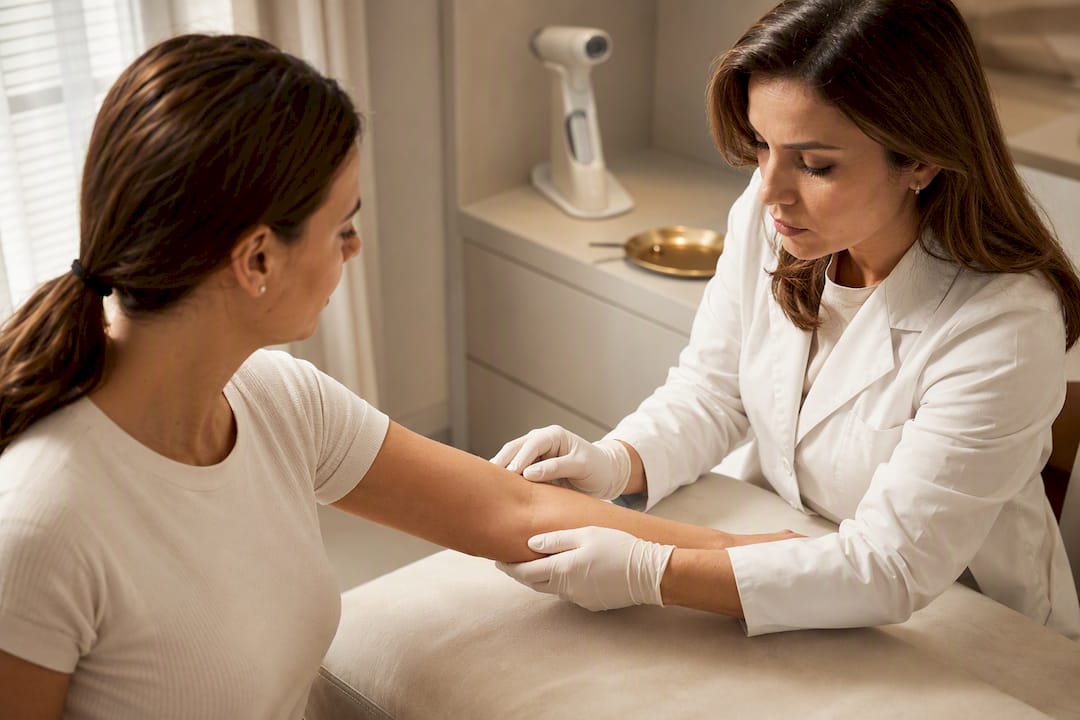
Pro Tip: Do a patch test on your inner wrist before your first full facial session, especially if you have sensitive skin. This confirms your skin tolerates the current level and the gel formula before you commit to a full-face treatment.

Who should avoid microcurrent, and what side effects are normal?
Most people tolerate at-home microcurrent well. The most common experiences are a mild tingling sensation during treatment and occasional transient redness that fades within an hour. The Slendertone Face RCT reported mild erythema in a small number of participants as the only adverse reaction across 12 weeks of use.
“People using at-home microcurrent facials may need to use them consistently to experience results. When trying a microcurrent facial at home, a person should always use a device approved by the Food and Drug Administration (FDA).”
— Medical News Today
Who should avoid microcurrent or consult a physician first:
- Anyone with a pacemaker or implanted electrical device
- People who are pregnant
- Those with active skin infections, open wounds, or inflamed acne in the treatment area
- Anyone with metal implants in the face or neck
- People with epilepsy or a history of seizures
- Those undergoing active cancer treatment
Aftercare basics: Apply SPF the morning after treatment. Avoid strong exfoliating acids (AHAs, BHAs, retinol) immediately post-session, as the skin’s permeability may be temporarily increased. Stay hydrated. Remove metal jewelry before each session to avoid unintended current concentration.
If you experience persistent redness, unusual swelling, or any pain that does not resolve within a few hours, stop use and consult a dermatologist.
This article is general information, not medical advice. Confirm whether microcurrent is appropriate for your specific health situation with a qualified professional.
How do you spot misleading before-and-after photos?
Before-and-after photography is one of the primary ways microcurrent devices are marketed, and also one of the most systematically misleading formats in the beauty industry. A credible photo set follows a strict protocol; most viral images do not.
What a trustworthy set includes:
- Identical lighting (natural, diffused, same time of day)
- Same camera distance, angle, and lens
- Neutral expression in both photos
- Matched hair pulled back, no makeup in either shot
- Documented dates and the routine used
- A baseline, an immediate post-treatment shot, and a 30–60 day follow-up
Expert guidance recommends the three-photo approach specifically because it captures both the transient drainage effect and the cumulative muscle-tone change. A single “after” photo with no baseline or date tells you almost nothing.
Red flags to watch for:
- Different lighting between before and after (shadows create the illusion of definition)
- Makeup in the “after” shot but not the “before”
- Filters, smoothing, or obvious retouching
- Different expressions (a relaxed jaw vs. a slightly tensed one changes the jawline dramatically)
- No dates, no routine listed, no session count
- Missing baseline photo
One concrete deceptive pattern: a “before” shot taken in flat, overhead lighting with a relaxed, slightly downward-tilted face, paired with an “after” shot in directional side lighting with the chin slightly lifted. The lighting and posture alone create the appearance of a sharper jaw and lifted cheeks, with zero treatment involved. When you see a dramatic single-session result, that is almost always what you are looking at.
What device features actually predict better results?
Not all at-home microcurrent devices deliver equivalent outcomes. The features below separate devices that produce consistent before-and-after changes from those that disappoint.
FDA clearance or regulatory signals. At-home devices should carry FDA clearance (in the US) or equivalent regulatory approval. This confirms the device has been reviewed for safety and that current delivery claims have been evaluated. Unregulated devices carry unknown risk.
Consistent, calibrated current delivery. The device should maintain stable microampere output across the treatment area. Devices with inconsistent output produce uneven results and can cause discomfort.
Guided protocols or app integration. NuFACE and FOREO both offer app-guided sessions that walk users through correct probe movement, timing, and intensity. This matters because technique drives results as much as the device itself. FOREO’s Bear, for example, pairs with the FOREO app for guided microcurrent routines, while NuFACE’s app provides video-led protocols by area.
Comfortable probe design. Spherical probes that glide smoothly reduce the risk of dragging or skipping, which disrupts current delivery and can cause uneven treatment.
Conductive gel compatibility and availability. Devices that require proprietary gels create an ongoing consumable cost. Check that replacement gel is readily available before committing to a device.
Price band expectations:
| Band | Typical Features | Consumable Notes |
|---|---|---|
| Entry ($100) | Basic current delivery, manual protocols | Standard gel, widely available |
| Mid ($200) | App guidance, multiple intensity levels, better probe design | Brand gel recommended |
| Premium ($100+) | Clinical-grade current, multi-protocol apps, advanced waveforms | Proprietary gel, higher ongoing cost |
For readers comparing microcurrent to RF and EMS devices, the mechanisms differ meaningfully: RF targets deeper collagen remodeling via heat, while microcurrent works at the muscle and cellular signaling level without thermal energy.
Glowera’s microcurrent collection: authentic devices, real support
Readers who have worked through this guide and are ready to start a documented routine have one practical problem left: sourcing a device they can trust. Glowera stocks a curated selection of at-home microcurrent devices from brands including NuFACE, ZIIP Beauty, and FOREO, alongside compatible conductive gels and complementary skincare accessories, all 100% authentic and backed by customer support.
The NuFACE MINI+ Starter Kit is a practical entry point for anyone building their first at-home routine: it includes the device, the activating gel, and app access for guided protocols. For readers focused on targeted work around the eyes and fine lines, the NuFACE FIX MicroWand addresses smaller areas with precision. Every product Glowera carries comes with individual customer service support for device selection, gel pairing, and routine questions, which matters when you are investing in a tool you plan to use five times a week.
Browse the full microcurrent range or reach out to Glowera’s customer service team to find the right device and consumables for your skin goals.
Key Takeaways
Consistent, documented use over 8–12 weeks is the only reliable path to cumulative microcurrent results that are visible to others, not just to yourself.
| Point | Details |
|---|---|
| Immediate vs. cumulative effects | Temporary lift and glow appear within minutes; lasting tone and definition require 8–12 weeks of consistent use. |
| Recommended frequency | Build phase: 5 times per week for 60 days, as advised by NuFACE and SpaLens. Maintenance: 2–3 times per week ongoing to sustain results. |
| Gel is non-negotiable | Insufficient conductive gel is the leading cause of poor results and discomfort; apply generously and reapply mid-session. |
| Photo documentation | Use a three-photo set: baseline, immediate post-treatment, and 30–60 day follow-up to capture both effects accurately. |
| Glowera’s role | Glowera stocks authentic NuFACE, ZIIP Beauty, and FOREO devices with compatible gels and customer support for building a reliable at-home routine. |
The evidence gap most microcurrent articles skip over
The before-and-after photos that drive most people to buy a microcurrent device are almost never the right kind of evidence. A single glowing post-treatment shot, taken with good lighting and a slightly lifted chin, captures the lymphatic drainage effect, not the cumulative muscle-tone change that actually requires weeks of work. Those two effects look similar in a photo but represent completely different biological processes with completely different timelines.
What I look for in credible results: a documented routine with session counts and dates, a half-face test where available (one side treated, one untreated, same photo), and a 30–60 day follow-up that was taken under the same conditions as the baseline. That combination is rare in brand marketing but common among serious at-home users who track their progress methodically.
The practical question most people skip is whether to start at home or book a professional series first. If you have never used microcurrent before, a single professional session is worth it, not because the results are dramatically better, but because a trained esthetician can show you the correct probe movement and pressure for your specific facial anatomy. That technique knowledge transfers directly to your at-home device and shortens the learning curve considerably. After that, a consistent at-home routine with a quality device is genuinely capable of maintaining and building on those results.
The technology is sound. The clinical effect sizes are modest but real. The gap between what the photos promise and what the science shows is not a reason to avoid microcurrent; it is a reason to go in with accurate expectations and a documented routine.
Sources and further reading
The claims in this article draw on the following sources. Reviewing the original materials, particularly the clinical study data and spa before-and-after galleries, gives the fullest picture of what microcurrent can and cannot do.
- Development of Home Beauty Devices for Facial Rejuvenation: PMC / NCBI — Peer-reviewed review of home beauty device efficacy, including the Slendertone Face RCT data on muscle thickness and skin tone.
- Microcurrent Facial: The Non-Surgical Facelift Explained, SpaLens — Practical overview of immediate vs. cumulative effects and phased protocol structure.
- Microcurrent Before and After: Realistic Results, Celliara — Evidence-forward guide to realistic timelines and photo evaluation.
- Microcurrent Facial Before and After: 5 Real Transformations, Island Salt & Spa — Spa case studies showing area-by-area improvements across a treatment series.
- Microcurrent 101, NuFACE — Brand guidance on recommended frequency and progressive improvement.
- ZIIP Halo 2.0 Review, Whimsy Soul — User-led review covering immediate results, app-guided protocols, and gel/probe maintenance.
- Why No One Believes I’m 45, The Beauty Breakfast Club — Long-form documentation of three-photo methodology and cumulative results.
- Microcurrent Facial: What It Is and How It Works, Medical News Today — Clinical overview including FDA clearance guidance and professional vs. at-home device comparison.
- The 8 Best Microcurrent Devices, PureWow — Editor-tested device roundup with expert facialist commentary on technique and consistency.
- I Got a Microcurrent Facial for the Most Sculpted Face, Byrdie — First-person professional treatment experience with expert commentary on collagen timelines.
- Glowera microcurrent device collection — Glowera’s curated range of NuFACE, ZIIP Beauty, and FOREO devices with compatible gels and accessories.